Hunting clothing · Review
King's Camo Hunter Series Review
Why the Hunter Series Wind-Defender fleece is a quiet, versatile middle layer for whitetail season — the wind-blocking fabric, where it fits, and who should look elsewhere. Compiled from the specs, not a paid field test.
How this is funded:we earn a commission if you buy through our links, at no extra cost to you. It never changes which product we recommend, and we’ll tell you plainly when to skip one. Full disclosure.
A quick, honest note before the review: we haven’t worn this fleece through a full whitetail season under controlled conditions, and we don’t claim a staged field test. What follows is compiled from the published specs, the way the garment is built, and how those design choices suit a deer hunter’s real layering problem — not a paid endorsement. With that said, the King’s Camo Hunter Series Wind-Defender fills a genuinely useful slot in a hunting wardrobe, and it’s the piece we’d point most hunters toward when they ask what a good mid layer looks like.
Our King's Camo pick
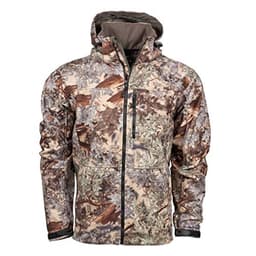
King's Camo Hunter Series Wind-Defender Fleece
A quiet windproof mid or outer layer
- Type
- Windproof fleece jacket
- Wind protection
- Wind-Defender membrane
- Noise
- Quiet fleece face
Price as of September 21, 2026. #ad How we’re funded
What it actually is
Strip away the marketing and the Hunter Series Wind-Defender is a windproof fleece: a soft, brushed fleece with a wind-blocking membrane laminated inside it. That membrane is the entire story. Ordinary fleece is warm and quiet, but it’s porous — a breeze passes straight through it and carries your body heat away, which is why you can be comfortable in a still woodlot and shivering the moment the wind picks up at the edge of a field. The Wind-Defender membrane stops that air movement, so the warmth your body generates stays trapped against you instead of being stripped off by the wind. You get the softness and quiet of fleece with a big chunk of the wind protection you’d normally need a shell for.
It is not, however, a waterproof jacket, and it isn’t pretending to be. Think of it as a warm, quiet, wind-stopping middle piece — not the outermost armor against a downpour. That distinction shapes everything about how you should use it.
Where it fits in a layering system
The reason this fleece is worth owning is that it plays two positions. Federal cold-weather guidance is consistent on the principle that you dress in several loose layers and adjust them as conditions and your activity change, rather than relying on one heavy coat. This fleece is built to be one of those adjustable pieces.
On a mild sit, wear it as your outer layer over a wicking base. The wind-blocking face handles the breeze, the fleece handles the chill, and you stay quiet and mobile. When the temperature drops or the forecast turns wet, move it underneath a shelland let it be your insulating mid layer — the loft traps warm air, the shell adds waterproofing and blocks the hardest wind, and the two together carry you into real cold. Getting one garment to do the work of two is exactly what makes a versatile mid layer worth its place in the pack. If you’re new to thinking in layers, our layering system guide lays out the whole base-mid-shell approach.
Quiet fabric for bow season
For an archery hunter, quiet matters as much as warmth. A deer at fifteen yards will pick up the scratch of a stiff, coated fabric against your bow arm or the string, and hard-shell jackets are notorious for it. A brushed fleece face is about as quiet as hunting fabric gets: it doesn’t rasp at the draw, it doesn’t crinkle when you shift on the stand, and it won’t betray a slow-motion draw on a buck that’s already in range. If most of your close encounters end with a bow, the near-silent face is a real, shot-saving feature rather than a nice-to-have.
That’s also the honest argument for wearing the fleece as your outer layer on mild bow hunts rather than throwing a shell over everything. A crisp shell that stops rain can be the loudest thing you own; on a dry, mild afternoon, the quiet fleece worn outermost is the smarter call.
Windproof fleece vs. a plain fleece
It’s fair to ask whether the membrane is worth it when a plain fleece costs less. The answer comes down to where and how you hunt. If you only ever sit in tight, sheltered timber with no wind, a plain fleece will keep you warm and quiet and you won’t miss the membrane. But most whitetail hunting involves field edges, ridgelines, and the open travel corridors where deer move — and those are exactly the places the wind finds you. A plain fleece in a steady breeze is barely warmer than a sweatshirt, because the air moving through it carries your heat away faster than your body can replace it. The Wind-Defender membrane is what closes that gap. You’re paying for the ability to stay warm in the wind without adding a noisy shell — and for a stand hunter, that’s usually money well spent.
Not waterproof — pair it with a shell
The one thing this fleece won’t do is keep you dry in the rain, and it’s worth being blunt about it. Wind-blocking is not the same as waterproof; the membrane stops moving air, but sustained rain will eventually soak through. Wet insulation stops insulating — federal cold-safety guidance is emphatic that a damp layer against you is how you get cold and stay cold — so the moment the weather turns, this fleece belongs under a waterproof shell, not out in the weather on its own. Treat it as the warm middle of your system and let a dedicated shell take the rain, and the fleece will keep doing its job for years. If you don’t own a shell yet, our cold-weather jacket roundup covers the waterproof outer layers that pair with a fleece like this.
Fit and sizing notes
Cut matters more on a layering piece than on a standalone jacket, because it has to sit over a base and, sometimes, under a shell without binding. Generally speaking, a mid layer wants a little room — loose enough to trap a pocket of warm air, not so tight that it compresses your base layer flat and kills the loft. If you run cold, wear a heavy base, or plan to layer this under a shell on the coldest days, sizing so the layers stay loose is the safer choice; a garment stretched drum-tight over your other clothes traps less air and feels colder, not warmer. Everyone’s proportions differ, so the reliable move is to measure yourself and check King’s Camo’s own size chart rather than assuming your street size carries over. Buy for the way you’ll actually wear it — over your hunting base layers, not a bare T-shirt.
Who it’s for — and who should look elsewhere
The Hunter Series Wind-Defender is for the hunter who wants one quiet, wind-stopping piece that does two jobs— an outer layer on mild days and a mid layer when it’s cold. It suits bow season especially well because of the silent face, and it suits anyone who hunts wind-exposed ground where a plain fleece would fall short.
Look elsewhere if you mainly hunt in steady rain and want a single do-everything jacket: you’ll need a waterproof shell regardless, so a non-waterproof fleece won’t solve your problem by itself. And if your hunting is dominated by dead-still, deep-cold late-season sits where you’re not moving for hours, a heavier dedicated insulated jacket may keep you warmer than a fleece can. For the broad middle of whitetail hunting — variable weather, some walking, close bow-range encounters — the versatile windproof fleece is the right tool.
The verdict
The King’s Camo Hunter Series Wind-Defender earns its spot as a quiet, versatile mid layerthat can also stand in as an outer layer when the weather cooperates. The wind-blocking membrane is the feature that sets it apart from a plain fleece, the near-silent face makes it a real asset for bow hunters, and its one honest limitation — it isn’t waterproof — is easily solved by pairing it with a shell. Buy it as the warm middle of a layering system, size it to wear over your base, and it’ll be one of the most-worn pieces in your pack.
Frequently asked questions
Is the King's Camo Hunter Series fleece windproof?
It's built around a wind-blocking membrane sandwiched inside the fleece, which is the whole point of the Wind-Defender name. A plain fleece dumps heat the moment a breeze cuts through it; the membrane stops that air movement so the warmth you generate stays next to you. It is windproof, but it is not waterproof — in steady rain you still want a shell over it.
Is the Hunter Series fleece a mid layer or an outer layer?
Both, which is why it earns a spot in the pack. On a mild sit it works as your quiet outer layer over a base. When it turns cold you move it underneath a shell and let it be the insulating mid layer. That versatility is the case for a windproof fleece over a plain one — you get two jobs from one piece.
Is King's Camo good for bow hunting?
The near-silent fleece face is its strongest argument for archery season. Hard-shell and heavily coated fabrics can rasp at the draw and turn a buck inside bow range; a brushed fleece face stays quiet against the string and your arm. If your close-range shots are with a bow, quiet fabric matters as much as warmth.
How does the Hunter Series fleece fit?
Fit runs to a layering cut rather than a tailored one, so it's meant to go over a base layer without binding. If you plan to wear it as a mid layer under a shell, leave room for that base underneath; if you run cold or wear a heavy base, sizing up keeps the layers loose enough to trap air. Check the brand's size chart against your own measurements before you order.
Who should skip the King's Camo Hunter Series fleece?
Anyone who mainly hunts in steady rain and wants a single do-it-all jacket — this isn't waterproof, so you'd be buying a shell anyway. And a hunter chasing maximum warmth for a dead-still late-season sit may want a heavier insulated jacket instead. As a quiet, wind-stopping middle layer, though, it's hard to beat.
Sources
- CDC / NIOSH — Cold Stress: Cold and Work — Federal cold-safety guidance: dress in several loose layers, keep the base layer dry, and protect the extremities (accessed July 22, 2026)
Keep reading
Best cold-weather hunting jackets
Where a windproof fleece fits against insulated and shell options.
See the jacket picksThe hunting layering system
How base, mid, and shell work together — and where this fleece slots in.
Read the guideBest hunting base layers
The wicking layer that goes under this fleece and keeps you dry.
See base layersHow to wash hunting clothes
Keep your fleece quiet, lofted, and scent-free between hunts.
Read the washing guide