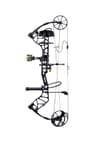
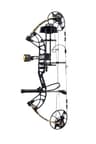
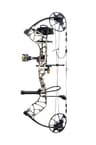
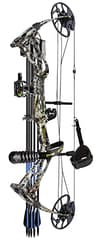
How to choose a deer-hunting compound bow
Ignore the speed number for a moment. For a whitetail inside bow range, four things decide whether a bow is right for you, and none of them is the IBO rating on the box.
Draw length has to match you — it’s not adjustable like weight
Draw weight is easy to change; draw lengthis the fit spec that matters most and the one beginners overlook. A bow set too long makes you overextend and lose the solid back-wall anchor that makes a shot repeatable; too short and you’re cramped. The bows on this list win partly because they cover a wide draw-length range without a trip to the shop — the Diamond Infinite 305 spans 19–31 inches, the Bear Cruzer 14–30 — so one bow fits a range of body sizes and grows with a new archer. If you don’t know your draw length, that adjustability is worth more than any spec.
Set the draw weight where you can shoot it, not where you can heave it
Every bow here reaches a full 70-pound hunting weight, which is more than a deer needs. The mistake is buying poundage you can only draw by pointing the bow at the sky and muscling it back — a motion that spooks a watching deer and wrecks your form. Set the weight so you can draw straight back from a seated stand position, slowly, on a cold morning. Forty to fifty pounds delivers plenty of kinetic energy to pass through a whitetail with a decent arrow and a sharp broadhead. Our draw-weight guide shows the math.
Ready-to-hunt packages are the value play
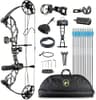
A bare flagship bow is just the start of the bill — add a sight, rest, quiver, stabilizer, and arrows and you’ve doubled it. The RTH and package bows here bundle all of that, tuned close from the factory, so your money goes to hunting instead of a parts list. The included accessories are rarely premium, and a serious archer will eventually upgrade the sight and arrows — but they’re a real, functional starting point, and that’s exactly what most deer hunters need.
Brace height: the quiet forgiveness spec
Brace height — the distance from the string to the grip at rest — trades speed for forgiveness. A taller brace (the Legit MAXX’s 6.25 inches is generous for its class) keeps the arrow on the string a shorter time, which forgives a slightly imperfect release. Lower-brace speed bows are less tolerant of form errors. For a beginner or anyone who values a smooth, forgiving shot over raw velocity, a taller brace height is a feature, not a compromise.
Where premium is — and isn’t — worth it
Spend up and you buy a smoother draw cycle, quieter shot, better fit-and-finish, and a flagship riser that’s a pleasure to shoot. Those are real, and if you shoot a lot and value the experience, a nicer bow is money well spent. What you don’t buy is a deadlier bow for whitetail. A budget Sanlida or Topoint package, set up properly and paper-tuned, kills a deer at 25 yards exactly as dead as a $1,200 flagship. Put the difference toward arrows, broadheads, a rangefinder, and — most of all — practice. Then pick the head that finishes the job in our broadhead roundup.