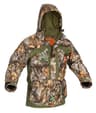
How to choose a cold-weather hunting jacket
Decide what the jacket is forbefore you look at warmth ratings. The same temperature calls for very different coats depending on whether you’ll be sitting dead still or walking to a spot, and whether you’re hunting with a bow or a gun. Answer those, and the right pick usually names itself.
It’s a layer, not the whole answer
The federal cold-safety rule is to dress in several loose layers and keep the layer against your skin dry — loose layers trap warm air, and being able to add or shed one is what keeps you from sweating on the walk and freezing on the sit. Your jacket is the shell and/or mid of that stack, over a moisture-moving base layer. A parka that reflects and holds heat is ideal as the outer layer for a still sit; a fleece is better used as a mid layer or a standalone on milder days. Fight the urge to solve cold with one thick coat — solve it with the system.
Still sit vs walking hunt
This is the core trade-off. When you sit stillin the cold you make almost no body heat, so you want maximum insulation — a heat-reflective, insulated parka built for stationary sits. When you walk, you generate plenty of heat and your real enemy is sweat, so you want breathability and the ability to open up or shed a layer. A jacket that’s perfect on a January sit will have you soaked on the hike in, and damp clothing is how a warm walk turns into a cold sit. If you do both, layer a lighter, breathable piece for the walk and add the warm outer once you’re settled.
Quiet fabric matters for a bow shot
If you bowhunt, fabric noise can cost you the shot. A stiff or slick shell that “swishes” when you raise your arms will turn a relaxed deer inside out at close range. Look for a brushed, soft, quiet face fabric— fleece and brushed-tricot shells are the quiet options here, which is why two of our picks lead on silence. Gun hunters have more latitude because the shot happens at distance, but quiet never hurts.
Insulation and waterproofing
Two more specs decide the cold, wet days. Insulationis what traps your heat — synthetic fills like Thinsulate are rated by gram weight, and heat-reflective liners add warmth without bulk, both aimed at the still, cold sit rather than the walk. Waterproofing is separate and just as important: wet insulation stops insulating, so a genuinely waterproof shell earns its keep in rain or wet snow, worn over your warm mid layer. Many hunters carry a packable waterproof shell precisely so they can keep the warm layer dry when the weather turns.
A simple cold-weather system
Put it together and it’s straightforward: a moisture-moving base layeragainst your skin, a warm mid layer (fleece or a light insulated piece), and an outer layer chosen for the day — an insulated parka for a cold sit, or a waterproof shell when it’s wet. Keep every layer loose enough to trap air, keep the base dry, and finish the job at the extremities: cold feet end more sits than a cold chest, so match your cold-weather bootsto the same sit. If you’re weighing a specific brand, our King’s Camo review digs into one of the picks in detail.