Tree stands · Saddle vs stand
Saddle vs Tree Stand
The honest trade-offs between saddle hunting and a traditional stand — weight, comfort, mobility, cost, and the learning curve nobody markets.
How this is funded:we earn a commission if you buy through our links, at no extra cost to you. It never changes which product we recommend, and we’ll tell you plainly when to skip one. Full disclosure.
Saddle hunting has gone from a fringe method to one of the fastest-growing ways to hunt whitetails, and for good reason — a saddle is the lightest, most mobile setup there is. But it isn’t automatically better than a stand, and the marketing rarely mentions the learning curve. Here’s the honest comparison, so you can pick the one that fits how you actually hunt rather than what’s trending.
The saddle option
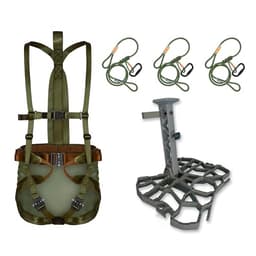
XOP Complete Tree Saddle System (Edge platform + Mondo harness)
Mobile, run-and-gun tree hunting
- Type
- Tree saddle system
- Includes
- Mondo saddle harness, Edge platform, bridge, tether, lineman's belt, carrying bag
- Harness sizing
- Adjustable, one size fits most
The stand option
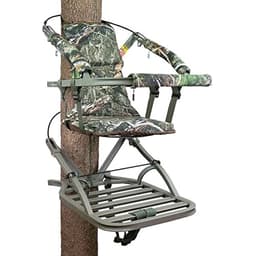
Summit Treestands Viper SD
Mobile hunters on climbable timber
- Type
- Climbing stand
- Weight capacity
- 300 lb
- Best tree
- Straight, branch-free trunks
The honest trade-offs
| Factor | Tree saddle | Tree stand |
|---|---|---|
| Weight & pack size | Lightest, packs smallest | Heavier; climbers bulkiest |
| Trees it works on | Almost any tree | Climbers need straight, clean trees |
| Comfort for long sits | Good once dialed in; takes practice | Often more comfortable out of the box |
| Learning curve | Real — practice before you hunt | Minimal |
| Mobility | Excellent — true run-and-gun | Good with a hang-on; less with a climber |
Which should you hunt?
Choose a saddleif you hunt public or big private ground, relocate often, and value packing light — and if you’re willing to put in backyard reps to learn the positions. It rewards the mobile, run-and-gun hunter more than any stand can.
Choose a standif you hunt a handful of known spots, want to climb in and sit comfortably without a learning curve, and don’t need to carry your setup far. A comfortable hang-on you leave up, or a climber on clean trees, is a proven, low-fuss way to hunt.
Whichever you pick, the safety rules are identical: a full-body harness, a lineman’s belt on the climb, and a lifeline on the trunk, so you’re attached from the ground up. That’s non-negotiable for both.
General guidance, not legal or safety advice. Hunting regulations vary by state and change every year — always verify seasons, legal equipment and requirements with your own state wildlife agency before you hunt. Wear a full-body harness and stay attached to the tree from the ground up whenever your feet leave the ground.
Frequently asked questions
Is saddle hunting better than a tree stand?
Not better — different. Saddles are lighter, pack smaller and hunt almost any tree, which makes them great for mobile, run-and-gun hunting. Stands are more familiar and often more comfortable to sit for hours. The right choice depends on how much you move and how much you value comfort.
Is a saddle safer than a tree stand?
Both are safe when used correctly with a full-body harness and staying attached from the ground up. In a saddle you're tethered to the tree the whole time by design, which some hunters find reassuring, but neither replaces proper fall-arrest gear and technique.
Is saddle hunting hard to learn?
There's a real learning curve — the shot positions and how you hang and move differ from a stand. Practice a foot off the ground in the backyard until it feels natural before you trust it on a hunt. Many hunters adapt in a few sessions; some prefer a stand and that's fine.
Do you need climbing sticks for both?
For a saddle and a hang-on stand, yes — you need a separate way up, usually climbing sticks and a lineman's belt. A self-contained climbing stand is the exception, but it only works on straight, branch-free trees.
Sources
- Tree Stand Safety Awareness Foundation — Industry safety foundation tracking treestand-fall statistics and the ABCs of safety (accessed July 22, 2026)
- Hunter-Ed — Fall-Arrest Systems (FAS) — State-approved hunter-ed guidance on full-body harness + fall-arrest components (accessed July 22, 2026)
- Hunter-Ed — Fall-Arrest System Safety Guidelines — Hunter-ed rule: stay attached to the tree from the ground up, every hunt (accessed July 22, 2026)
Keep reading
Saddle hunting for beginners
What a saddle setup is, what you need, and how to practice safely before season.
Read the beginner guideBest tree stands, saddles & blinds
The top pick in each style, from climbers to saddles to blinds.
See the picksTree-stand safety & harness guide
The fall-arrest basics that apply to both a saddle and a stand.
Read the safety guideClimbing sticks guide
How to get up to a saddle or hang-on quietly and safely.
See the guide