Tag & Timber

Trail cameras · Cellular

Best Cellular Trail Cameras for Deer

The cellular cameras worth running for whitetail — compared on connectivity, flash and the plan cost that decides what you'll really pay for a season.

By Stephen V.Last updated How we pick

A cellular trail camera sends photos to your phone, so you can inventory the deer on your ground without walking in and leaving scent. That’s a real advantage on pressured or mature deer — but it comes with a monthly or yearly data plan that usually costs more over a season than the camera did. So the pick isn’t just about the box; it’s about the plan attached to it.

We compared these on connectivity (does it find signal on any carrier?), flash type (no-glow is invisible to deer and thieves), power (solar means fewer battery swaps), and the cost to run it. Before you buy any of them, it’s worth reading what a cellular camera actually costs to run for a season — the plan math is the part nobody else does.

How this is funded:we earn a commission if you buy through our links, at no extra cost to you. It never changes which product we recommend, and we’ll tell you plainly when to skip one. Full disclosure.

Quick picks

Ranked on published specs, package value and buyer fit. Select a row to jump to the full write-up. We have not tested these products — here is exactly what we do instead.

#ProductBest forPrice
1
Tactacam Reveal Pro 3.0

Tactacam Reveal Pro 3.0

The camera to buy if you want photos on your phone and don't want to fuss with carrier choice — it hops between networks automatically and adds GPS so a stolen camera can be tracked. The catch, as with every cellular cam, is the monthly plan, not the box price.

Best overall
$189.99 · View on Amazon

$209.9910% off

Price as of July 22, 2026. #ad How we’re funded

2
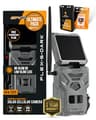
SPYPOINT Flex-S Dark

SPYPOINT Flex-S Dark

SPYPOINT's draw is the free plan — up to 100 photos a month at no cost — which makes it the easiest cellular camera to try without committing to a subscription. The solar panel on this Dark model means you rarely touch the batteries.

Best free plan
$199.99 · View on Amazon

$219.989% off

Price as of July 22, 2026. #ad How we’re funded

3
Moultrie Edge 2

Moultrie Edge 2

The cheapest genuinely good cellular camera here, with dual-carrier connectivity and no activation fee. If you want on-your-phone scouting and don't need every premium feature, this is the value pick.

Best on a budget
$58.00 · View on Amazon

$79.9927% off

Price as of July 22, 2026. #ad How we’re funded

The picks in full

#1Best overall

Tactacam Reveal Pro 3.0

The camera to buy if you want photos on your phone and don't want to fuss with carrier choice — it hops between networks automatically and adds GPS so a stolen camera can be tracked. The catch, as with every cellular cam, is the monthly plan, not the box price.

Strengths

  • Multi-carrier LTE picks the best network automatically — no guessing AT&T vs Verizon
  • No-glow IR flash won't spook deer or tip off trespassers
  • GPS tracking built in if the camera walks off

Trade-offs

  • Cellular means an ongoing data plan on top of the purchase price
  • The lowest photo plans throttle how many images you get per day
ConnectivityCellular (multi-carrier LTE)
FlashNo-glow infrared
Ongoing costData plan required (billed monthly or yearly)
Photo resolutionNot published

Worth knowing. Cellular cameras are priced by the plan, not the box — budget the data plan before you buy. See our cellular subscription-cost breakdown.

Specs read from the product listing, on July 22, 2026. “Not published” means the manufacturer does not state that figure.

#2Best free plan

SPYPOINT Flex-S Dark

SPYPOINT's draw is the free plan — up to 100 photos a month at no cost — which makes it the easiest cellular camera to try without committing to a subscription. The solar panel on this Dark model means you rarely touch the batteries.

Strengths

  • Free plan covers ~100 photos/month — genuinely usable before you pay
  • Integrated solar keeps it running without battery swaps
  • Auto carrier-select finds signal on its own

Trade-offs

  • The free tier fills up fast on an active trail — heavy users need a paid plan
  • App and delivery speed lag the premium cellular cameras
ConnectivityCellular (auto carrier-select) + solar
FlashNo-glow infrared
Ongoing costFree plan (~100 photos/mo); paid plans for more
PowerIntegrated solar panel + battery

Worth knowing. The free photo tier is the reason to start here — but read the plan limits before you assume it's enough for a hot scrape.

Specs read from the product listing, on July 22, 2026. “Not published” means the manufacturer does not state that figure.

#3Best on a budget

Moultrie Edge 2

The cheapest genuinely good cellular camera here, with dual-carrier connectivity and no activation fee. If you want on-your-phone scouting and don't need every premium feature, this is the value pick.

Strengths

  • Among the lowest entry prices for a dual-carrier cellular camera
  • 36 MP image capture is plenty for identifying deer
  • No activation fee to get started

Trade-offs

  • Still needs a data plan like any cellular camera
  • Low-glow flash is slightly more visible than a no-glow at close range
ConnectivityCellular (dual-carrier LTE)
FlashLow-glow infrared
Ongoing costData plan required; no activation fee
Photo resolution36 MP

Worth knowing. A low-glow flash emits a faint red glow at the LED; a no-glow does not. It matters most for close, wary bucks and for theft-prone public land.

Specs read from the product listing, on July 22, 2026. “Not published” means the manufacturer does not state that figure.

How to choose a cellular trail camera

Start with the plan, not the camera. Estimate how many photos a day you actually want from each spot, whether you need HD video (it burns through data and costs more), and how many cameras you’ll run — because the plan cost multiplies per camera. If you’re testing the water, a camera with a genuine free tierlets you learn the app before you pay. If you’ll run several cameras hard, do the annual math up front.

Match the carrier to your ground

A camera is only as good as its signal at the tree. Multi-carrier or auto-select cameras find the best available network for you, which matters on rural ground where one carrier is strong and another is dead. If you already know which carrier works on your property, a single-carrier model can be cheaper — just confirm coverage before you rely on it.

Flash and placement still decide the photos

Cellular or not, a no-glow flash keeps the camera invisible at night, and thoughtful placement is what fills the card with bucks instead of blank frames. Our camera setup guide covers height, angle and where to hang one for deer.

Frequently asked questions

Which cellular trail camera is best for deer hunting?

For most hunters, a multi-carrier camera that finds signal automatically is the safest buy. If you want to try cellular without a monthly bill, start with one that has a genuine free photo tier. If budget is the priority, a dual-carrier camera with no activation fee gets you on your phone for less.

Do cellular trail cameras have a free plan?

Some do — a limited number of photos per month at no cost, which is enough to learn the app and cover a slow trail. Heavy use on an active spot will exceed the free tier quickly, so budget for a paid plan if you run cameras hard.

How much data does a cellular trail camera use?

Photos are small; HD video is not. If you enable video on an active trail you'll move to a higher plan fast. Most hunters keep cameras on photo mode and pull video only for the occasional standout buck.

Do I need a no-glow flash?

For wary bucks at close range and for theft-prone public land, yes — a no-glow infrared flash is invisible at night. On quiet private ground a low-glow is usually fine and can save you money.

Sources

Keep reading