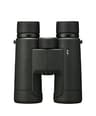
How to choose deer hunting binoculars
Start from where and when you hunt, then buy the glass that matches it. For whitetails, the configuration is settled and the trade-offs come down to three things: how much low-light performance you need, how steady you can hold the magnification, and what warranty and build you want behind it. Spend where those matter to you and ignore the rest of the spec sheet.
Why 10x42 is the deer default
The first number is magnification, the second is the objective lens diameter in millimeters. Ten-power gets you close enough to judge antlers and pick a deer out of cover at the ranges whitetails are usually seen, and a 42 mm objective is the sweet spot for gathering light in a package you can still carry all day. Go bigger — a 50 mm objective — and you gain a little brightness for a lot of weight and bulk. Go to 8x and you trade some reach for a wider, steadier, brighter-feeling field, which some hunters prefer in thick timber. Both are valid; 10x42 is simply the do-everything choice, which is why every pick here is one.
Low-light glass is what you’re actually paying for
Two 10x42 binoculars can look identical on paper and worlds apart in the last twenty minutes of light. The difference is glass and coatings — HD or ED elements, fully multi-coated lenses, quality prisms — and it shows up precisely when deer are moving and you’re trying to confirm what you’re looking at. This is where the step from a budget pair to a mid-tier HD pair, and again to premium glass, buys real performance. If you glass hard at dawn and dusk, that brightness earns its price. If you mostly hunt tight cover in decent light and range-and-confirm, you won’t miss it, and a value or budget pair is the smart money.
Magnification you can hold steady
Ten-power magnifies your heartbeat and hand shake along with the deer, so the higher power is a touch harder to hold rock-steady from an unsupported position than 8x. It’s rarely a real problem from a stand where you can brace against the tree or your knees, but it’s worth knowing if you glass a lot offhand from the ground. A bino harness that straps the pair to your chest also steadies the glass and keeps it out of your way — cheap, and worth adding to whatever you buy.
Build, warranty, and the little things
Any deer binocular should be waterproof and fogproof — you will hunt them in rain and pull them from a warm truck into cold air, and cheap non-sealed glass fogs internally and is ruined. Beyond that, the differences are conveniences: a locking diopter that won’t drift out of adjustment, comfortable eye relief if you wear glasses, and twist-up eyecups that hold their position. Warranty matters more than people expect on gear that lives outdoors and gets dropped: an unconditional, no-questions warranty like the one behind several picks here means a cracked pair is a replacement, not a loss.
Where premium is and isn’t worth it
The premium pair here is genuinely brighter and sharper at the edges, and if you’re a dedicated glasser who lives in the low-light window, pay for it — the difference is real when it counts. For most deer hunters, though, the mid-priced value benchmark is the honest buy: excellent HD glass, a rugged sealed body, and a lifetime warranty at a price that leaves money for the rest of your kit. Whatever you save, a rangefinder is the natural companion buy — see how the two compare in rangefinder vs binoculars.