Bows & archery · Head to head
Fixed vs Mechanical Broadheads for Deer
The most argued-about choice in bowhunting, settled honestly: what each design does well, where it fails, and how to match the head to your bow and your shots.
How this is funded:we earn a commission if you buy through our links, at no extra cost to you. It never changes which product we recommend, and we’ll tell you plainly when to skip one. Full disclosure.
No argument in bowhunting is louder than fixed versus mechanical, and most of the heat comes from treating it as a matter of faith rather than physics. It isn’t. Each design makes a clear trade, and the right answer falls out of two questions: how much energy does your bow make, and how well is it tuned? Answer those honestly and the choice makes itself.
Fixed — reliable & deep
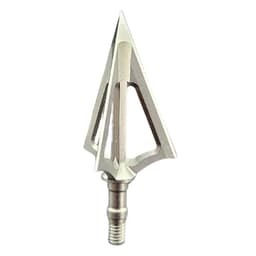
G5 Outdoors Montec 100gr
Best fixed-blade for reliability and penetration
- Type
- Fixed (one-piece)
- Blades
- 3
- Cut diameter
- 1-1/16 in
Price as of September 20, 2026. #ad How we’re funded
Mechanical — big cut, field-point flight
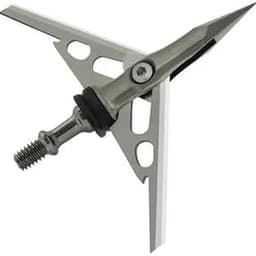
Rage Hypo2 100gr
Best big-cut mechanical for short blood trails
- Type
- Mechanical (rear-deploy)
- Blades
- 2
- Cut diameter
- 2 in
Price as of September 20, 2026. #ad How we’re funded
How each design works
A fixed-bladebroadhead has blades that are always open — usually machined into or locked onto a solid ferrule. There’s nothing to deploy, so 100% of your arrow’s energy goes into cutting and penetrating. A one-piece head like the G5 Montec takes this to its logical end: no o-rings, no set screws, nothing to fail.
A mechanical(or expandable) broadhead flies with its blades folded down into a slim, field-point-like profile, then opens them on impact to cut a wider hole. That deployment is the whole point — it’s what makes the head fly like a field point and cut bigger than a fixed head of the same profile — but opening the blades consumessome of the arrow’s kinetic energy at the exact moment it’s trying to punch through hide and rib.
Head-to-head
| What matters | Fixed blade | Mechanical |
|---|---|---|
| Flight vs field points | Needs a tuned bow; blades steer the arrow | Flies like a field point; forgives a slight tune error |
| Penetration | Deeper; uses all the arrow’s energy | Less; spends energy opening on impact |
| Cut diameter | Smaller (often ~1 to 1-1/4 in) | Larger (up to ~2 in) |
| Best bow | Any, including low-poundage and traditional | Modern compound / crossbow with energy to spare |
| Reliability | Nothing to fail; re-sharpenable | Moving parts; replace o-rings each season |
| Hard angles / bone | More forgiving | Less forgiving; wants a broadside hit |
Choose fixed if…
Choose a fixed head if you shoot a lower draw weight, a youth bow or a traditional bow, if you often take quartering shots where you might catch bone, or if you simply want a head with nothing to fail. The trade is that you must tune your bowso the fixed head flies with your field points — if your broadheads plane away from your field points, that’s a tuning issue to fix, not a reason to give up. A properly tuned fixed head is the most dependable thing you can put on the front of an arrow.
Choose mechanical if…
Choose a mechanicalif you shoot a modern compound at a healthy draw weight (or a crossbow), you want the easiest possible sight-in because the head flies like your field points, and you value the bigger cut and easier blood trail on a well-placed broadside shot. The trade is a smaller margin on bad hits and moving parts to maintain — so keep your o-rings fresh and take only the shots you’ve practiced. On the right bow, a mechanical is a superb, forgiving-to-tune choice.
The honest bottom line
Shot placement matters more than the fixed-versus-mechanical debate ever will. A sharp head of either type, put through both lungs, kills a deer quickly; a poorly placed head of either type does not. Pick the design that matches your bow’s energy and your tuning, sight in with the actual broadheads at your maximum ethical range, keep them sharp and maintained, and then stop arguing about it and go practice. That’s the whole answer.
General guidance, not legal or safety advice. Hunting regulations vary by state and change every year — always verify seasons, legal equipment and requirements with your own state wildlife agency before you hunt. Wear a full-body harness and stay attached to the tree from the ground up whenever your feet leave the ground.
Frequently asked questions
Which is better for deer, a fixed or mechanical broadhead?
Neither is universally better — it depends on your bow. A fixed head penetrates more reliably and always opens, making it the safer choice for lower-poundage setups and hard angles, but it needs a well-tuned bow to fly straight. A mechanical flies like a field point and cuts a wider hole for easier blood trails, but it spends energy opening on impact, so it wants a powerful, well-tuned bow and a well-placed broadside shot.
Do mechanical broadheads penetrate enough for deer?
On a capable bow with a well-placed shot, yes — plenty of deer are killed cleanly with mechanicals every season. The concern is energy: opening the blades costs kinetic energy, so on a low-poundage bow, a youth setup, or a hard-quartering or heavy-bone hit, a mechanical can under-penetrate where a fixed head would drive through. Match the head to your bow's energy and take good shots.
Are fixed broadheads harder to shoot accurately?
They're less forgiving of a poorly tuned bow. A fixed head's exposed blades catch air and steer the arrow, so any tuning flaw shows up as broadheads that don't hit with your field points. On a properly tuned bow, a quality fixed head flies beautifully. Mechanicals hide their blades in flight, so they fly like field points and forgive a slightly imperfect tune — that forgiveness is their main selling point.
Do I need crossbow-specific broadheads?
For mechanicals, often yes — crossbows generate more speed and energy, and many expandables offer a crossbow-rated version built to survive that force without deploying on the shot. Fixed heads usually transfer between vertical bows and crossbows without issue. Whatever you shoot, check the packaging and always sight in with the exact heads you'll hunt with.
Sources
- Wasp Archery — How to Calculate the Kinetic Energy of Your Arrow — The kinetic-energy formula (arrow weight and speed) used to judge penetration (accessed July 22, 2026)
- Bowhunting.com — How Far Should You Shoot With a Crossbow? — On ethical crossbow range for whitetail and how energy drops downrange (accessed July 22, 2026)
- Pope & Young Club — Equipment Definitions — Bowhunting equipment standards, including the 300-grain minimum arrow weight (accessed July 22, 2026)
Keep reading
Best broadheads for deer hunting
Our full picks across fixed and mechanical designs, matched to different bows.
See the roundupWhat draw weight do you need?
How much kinetic energy your bow makes decides which head is the safe choice.
Read the guideBest compound bows for deer
The rigs that launch these heads, ranked on fit and value.
See the bowsHow to choose a compound bow
The bow specs that determine how much energy you have to work with.
Read the guide