Hunting optics · Comparison
Rangefinder vs Binoculars: Which to Buy First
Both belong in a deer hunter's kit eventually — but with one purchase to make, which optic does more for you? An honest look at what each one is actually for.
How this is funded:we earn a commission if you buy through our links, at no extra cost to you. It never changes which product we recommend, and we’ll tell you plainly when to skip one. Full disclosure.
Ask a room of deer hunters whether binoculars or a rangefinder is the more important optic and you’ll get an argument, because both are right — for different hunters. They do genuinely different jobs. Binoculars help you find and evaluate deer; a rangefinder helps you make the shot honest. If you’re buying one now and the other later, the question isn’t which is “better,” it’s which does more for the way you actually hunt. Here’s the honest breakdown.
Start-here binocular
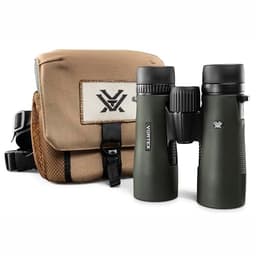
Vortex Diamondback HD 10x42
The best all-round value for deer
- Magnification
- 10x
- Objective lens
- 42 mm
- Glass
- HD, roof prism
Price as of September 20, 2026. #ad How we’re funded
Start-here rangefinder
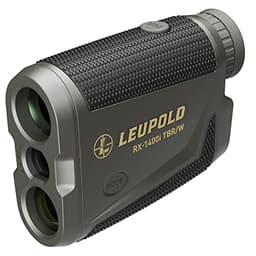
Leupold RX-1400i TBR/W Gen 2
Stand hunters who want angle-compensated range
- Max range (reflective)
- 1,400 yd
- Magnification
- 6x
- Angle compensation
- Yes — TBR/W (true horizontal + wind hold)
Price as of September 20, 2026. #ad How we’re funded
The short answer
For most deer hunters, buy binoculars first. You spend far more of a hunt looking for and sizing up deer than you spend ranging one, and good glass improves every part of that: catching a flicker of movement at last light, telling a shooter from a young buck, counting points, reading body language before a deer ever commits. That value shows up on every sit. A rangefinder earns its keep in the few seconds before the shot — and those seconds matter enormously — but they are a small slice of the day.
The big exception: if you bowhunt, or you hunt steep, broken country from an elevated stand, flip the order and buy the rangefinder first. On an angled shot, misjudging distance by a few yards is the difference between a clean hit and a clean miss, and a rangefinder built for that job removes the guesswork in a way nothing else can. More on why below.
What binoculars do that a rangefinder can’t
Binoculars are a scouting and evaluationtool. Their whole design — two eyes, a wide field of view, real magnification, and a large light-gathering objective — is built for comfortably searching a landscape and studying what you find. That’s work you do for minutes and hours, not seconds:
- Finding deer. A wide, bright field lets you sweep a field edge, a cut, or a timbered draw and pick out an ear twitch or a patch of tan that your naked eye slides right past.
- Evaluating them.Judging antler size, aging a deer on the hoof, confirming a doe has fawns with her, or deciding a buck is a shooter — all of it depends on glass good enough to show real detail at distance.
- Reading the situation.You can watch how a deer is moving and whether it’s relaxed or alerted, which tells you whether to draw, wait, or let it walk.
There’s also a safety and pressure argument for glass. A deer’s survival runs on its senses — and its nose above all — so the more you can learn about an animal from a distance, the less you have to close the gap and risk being winded, seen, or heard. Glassing lets you gather information without pressuring the deer, which is really a form of scouting you do in real time from the stand.
What a rangefinder does that binoculars can’t
A rangefinder answers one question with precision: exactly how far is that deer? And on the shots that matter most, the honest answer isn’t the number your eye would guess.
This is the part most new hunters underrate. When you shoot from an elevated stand or across a hillside, your arrow or bullet follows the true horizontal distanceto the deer — the flat-ground distance — not the longer line-of-sight distance your eye and a basic rangefinder both see. Aim for the line-of-sight number on a steep shot and you’ll shoot high. An angle-compensating rangefinderdoes that trigonometry for you and hands you the shorter, correct distance to hold for. For a bowhunter perched fifteen or twenty feet up, that correction isn’t a nicety — it’s the whole ballgame.
A rangefinder also keeps you honest about range itself. Ethical bow and crossbow range on whitetail is short — commonly kept to 40 yards or less, and traditionally capped around 50 — because arrow energy falls off the farther the shot travels. Knowing the true distance is how you make sure the deer you’re about to shoot is actually inside your practiced, ethical range instead of ten yards past it.
Who should buy binoculars first
Reach for glass first if you see yourself in any of these:
- You hunt open or mixed country. Fields, food plots, cut corn, river bottoms, and Western-style glassing all reward the hunter who can find and judge deer at distance before committing to a spot.
- You’re a gun hunter at moderate range. Inside 100 yards on flat ground, your rifle or slug gun has plenty of margin, and a good scope already magnifies the target. Binoculars do far more for you across the whole hunt than a rangefinder will.
- You want to be a better all-round hunter.Learning to age and judge deer, spotting movement first, and scouting more effectively are skills that good binoculars unlock and a rangefinder simply doesn’t.
A quality mid-priced 10x42 — the value benchmark most hunters land on — buys you sharp HD glass and enough low-light reach for dawn and dusk, and it’s the optic you’ll use on literally every sit.
Who should buy a rangefinder first
Flip the order and put the rangefinder ahead of binoculars if:
- You bowhunt or shoot a crossbow. Archery tackle has a steep trajectory and a short ethical window, so a five- or ten-yard misjudgment is a miss or, worse, a wounded deer. An angle-compensating rangefinder is the single biggest accuracy upgrade you can make.
- You hunt steep or broken terrain.Hill country, bluffs, and tall stands all create the angled shots where true-horizontal distance and line-of-sight distance diverge the most. That’s exactly the problem a TBR-style rangefinder is built to solve.
- Your shots are at uncertain distances.If you can’t pre-range and pace off your shooting lanes — because you move stands often or hunt new ground — ranging on the fly keeps every shot inside your limits.
When you need both
Eventually, most serious deer hunters carry both, because they cover different halves of the same job. Binoculars find and evaluate the deer at distance; the rangefinder confirms the number the instant it steps into a lane. The workflow is simple and it’s why they pair so well: glass to locate and judge, range to shoot.
If budget forces a sequence, buy the one that fits your season now and add the other before the next. A bowhunter starts with the angle-compensating rangefinder and adds glass; a field-and-timber gun hunter starts with binoculars and adds a rangefinder when the shots get longer or steeper. There’s no wrong order — only the order that matches how and where you hunt.
The bottom line
Binoculars make you a better hunter on every sit; a rangefinder makes the hardest shots honest. For the majority of deer hunters — especially in open or mixed country with a gun — glass first is the higher-value buy. For bowhunters and steep-country stand hunters, the angle-compensating rangefinder comes first because it fixes an accuracy problem nothing else will. Match the purchase to your weapon and your terrain, and you’ll never waste a dollar of optics budget.
General guidance, not legal or safety advice. Hunting regulations vary by state and change every year — always verify seasons, legal equipment and requirements with your own state wildlife agency before you hunt. Wear a full-body harness and stay attached to the tree from the ground up whenever your feet leave the ground.
Frequently asked questions
Should I buy binoculars or a rangefinder first?
For most deer hunters, binoculars first. They help you find, count, and evaluate deer across a longer stretch of the day than a rangefinder does, and good glass makes you a better hunter no matter how you take the shot. The exception is a bowhunter or anyone hunting steep ground, where an angle-compensating rangefinder solves a specific accuracy problem that binoculars can't touch.
Can I hunt deer without a rangefinder?
Yes. Plenty of hunters shoot deer at known distances they have paced off or ranged ahead of time, and a gun hunter inside 100 yards on flat ground has very little margin to worry about. The case for a rangefinder gets strong when the shot is angled, the distance is uncertain, or you are shooting a bow, where a ten-yard misjudgment can mean a clean miss.
Why does an angled shot need a special rangefinder?
From a treestand or a hillside, your arrow or bullet follows the true horizontal distance to the deer, not the longer line-of-sight distance your eye sees. An angle-compensating rangefinder does that trigonometry for you and gives you the shorter number to aim for, so you don't shoot high on a steep shot. A basic rangefinder shows only the straight-line distance.
Do I still need binoculars if I have a rangefinder with magnification?
A rangefinder's optic is built to put a bright reticle on one target and read a number, not to scan comfortably for long stretches. Its narrow field of view, lower magnification, and single-eye or modest glass make it tiring for the drawn-out glassing that finds deer. For genuine scouting and evaluation, dedicated binoculars are far more capable.
What magnification should a first pair of deer binoculars be?
An 8x42 or 10x42 is the deer default. The first number is magnification and the second is the objective lens in millimeters; 42 mm gathers enough low-light brightness for dawn and dusk without being heavy. Choose 8x for steadier, wider views in timber and 10x for a little more reach in open country.
Sources
- Realtree — Can You Trust Angle-Compensating Rangefinders? — On why an arrow follows the true horizontal distance, not line-of-sight, on an angled shot from a stand (accessed July 22, 2026)
- Bowhunting.com — How Far Should You Shoot With a Crossbow? — On ethical crossbow range for whitetail and how energy drops downrange (accessed July 22, 2026)
- National Deer Association — Understanding Deer Senses (Dr. Gino D'Angelo) — NDA research summary on the three senses that keep a deer alive — sight, hearing, and, above all, smell (accessed July 22, 2026)
Keep reading
Best binoculars for deer hunting
Our value benchmark and the upgrades worth paying for, compared on glass and low-light reach.
See the picksBest hunting rangefinders
The angle-compensating models we point stand hunters and bowhunters toward.
See the picksHow to choose a rangefinder
The features that matter for deer — angle compensation, glass, display, and battery.
Read the guideBinocular magnification: 8x vs 10x
Why 8x42 and 10x42 are the deer answers, and why bigger numbers aren't better.
Read the guide