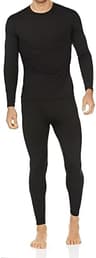
How to choose a base layer for deer hunting
Start with a single honest question: do you sit still, or do you cover ground?Almost every base-layer decision flows from it. A layer that keeps you warm on a motionless January sit will have you sweating on a fast walk in — and sweat that soaks into the wrong fabric is exactly how you end up cold later. Match the material and the weight to how you actually hunt, not to the coldest number on the forecast.
Merino wool vs synthetic
Both beat cotton; they just win in different conditions. Merino woolhas an excellent warmth-to-weight ratio, resists odor naturally, and — its best trick — stays warm even when it’s damp, which is why it shines on long, cold, low-movement sits. Its downsides are price and a slower dry time than synthetics. Syntheticswick and dry fast, cost less, and handle abuse well, which makes them the better call for active, sweaty hunts — a still-hunt, a long pack-in, or a warmer day. Their weakness is odor: synthetic fibers hold body smell, so if you’re hunting a wary buck’s nose you’ll want a proper scent-control routine to go with them.
Match the weight to how you hunt
Base layers come in weights — usually described as lightweight, midweight and heavyweight — and heavier is not automatically better. A base layer is thin by design; its warmth comes from managing moisture and adding a trapped-air layer, while the bulk of your insulation should come from the mid and outer layers over it (the same job a gram rating like Thinsulate does in a jacket or boot). A rough guide:
- Lightweight / active: early-season, still-hunting, or anyone who walks in and sweats. Prioritize wicking and dry time.
- Midweight / all-round:the versatile pick for most stand hunts — enough warmth to sit, not so much you overheat on the walk.
- Heavyweight / cold sits: late-season, low-movement sits in real cold, worn under a full insulated system.
If you run cold or hunt the tail end of the season, it’s often smarter to add a heavier mid layer or a warmer jacket over a midweight base than to buy the thickest base layer you can find and cook on the way in.
Odor: the reason wool costs more
Merino resists odor because its fibers slow the growth of the bacteria that make sweat smell, so a wool layer can go multiple hunts between washes and still stay fresher than a synthetic worn once. That matters for two reasons: comfort, and the fact that you are the single biggest source of scent in the woods. Wool won’t make you invisible to a deer’s nose — nothing does — but starting with a low-odor layer is one fewer thing working against you.
Building the base layer into your system
A base layer only works as part of a layered system, and the federal cold-safety advice is the same one experienced hunters give: wear several loose layers rather than one thick one, and above all keep the layer against your skin dry. Loose layers trap warm air and let you shed a layer before you sweat on the walk, then add it back once you’re settled. Wash your base layers with a scent-free, additive-free detergent so you don’t undo the odor advantage — our washing guide covers exactly how.
The base layer also sets up everything above and below it. Pair it with the right cold-weather jacketfor the shell and mid of the system, and don’t forget the extremities — cold feet end more sits than cold torsos, so read keeping your feet warm and treat your socks as a base layer too.