Trail cameras · Head to head
Tactacam Reveal vs SPYPOINT Flex
The two cellular trail cameras deer hunters ask about most, compared on cost, connectivity and who each one actually suits.
How this is funded:we earn a commission if you buy through our links, at no extra cost to you. It never changes which product we recommend, and we’ll tell you plainly when to skip one. Full disclosure.
These are the two cellular trail cameras deer hunters ask about most, and the honest answer is that they’re aimed at slightly different buyers. Tactacam’s Reveal line is built around dependable multi-carrier connectivity and a feature set for hunters who’ve accepted they’ll pay for a plan. SPYPOINT’s Flex is the camera to reach for if you want to try cellular without committing to a monthly bill, thanks to its free photo tier. Below is how they line up, and how to choose.
Best for connectivity
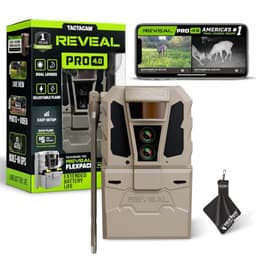
Tactacam Reveal Pro 4.0
Cellular scouting on any carrier
- Connectivity
- Cellular (multi-carrier LTE, auto-carrier selection)
- Flash
- Selectable no-glow (80 ft) or low-glow (96 ft) infrared
- Ongoing cost
- Data plan required; no activation fee
Price as of October 20, 2026. #ad How we’re funded
Best for a free start
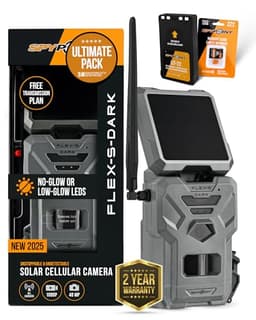
SPYPOINT Flex-S Dark
Trying cellular without a monthly bill
- Connectivity
- Cellular (auto carrier-select) + solar
- Flash
- Selectable no-glow or low-glow IR (100 ft)
- Ongoing cost
- Free plan (~100 photos/mo); paid plans for more
Head-to-head
| What matters | Tactacam Reveal | SPYPOINT Flex |
|---|---|---|
| Connectivity | Multi-carrier LTE, auto-selects best network | Auto carrier-select LTE |
| Free plan | No standing free photo tier | Yes — limited free photos per month |
| Flash | Selectable no-glow (80 ft) or low-glow (96 ft) | Selectable no-glow or low-glow on the “Dark” model |
| Power | Batteries / rechargeable / solar-ready | Integrated solar on this model |
| Best for | Hunters who’ll pay for reliable delivery | Trying cellular without a monthly bill |
Who should buy which
Buy the SPYPOINT Flexif you’re new to cellular and want to learn the app before you pay, or you have a slow trail the free tier can cover. The integrated solar means you rarely touch batteries, which suits a set-and-forget camera. Its limitation is the same as its selling point: the free tier fills up fast on a hot spot, and heavy users will end up on a paid plan anyway.
Buy the Tactacam Revealif reliable delivery on rural ground matters more to you than a free tier, and you’ve accepted a plan is part of running a cellular camera. The multi-carrier LTE and GPS theft-tracking are the kind of features that justify paying, especially if the camera lives somewhere you can’t easily check.
And if neither the plan nor the app appeals, the real question might be whether you want cellular at all. A no-subscription SD-card cameradoes the same scouting with no recurring cost — the trade is that you have to walk in to see the photos.
Frequently asked questions
Is Tactacam or SPYPOINT better for deer hunting?
Neither is universally better. Tactacam's Reveal line leans toward reliable multi-carrier connectivity and features for hunters who'll pay for a plan; SPYPOINT's Flex is known for a free photo tier that lets you try cellular without a monthly bill. Pick on whether you want the free tier or the connectivity.
Does SPYPOINT really have a free plan?
Yes — SPYPOINT offers a limited free photo tier that's genuinely usable for a slow trail or a first camera. Heavy use on an active spot will exceed it, so budget for a paid plan if you run cameras hard.
Which has better connectivity?
Tactacam's Reveal cameras are built around multi-carrier LTE that finds the best available network automatically, which helps on rural ground. SPYPOINT also auto-selects a carrier. Both depend on signal at the tree — check coverage on your property before relying on either.
Do both need a subscription?
Both are cellular, so both need a data plan to send photos — SPYPOINT just includes a free tier to start. If you don't want any recurring cost, look at no-subscription SD-card cameras instead.
Sources
- National Deer Association — Find Next Season's Buck in Last Season's Trail-Cam Photos — NDA on reading trail-camera data to pattern deer movement and bedding-to-food travel (accessed July 22, 2026)
- National Deer Association — Nonprofit deer & habitat conservation organization; hunter education and research (accessed July 22, 2026)
Keep reading
Best cellular trail cameras
The full cellular roundup, including both of these and a budget pick.
See the picksWhat cellular cameras really cost
The plan math that decides which of these is cheaper for how you'll use it.
See the cost breakdownNo-subscription trail cameras
Don't want a plan at all? The SD-card cameras that cost nothing to run.
See the alternativesHow to set up a trail camera
Placement and settings that fill the card with bucks, on either brand.
Read the guide