Tree stands · Comparison
Hang-On vs Climbing Tree Stand
The two mobile stand styles compared — which trees each works on, how each gets you up, and the safety point that decides more than the marketing does.
How this is funded:we earn a commission if you buy through our links, at no extra cost to you. It never changes which product we recommend, and we’ll tell you plainly when to skip one. Full disclosure.
Hang-on and climbing stands are the two mobile ways to hunt whitetails from a tree, and hunters argue about them like it’s a matter of taste. It isn’t — it’s mostly a matter of what trees you hunt. A climbing stand is faster and fully self-contained, but it only goes up a clean, straight trunk. A hang-on will hunt almost any tree, but you carry a separate way up. Get that one distinction right and the rest of the decision falls into place.
Climbing stand pick
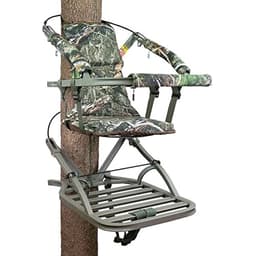
Summit Treestands Viper SD
Mobile hunters on climbable timber
- Type
- Climbing stand
- Weight capacity
- 300 lb
- Best tree
- Straight, branch-free trunks
Price as of September 21, 2026. #ad How we’re funded
Hang-on stand pick
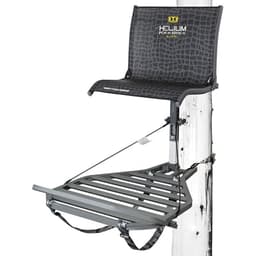
Hawk Helium Kickback XL
Comfortable lock-on hunting on any tree
- Type
- Hang-on / lock-on stand
- Weight capacity
- 300 lb
- Best tree
- Almost any tree (with climbing sticks)
Price as of September 21, 2026. #ad How we’re funded
How each one gets you up the tree
A climbing standcomes in two pieces — a seat and a foot platform — that both clamp around the trunk. You sit to lift the platform with your feet, stand to raise the seat, and “inchworm” your way up. Nothing is left on the ground and nothing is pre-hung. It’s the definition of walk-in, hunt-now mobility — but it depends entirely on the tree cooperating with a two-point grip the whole way up.
A hang-on stand is just a platform and seat that you fix to the tree at hunting height. It has no way up built in, so you bring climbing sticksor screw-in steps and a lineman’s belt: you climb, hang the stand, step onto it, and clip in. It’s a few more steps and a bit more gear, but it frees you from needing a perfect tree — you can hang on a crooked, leaning or branchy trunk a climber would flatly refuse.
Which trees each one suits
This is the whole ballgame. A climber needs a straight, branch-free trunk of the right diameter for the full height you plan to climb — a clean pine, poplar or maple with no low limbs. On leaning, crooked, fat, skinny or heavily-branched trees it simply won’t go, and forcing it is how people get hurt. In a lot of mature hardwoods, cedar swamps and thick cover, genuinely climbable trees are the exception, not the rule.
A hang-on has no such pickiness. With sticks, it’ll hunt almost any tree— the gnarled oak on the bench, the double-trunk on the field edge, the leaner over the creek. If your best sign is nowhere near a climbable tree, a hang-on isn’t a compromise, it’s the only one of the two that can hunt the spot at all. The honest test is to walk your ground and count the clean, straight trunks near the deer movement you actually want to hunt.
The honest trade-offs
| Factor | Climbing stand | Hang-on stand |
|---|---|---|
| Trees it works on | Only straight, branch-free trunks | Almost any tree, with sticks |
| Way up | Self-contained — climbs itself | Needs separate sticks or steps |
| Weight & pack size | Heavier — one bulky pack | Stand is light; sticks add weight |
| Setup speed & noise | Fast once learned; climb can be noisy | Slower to hang; quiet if practiced |
| Comfort | Padded seat, room to move | Varies; reclining models are excellent |
| Mobility | Excellent on the right trees | Excellent, and on more trees |
| Cost | All-in-one price | Stand is cheaper; add sticks to compare |
Weight, noise, comfort and cost
On weight, a full-size climber bundles the seat, platform and climbing mechanism into one pack, which is comfortable to carry but heavy overall. A lightweight hang-on plus a compact set of sticks can carry lighter — but only if you actually choose light sticks, so compare the whole hang-on-plus-sticks kit against the specific climber, not the bare platform.
On setup speed and noise, a climber is fast once the motion is learned, but the climb itself — metal on bark, a body shifting — can be loud if you’re rushed or rusty. A hang-on is slower to set the first time and rewards practice, but a hunter who has drilled the routine can hang one quietly. Both are noisiest in the dark on opening morning, which is exactly why you rehearse either at home first.
On comfort, the two are closer than people assume. A good climber has a padded seat and room to stand and shift. A modern hang-on with a reclining backrest can be more comfortable than a bare lock-on and easily rivals a climber for a long sit. On cost, remember the hidden line item: a hang-on’s lower sticker price isn’t the real price until you add the sticks it needs to get you off the ground.
Safety decides more than the stand style does
Here’s the part that outranks every spec above. Across a hunting lifetime, a large share of tree-stand hunters will fall, and the falls cluster not in the seat but during the climb, the transition on and off the platform, and setup. That’s true of a climber and a hang-on alike — the risk lives in the movement, and both styles ask you to move at height.
So the safety answer isn’t “pick the safer stand” — it’s wear a full-body harness and stay attached to the tree from the ground upwith either one. Use a lineman’s belt on the climb and a lifeline on the trunk so you’re never unclipped while your feet are off the ground. Haul your bow or firearm up on a rope after you’re seated and tied in. Do that and both stands are safe; skip it and neither is. Our safety and harness guide covers the full system.
So which should you hunt?
Choose a climbing standif your ground holds plenty of straight, branch-free trees near your sign, you want to walk in and be at height fast, and you like a setup that leaves nothing behind. On the right timber it’s hard to beat for run-and-gun hunting.
Choose a hang-onif your best trees are crooked, leaning or branchy, if you hunt spots a climber can’t touch, or if you want the flexibility to hunt more of your property. Paired with good sticks and a reclining seat, it hunts almost anywhere and gives up little in comfort. Plenty of serious hunters own both and pick per spot — and if you’re still torn, that’s often the honest answer.
General guidance, not legal or safety advice. Hunting regulations vary by state and change every year — always verify seasons, legal equipment and requirements with your own state wildlife agency before you hunt. Wear a full-body harness and stay attached to the tree from the ground up whenever your feet leave the ground.
Frequently asked questions
Is a hang-on or a climbing stand better?
Neither is universally better — your trees decide. A climber is faster and fully self-contained but only works on straight, branch-free trunks. A hang-on paired with climbing sticks is a little slower to set but hunts almost any tree. If your ground has clean, straight trees near your sign, a climber shines; if it doesn't, a hang-on will hunt far more of it.
Which is safer, a hang-on or a climbing stand?
Both are safe when used correctly, and both share the same real risk: most falls happen during the climb and setup, not while seated. That means the deciding factor isn't the stand style — it's wearing a full-body harness and staying attached to the tree from the ground up, every hunt, with either one.
Do you need climbing sticks for a hang-on stand?
Yes. A hang-on has no way up built in — you carry climbing sticks or screw-in steps and a lineman's belt to hang it and reach height. A climbing stand is the exception; it's self-contained, but only on trees straight and clean enough for it to grip.
Which is lighter to pack in?
It varies by model, but a lightweight hang-on plus a compact set of sticks often carries lighter than a full-size climber, which bundles the seat, platform and climbing mechanism into one heavy pack. If minimum weight is the goal, weigh the specific hang-on-plus-sticks combo against the climber you're considering.
Sources
- National Deer Association — Treestand Accidents: Can We Stop the Insanity? — NDA on the leading causes of treestand falls and the case for a harness on every hunt (accessed July 22, 2026)
- Tree Stand Safety Awareness Foundation — Industry safety foundation tracking treestand-fall statistics and the ABCs of safety (accessed July 22, 2026)
Keep reading
Best climbing tree stands
Our top climbers for the mobile hunter — and the trees they will and won't work on.
See the climber picksBest tree stands, saddles & blinds
The top pick in every style, from climbers to hang-ons to ground blinds.
See all the picksClimbing sticks guide
The other half of a hang-on setup — how to get up quietly and safely.
Read the guideTree-stand safety & harness guide
The fall-arrest basics that matter more than which stand style you pick.
Read the safety guide