Bows · Fit
How to Measure Draw Length for a Compound Bow
Wingspan divided by 2.5 gets you close in about thirty seconds. Knowing whether the number is right is the harder half, and almost every self-taught archer is shooting a bow set an inch too long.
How this is funded:we earn a commission if you buy through our links, at no extra cost to you. It never changes which product we recommend, and we’ll tell you plainly when to skip one. Full disclosure.
Measure your wingspan fingertip to fingertip and divide by 2.5. A 70-inch wingspan gives a 28-inch draw length. That takes thirty seconds and gets most people within half an inch, which is close enough to shop with and not close enough to stop thinking about.
The reason to care is that draw length is the one bow specification where being wrong quietly costs you accuracy forever. Draw weight announces itself — if it is too heavy you shake, and you know. An over-long draw length does not announce anything. It just prevents you from ever building a consistent anchor, and the archer concludes they are bad at shooting.
The wingspan method, and why you must not stretch
Stand with your back flat against a wall, arms out to the sides at shoulder height, palms facing forward. Have someone measure in inches from the tip of one middle finger to the tip of the other, then divide by 2.5.
The one instruction that matters more than the arithmetic: stand relaxed. The natural instinct when someone puts a tape measure on you is to reach, and every inch of reach becomes 0.4 inches of draw length you do not have. Roll your shoulders back to the wall, let your arms hang level, and do not push your fingertips at anything. If your two measurements differ, take the shorter one.
Confirming it at full draw
The tape measure gives you a number. Your body tells you whether the number is right, and there are four checkpoints at full draw:
- Bow arm straight but soft. Not locked, not hyper-extended, elbow rotated slightly so the inside of the forearm is out of the string’s path.
- A consistent anchor. Your release hand should land against the same spot on your jaw or cheek every single time without you hunting for it.
- String touching the tip of your nose. Lightly, as a reference point. If you have to push your head forward to make contact, the draw is long.
- Draw elbow in line with the arrow. Not flared high, not collapsed behind you.
If you are getting string slap on your forearm, the draw is almost certainly long — people usually treat that as a grip problem and buy an arm guard, which is treating the symptom. Come down half an inch, shoot again, and keep going until the anchor lands by itself.
Err short, not long
If you are between two settings, take the shorter one. The cost of a slightly short draw is a little arrow speed — roughly 10 feet per second per inch, which is the same reason IBO speed ratings are quoted at a standard draw length and weight, and why a 28-inch archer will never see the number printed on a bow rated at 30.
That is a trade worth making every time, because what a slightly long draw costs is the anchor, and the anchor is where accuracy comes from. It also matters less than it sounds for whitetail hunting: most deer are shot inside 30 yards, and the limiting factor at that distance is where the arrow goes rather than how fast it gets there. Our draw weight guide makes the same argument about poundage, and the energy you need is not in short supply with any modern compound.
One genuine number to respect at the arrow end: the Pope & Young Club’s equipment definitions set a 300-grain minimum total arrow weight, which is a sensible floor whether or not you ever enter anything.
Draw length changes your arrow, too
Draw length determines how long your arrows need to be, and arrow length is one of the two axes on every spine chart along with draw weight. So a half-inch change in draw length is not just a bow adjustment — it can move you into a different shaft.
Easton’s own guidance on spine is a good reminder of how many variables are in play: point weight, insert weight, fletching and bow speed all change the spine a setup needs, on top of length and poundage. The same maker recommends 10–15% front-of-center for hunting setups and warns that going past about 20% weakens dynamic spine and destabilizes the arrow at distance. If you adjust your draw length meaningfully, re-check the arrow rather than assuming. Our guide to choosing hunting arrows works through spine, length, FOC and total weight together, and our arrow picks cover the shafts worth shooting.
Buy the adjustment range, not the guess
If you are not confident in your measurement — or you are buying for someone who is still growing — the practical answer is to buy a bow whose published draw-length range comfortably contains your estimate, and adjust after a shop confirms it. Ready-to-hunt packages are unusually good at this, and the published ranges differ more than you would expect:
| Bow | Published draw length | Published draw weight |
|---|---|---|
| Bear Cruzer G4 RTH | 14–30 in | 10–70 lb |
| Bear Legit MAXX RTH | 14–30 in | 10–70 lb |
| Diamond Infinite 305 | 19–31 in | 7–70 lb |
| Sanlida Dragon X8 RTH | 18–31 in | 0–70 lb |
| Topoint Starting 31 | 19–30 in | 19–70 lb |
| Bear Species XT RTH | Adjustable (no range published) | Up to 70 lb |
Note the last row. The Species XT is a well-regarded ready-to-hunt bow and its listing publishes only “adjustable, fits most adults” rather than a range — which is fine if you are a 28-inch adult and not fine if you are buying for a 12-year-old. A published range is a specification; “adjustable” is a claim.
Three of these bows publish ranges wide enough to take a child to adulthood, which is the case for buying adjustment rather than buying the exactly right bow today.
19–31 in range
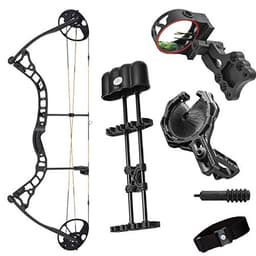
Diamond Archery Infinite 305
Best adjustability for a growing or first-time archer
- Peak draw weight
- 7–70 lb
- Draw length
- 19–31 in
- Speed (IBO)
- Up to 305 fps
Price as of October 6, 2026. #ad How we’re funded
14–30 in range
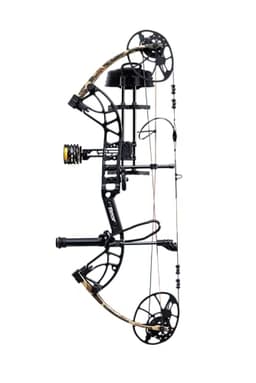
Bear Archery Cruzer G4 RTH
One bow that fits the whole family
- Peak draw weight
- 10–70 lb
- Draw length
- 14–30 in
- Package
- Ready-to-Hunt (sight, rest, quiver, stabilizer)
Price as of October 6, 2026. #ad How we’re funded
14–30 in, 6.25 in brace
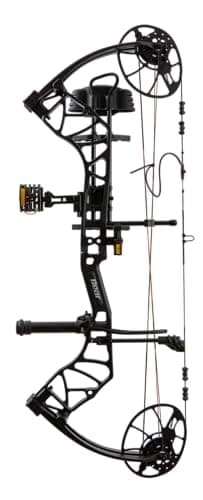
Bear Archery Legit MAXX RTH
Best forgiving package for a first-year hunter
- Peak draw weight
- 10–70 lb
- Draw length
- 14–30 in
- Brace height
- 6.25 in
Also worth confirming before you buy: how the bow adjusts. Many modern compounds change draw length through rotating cam modules that move with an Allen key and no bow press, which is what makes a wide published range usable at home. Others need a press and a shop visit, which turns every half-inch experiment into an appointment. Our guide to choosing a compound bow covers where this sits among the other specifications, and our compound bow picks cover the full range.
Get it checked, then stop thinking about it
The wingspan number is a shopping tool. The real confirmation is somebody watching you at full draw and telling you whether your shoulder, elbow and anchor are where they should be — which a tape measure cannot see and a video of yourself from the side mostly can.
Once it is right, it stays right for years, and every other problem in your shooting becomes diagnosable. That is the real argument for spending thirty minutes on this: draw length is the variable that, left wrong, makes all the others impossible to read.
General guidance, not legal or safety advice. Hunting regulations vary by state and change every year — always verify seasons, legal equipment and requirements with your own state wildlife agency before you hunt. Wear a full-body harness and stay attached to the tree from the ground up whenever your feet leave the ground.
Frequently asked questions
How do I measure my draw length?
Stand with your back to a wall, arms out to the sides at shoulder height and palms forward, and measure fingertip to fingertip across your middle fingers. Divide that wingspan in inches by 2.5. A 70-inch wingspan gives a 28-inch draw length. Stand relaxed rather than stretching, because a stretched measurement is how people end up with a bow set an inch too long — the single most common fit error in compound archery.
What is the average draw length for a compound bow?
Most adult men land between 27 and 30 inches and most adult women between 24 and 27, which is why the ready-to-hunt bows that publish an adjustment range tend to cover roughly 14 to 31 inches between them. There is no normal you should aim for, though — draw length is a consequence of your frame, and shooting a longer one than fits you costs accuracy without buying anything.
How do I know if my draw length is too long?
Four symptoms, and most over-drawn archers have at least two. Your bow arm locks out or hyper-extends instead of staying straight and soft. Your head pushes forward to meet the string instead of the string coming to a consistent anchor. Your anchor drifts behind the jaw and changes shot to shot. And you get string slap on the inside of your forearm, because an over-extended bow arm rotates the elbow into the string's path. Come down half an inch at a time and re-check.
Is it better to have a draw length too long or too short?
Too short, clearly. A slightly short draw costs a small amount of arrow speed and nothing else — you still get a repeatable anchor and a relaxed bow arm, which is where accuracy comes from. A slightly long draw costs you the anchor itself, invites string slap, and builds a collapse into the shot that is hard to unlearn. Target archers often deliberately shoot a touch short for exactly this reason.
Does draw length affect arrow speed?
Yes, and the rule of thumb is roughly 10 feet per second per inch of draw length, which is why bow speed ratings are quoted at a standard draw length and weight. Two things follow. First, a 28-inch archer will never see the IBO number printed on a bow rated at 30 inches, and that is normal rather than a defect. Second, the speed you lose by setting your draw correctly is far cheaper than the accuracy you lose by setting it long.
Does draw length change my arrow spine?
Indirectly but importantly, because draw length sets how long your arrows need to be, and arrow length is one of the two axes on every spine chart along with draw weight. Easton's own guidance on spine is a useful reminder of how many variables move the answer: point weight, insert weight, fletching and bow speed all change the spine a setup needs. So if you change your draw length by more than half an inch, re-check your arrow selection rather than assuming the old shafts still fit.
Can one compound bow fit a growing kid and an adult?
Some can, and the specification to look for is the published draw-length range rather than the marketing. Two of the bows on this page publish a 14-to-30-inch adjustment range with a 10-to-70-pound draw weight, which genuinely spans a young shooter to a full-sized adult. Bows that publish a 19-to-31-inch range cover a teenager upward but not a small child. Check the published range against your measured number with an inch of margin on each side.
Do I need a bow press to change draw length?
It depends on the bow. Many modern ready-to-hunt compounds adjust draw length through rotating modules on the cam that change with an Allen key and no press, which is the feature that makes a wide published range actually usable at home. Others require a press and a shop visit. If you expect to adjust — because you are buying for a growing archer, or because you are not confident in your measurement yet — confirm the adjustment method before you buy, not after.
Sources
- Easton Archery — Spine Considerations for Bowhunters — How spine is measured (an 880-gram load across 28-inch supports, the deflection in inches becomes the rating) and why point weight, insert weight, fletching and bow speed all change the spine a setup needs (accessed August 19, 2026)
- Easton Archery — FAQs About Arrow F.O.C. (Front of Center) — Easton's recommendation of 10-15% FOC for hunting setups, and its warning that FOC past about 20% weakens dynamic spine and destabilizes the arrow at distance (accessed August 19, 2026)
- Pope & Young Club — Equipment Definitions — Bowhunting equipment standards, including the 300-grain minimum arrow weight (accessed July 22, 2026)
- Bowhunting.com — How Far Should You Shoot With a Crossbow? — On ethical crossbow range for whitetail and how energy drops downrange (accessed July 22, 2026)
Keep reading
How to choose a compound bow
Where draw length fits alongside draw weight, brace height and package value.
Read the guideWhat draw weight do you need for deer?
The other half of bow fit, and why more poundage than you can shoot well is a mistake.
Read the guideBest compound bows for beginners
Ready-to-hunt packages with the widest published adjustment ranges.
See the picksHow to choose hunting arrows
Draw length sets arrow length, and arrow length is half of every spine chart.
Read the guide