Clothing · Head to head
Merino vs Synthetic Base Layers
Wool locks odor inside the fiber and keeps insulating when damp. Synthetic dries faster, costs less and does not wear out. Which trade matters depends on how far you walk and how long you sit.
How this is funded:we earn a commission if you buy through our links, at no extra cost to you. It never changes which product we recommend, and we’ll tell you plainly when to skip one. Full disclosure.
The base layer is the only piece of clothing touching your skin for the whole hunt, which makes it the layer that decides whether the rest of your system works. Get it wrong and every jacket above it is compensating for a wet, cold, smelly foundation. There are two materials worth considering, they fail in opposite directions, and the right answer genuinely depends on the kind of hunting you do.
Merino wool
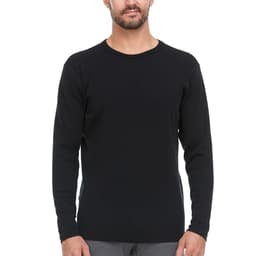
Minus33 Midweight Merino Wool Crew
Scent-conscious cold-weather stand sits
- Material
- 100% merino wool
- Weight
- Midweight
- Style
- Long-sleeve crew top
Price as of October 3, 2026. #ad How we’re funded
Synthetic
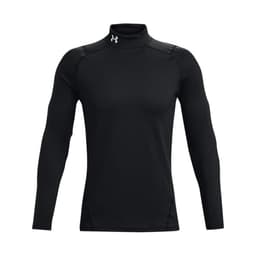
Under Armour ColdGear Armour Mock
Hunters who move and sweat
- Material
- Synthetic (ColdGear dual-layer knit)
- Fit
- Fitted mock neck
- Weight
- Not published
What merino does better
Odor, by a wide margin
This is the reason wool dominates hunting base layers specifically, as opposed to general outdoor clothing. The Woolmark Company’s research summary is specific: wool binds odor compounds inside the fiber, where bacteria do not thrive, releasing them mainly during washing rather than accumulating on the surface. In a New Zealand assessor study, unwashed wool fabrics retained about 66% less body-odor intensity than polyester and 28% less than cotton.
For a hunter this matters twice. It matters over a multi-day hunt where you cannot wash anything and are re-wearing the same layer. And it matters for the animal you are hunting: deer navigate by smell above all else, and a synthetic base layer that has gone sour by day three is a scent source you are carrying into your own stand. Wool does not make you scent-free — nothing does — but it removes one avoidable source.
Moisture handling when you stop moving
Wool is hygroscopic: it absorbs water vapor into the fiber itself. Woolmark cites wool absorbing roughly twice the water vapor of cotton and around thirty times that of polyester. The practical effect is that wool pulls moisture off your skin and holds it inside the fiber, so the surface against you feels dry even when the garment is carrying water.
That is exactly the whitetail hunter’s situation. You generate heat and sweat walking to the stand, then stop dead and produce no heat for four hours. A synthetic that wicked moisture to its outer surface now has a damp layer sitting against you with no body heat to drive it off; wool holds it internally and keeps insulating. This is the whole reason wool has a reputation for being “warm when wet”.
What synthetic does better
Drying speed
Polyester and polypropylene barely absorb water at all — they move it along the surface and evaporate it. If you are moving continuously and generating heat, a synthetic will dry on your body faster than wool will. For still-hunters, spot-and-stalk hunters and anyone doing a genuinely hard walk-in, that is a real advantage.
Durability
Merino is a fine fiber and it wears out. Elbows, heels and anywhere a pack strap rubs will go first, and pure merino garments do not last as long as synthetic ones for the same money. This is why so many good hunting base layers are merino-dominant blends with nylon reinforcement — a sensible engineering compromise rather than a cost-cutting one.
Price
A synthetic base layer set commonly costs a third to a half of a comparable merino one. If you are outfitting from scratch and have to choose between one merino top and a complete synthetic top-and-bottom set, the complete set is the better hunting decision. A base layer only on your torso is half a system.
Which to buy for how you hunt
- Stand hunter, short walk, long sit, multi-day trips. Merino. The odor advantage over several days and the damp-but-still-warm behavior when you stop moving are both aimed squarely at your situation.
- Public-land hunter walking miles, moving all day. Synthetic, or a merino blend. Drying speed and durability matter more when you are generating heat continuously and dragging through brush.
- Buying your first set on a budget. Synthetic, top and bottom. A complete system in the cheaper material beats half a system in the better one, and it is not close.
- You sweat heavily. Consider a thin synthetic next to skin under a merino mid layer. You get the fast transport where it matters and the odor control in the bulk of the insulation.
What neither one does
Neither material makes you invisible to a deer’s nose. The National Deer Association’s work on deer senses is unambiguous that smell is the sense that keeps a deer alive, and its guidance on thermals makes the practical point: how air moves through your setup determines whether a deer smells you, far more than what you are wearing does. Wool reduces the odor your clothing generates. It does not stop your scent stream from drifting downwind into a bedding area.
Buy the base layer for warmth, moisture management and multi-day comfort. Then hunt the wind anyway. Our scent control page is honest about which parts of this you can actually influence.
Frequently asked questions
Is merino wool better than synthetic for hunting base layers?
For most whitetail hunting, yes — because of odor. Research summarized by The Woolmark Company found unwashed wool retained roughly 66% less body-odor intensity than polyester in assessor testing, and wool absorbs around thirty times more water vapor than polyester, so it keeps insulating when damp. Synthetics win on drying speed, durability and price, which matters more if you hunt hard and move a lot.
Does merino wool really reduce human scent?
It reduces the odor your clothing generates, which is not the same as making you scent-free. Wool binds odor compounds inside the fiber where bacteria do not thrive, so a wool base layer smells far less after a day of wear than a polyester one. It does nothing about the scent coming off your skin, breath and hair — and no fabric beats playing the wind.
Does merino keep you warm when wet?
It keeps insulating better than synthetics do, but 'warm when wet' oversells it. Wool absorbs moisture into the fiber rather than holding it against your skin, which is why it still feels warm when damp. Genuinely soaked, any base layer is a liability — the real answer is not to sweat through it on the walk in.
How thick should a hunting base layer be?
Base layers are usually sold by fabric weight in grams per square meter. Lightweight for early season or hard walking, midweight for general deer season, heavyweight for sitting still in genuine cold. Buy for how much you move rather than for the temperature — a heavyweight layer on a mile walk means you arrive soaked, which is worse than being slightly cool.
Is merino wool itchy?
Modern merino generally is not. Merino fibers are much finer than the coarse wool people remember, and fineness is what determines whether a fiber prickles against skin. If you have had a bad experience with wool, it was almost certainly a coarser grade than what hunting base layers use.
Can you mix merino and synthetic layers?
Yes, and blends are common because they capture some of both. A merino-dominant blend with nylon reinforcement lasts far longer than pure merino while keeping most of the odor advantage. Layering a synthetic next to skin under a wool mid layer is also a legitimate setup for hunters who sweat heavily.
Sources
- The Woolmark Company — Wool Is Naturally Odor Resistant — Wool absorbs twice the water vapor of cotton and thirty times that of polyester, and a New Zealand assessor study found unwashed wool retained 66% less body-odor intensity than polyester (accessed August 19, 2026)
- CDC / NIOSH — Cold Stress: Cold and Work — Federal cold-safety guidance: dress in several loose layers, keep the base layer dry, and protect the extremities (accessed July 22, 2026)
- National Deer Association — Understanding Deer Senses (Dr. Gino D'Angelo) — NDA research summary on the three senses that keep a deer alive — sight, hearing, and, above all, smell (accessed July 22, 2026)
- National Deer Association — To Beat a Buck's Nose, Remember Thermals — NDA on how wind and thermals carry human scent — why playing the wind beats trusting scent products alone (accessed July 22, 2026)
Keep reading
Best base layers for deer hunting
Our picks in both materials, compared on weight and what each one suits.
See the picksThe deer hunting layering system
How the base layer works with the mid and outer layers — the whole system, in order.
Read the guideBest scent control for deer hunting
What scent products can and cannot do, and where a base layer fits in.
See the picksBest hunting socks
The same wool-versus-synthetic argument, applied to the layer inside your boot.
See the sock picks