Tag & Timber

Hunting boots

Best Rubber Hunting Boots

Scent-free and fully waterproof — the rubber boots that make sense for whitetail, ranked on warmth, fit and season, not marketing.

By Stephen V.Last updated How we pick

For sitting whitetail hunters, rubber is the default boot material for two reasons that matter more than anything on a spec sheet: it’s scent-freeand it’s fully waterproof. A deer’s nose is its best defense, and unlike leather, a rubber upper holds and broadcasts almost no odor — so a careful hunter can walk to the stand without leaving a scent trail the ground reads back to a downwind buck. Cross a wet field, a creek or a swamp edge and rubber keeps your feet dry where a leather boot would soak through.

The trade-off is real and we won’t hide it: rubber breathes poorly and runs heavy, so a rubber boot that’s perfect on a cold stand sit will cook your feet on a long, warm early-season walk. The fix isn’t one magic boot — it’s matching insulation to your season, measured in grams (of Thinsulate-type fill). We rank on that logic below: an all-round default first, then the warmest late-season boot, a do-everything all-season option, and a budget pick that still keeps toes.

If you cover serious miles to your spot, read the honest counterpoint in our rubber vs leather comparisonbefore you buy — for walking hunts, a breathable leather boot is often the smarter call.

How this is funded:we earn a commission if you buy through our links, at no extra cost to you. It never changes which product we recommend, and we’ll tell you plainly when to skip one. Full disclosure.

Quick picks

Ranked on published specs, package value and buyer fit. Select a row to jump to the full write-up. We have not tested these products — here is exactly what we do instead.

#ProductBest forPrice
1
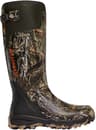
LaCrosse Alphaburly Pro 18"

LaCrosse Alphaburly Pro 18"

The rubber boot most whitetail hunters end up in. Fully waterproof, scent-free rubber over an adjustable neoprene gusset for a snug calf, offered in insulation weights from uninsulated to 1,600 g — so you buy the model that matches your season instead of one compromise boot.

Best overall rubber boot
$114.95 · View on Amazon

Price as of August 7, 2026. #ad How we’re funded

2
Muck Boot Woody Arctic Ice

Muck Boot Woody Arctic Ice

Built for sitting still in the cold. Heavy fleece lining, a thick rubber-and-neoprene body and a Vibram Arctic Grip outsole that bites on ice make this the boot for the late-season stand hunter who isn't walking far but needs to keep toes.

Best for late-season cold
$183.51 · View on Amazon

Price as of August 7, 2026. #ad How we’re funded

3
Muck Boot Wetland

Muck Boot Wetland

The do-everything rubber boot. Lighter and more flexible than the Arctic Ice, with enough warmth for most of the season and Muck's signature comfortable neoprene fit — the boot to own if you buy one pair for wet ground.

Best all-season rubber
$164.32 · View on Amazon

Price as of August 7, 2026. #ad How we’re funded

4
Rocky Sport Pro 1200G

Rocky Sport Pro 1200G

The budget pick that punches up. A waterproof rubber boot with 1,200 g of insulation at a price well under the premium rubber boots — a smart buy for a hunter who wants warm, scent-free feet without spending big.

Best budget rubber
$87.00 · View on Amazon

$154.9944% off

Price as of August 7, 2026. #ad How we’re funded

The picks in full

#1Best overall rubber boot

LaCrosse Alphaburly Pro 18"

The rubber boot most whitetail hunters end up in. Fully waterproof, scent-free rubber over an adjustable neoprene gusset for a snug calf, offered in insulation weights from uninsulated to 1,600 g — so you buy the model that matches your season instead of one compromise boot.

Strengths

  • Scent-free rubber — no leather to hold and broadcast odor
  • Adjustable neoprene gusset dials in the calf fit
  • Sold in multiple insulation weights for early to late season

Trade-offs

  • Rubber boots breathe poorly — hot on warm early-season walks
  • Heavier than a leather boot for long hikes
Height18"
MaterialWaterproof rubber over neoprene
InsulationChoose 0-1,600 g by model
Best forWet ground, scent control

Worth knowing. Insulation is measured in grams (of Thinsulate-type fill): roughly 400-800 g for early season, 1,000-1,600 g for late-season stand sits. More isn't better if you're hiking — you'll sweat.

Specs read from the product listing, on July 22, 2026. “Not published” means the manufacturer does not state that figure.

#2Best for late-season cold

Muck Boot Woody Arctic Ice

Built for sitting still in the cold. Heavy fleece lining, a thick rubber-and-neoprene body and a Vibram Arctic Grip outsole that bites on ice make this the boot for the late-season stand hunter who isn't walking far but needs to keep toes.

Strengths

  • Very warm fleece lining for stationary cold-weather sits
  • Vibram Arctic Grip outsole holds on ice
  • Waterproof rubber-and-neoprene construction

Trade-offs

  • Too warm for early season or long walks
  • Heavy and stiff compared with a leather hiker
HeightTall
MaterialRubber + neoprene, fleece-lined
InsulationHeavy (late-season warmth)
OutsoleVibram Arctic Grip (ice traction)

Worth knowing. Warmth for a stationary hunter comes from insulation plus staying dry; toes go cold from sweat as often as from the air, so don't over-insulate for a boot you'll also walk in.

Specs read from the product listing, on July 22, 2026. “Not published” means the manufacturer does not state that figure.

#3Best all-season rubber

Muck Boot Wetland

The do-everything rubber boot. Lighter and more flexible than the Arctic Ice, with enough warmth for most of the season and Muck's signature comfortable neoprene fit — the boot to own if you buy one pair for wet ground.

Strengths

  • Comfortable stretch-fit neoprene upper
  • Waterproof and scent-free rubber
  • Flexible enough to walk in, warm enough for cool sits

Trade-offs

  • Not warm enough for bitter late-season sits
  • Mid-weight warmth is a compromise at both extremes
HeightTall
MaterialWaterproof rubber + stretch neoprene
InsulationNeoprene (mid warmth)
Best forWet ground across most of the season

Worth knowing. Neoprene provides warmth and stretch but a fixed amount of it — a neoprene boot can't be dialed up for deep cold the way a gram-rated insulated boot can.

Specs read from the product listing, on July 22, 2026. “Not published” means the manufacturer does not state that figure.

#4Best budget rubber

Rocky Sport Pro 1200G

The budget pick that punches up. A waterproof rubber boot with 1,200 g of insulation at a price well under the premium rubber boots — a smart buy for a hunter who wants warm, scent-free feet without spending big.

Strengths

  • 1,200 g insulation handles cold stand sits
  • Scent-free rubber upper
  • Priced well below premium rubber boots

Trade-offs

  • Fit and durability aren't at the premium-brand level
  • Heavy, like all insulated rubber boots
HeightTall
MaterialWaterproof rubber
Insulation1,200 g
Best forCold-weather stand hunting

Worth knowing. 1,200 g of insulation is a late-season number — plenty for sitting in the cold, but too warm for a mild early-season walk-in.

Specs read from the product listing, on July 22, 2026. “Not published” means the manufacturer does not state that figure.

Why rubber for whitetail

Two words: scent and water. Scent control is the through-line of serious whitetail hunting, and your boots spend the whole walk in contact with the ground, laying down the one scent trail you can’t play the wind against. A rubber upper holds far less odor than leather and gives a downwind deer much less to work with. That’s why so many experienced stand hunters own leather boots for scouting and rubber boots for the actual hunt.

The waterproofing is just as practical. Whitetail country is wet — dew-soaked fields at dawn, flooded timber, beaver sloughs, the creek crossing between the truck and the tree. A tall rubber boot is waterproof by construction, not by a coating that wears off, so you walk through all of it and arrive with dry feet. Dry feet aren’t just comfort; on a cold sit, dry feet are warm feet, and wet ones go cold fast no matter how much insulation you bought.

Matching insulation grams to your season

Insulation in a hunting boot is measured in grams— the weight of synthetic fill (Thinsulate is the reference brand) packed into the boot. More grams means more warmth and more bulk. The trap is thinking warmer is always better; it isn’t, because a boot that’s too warm makes your feet sweat, and damp feet get cold. Match the number to how you hunt:

  • Uninsulated to ~400 g— early season and mild days, or any hunt with a real walk in. Enough for cool mornings, cool enough not to sweat you out.
  • ~800 g— the middle of the season and moderate cold, a versatile choice for mixed sitting and short walks.
  • 1,000–1,600 g— late-season stand sits in real cold, when you’re barely moving and need the boot to do the work your body isn’t.

This is why the LaCrosse Alphaburly Pro leads the list: it’s sold across a range of insulation weights, so you buy the exact model for your season instead of forcing one compromise boot to cover them all. If you only buy one pair, size the grams to the coldest sits you actually hunt, and manage warmer days with a thinner sock.

The breathability and weight trade-off

Here’s the honest cost of rubber. It doesn’t breathe like leather with a waterproof-breathable membrane, so heat and sweat vapor have nowhere to go. Stand still in the cold and that’s fine — you want the sealed warmth. But hike a mile in an insulated rubber boot on a 50-degree afternoon and your feet will sweat, then chill once you stop. Rubber boots are also heavier than a comparable leather hiker, which you feel over distance. None of this makes rubber wrong — it makes it a stand hunter’s boot. If most of your hunting is walking, weigh a leather boot instead.

Fit, height and getting the most from rubber

Rubber boots don’t adjust to your foot the way broken-in leather does, so fit and socks carry more of the load. A snug calf (an adjustable gusset helps) keeps the boot from slipping and pumping cold air; a good wool sock manages the moisture rubber can’t vent. Go tall enough for the water and cover you actually cross. And if you’re between an early-season walk and a late-season sit, remember that two different boots almost always beat one boot trying to be both — which is the whole reason we ranked a season-matched lineup rather than crowning a single “best.” Our insulation guide goes deeper on the gram numbers, and our keeping feet warm in the stand piece covers the sock-and-dryness side.

How many pairs do you really need

One pair covers a lot of ground if you buy for your coldest sits and manage warmer days with thinner socks — the do-everything Muck Wetland exists for exactly that hunter. But if your season runs from a warm early bow opener to bitter late-season gun sits, one boot will always be wrong at one end. The honest split is a lighter, lower-gram boot for early season and short walks, and a heavily insulated boot — think 1,000–1,600 g — for the deep-cold sits when you’re barely moving. That’s the logic behind ranking a season-matched lineup rather than crowning one boot: the Alphaburly Pro for its range of weights, the Woody Arctic Ice for the coldest sits, the Wetland as the versatile middle, and the Rocky Sport Pro when the budget is tight but the cold isn’t optional.

Care, durability and when to skip rubber

Rubber boots ask little in return: rinse off mud so it doesn’t dry and crack the flex points, store them somewhere cool and out of direct sun (heat and UV age rubber faster than water ever will), and dry the insides after a wet hunt so the liner doesn’t hold damp into the next sit. A neoprene-and-rubber boot that’s cared for lasts seasons. Just be honest about when rubber is the wrong tool: if a given hunt is mostly walking — scouting, spot-and-stalk, big-woods approaches — the heat and weight of rubber work against you, and a breathable leather boot will serve you better. Buy rubber for the sits and the wet, not for the miles.
Frequently asked questions

Why are rubber boots good for deer hunting?

Two reasons: they're scent-free and fully waterproof. A rubber upper holds far less odor than leather, so it lays down less scent for a deer's nose on the walk in, and it keeps your feet dry through wet fields, creeks and flooded timber. Dry feet also stay warmer on a cold sit, which makes rubber the default boot for stand hunters.

How many grams of insulation do I need in a rubber hunting boot?

Match the grams to your season. Uninsulated to about 400 g suits early season and any hunt with a real walk; around 800 g covers mid-season cold; and 1,000-1,600 g is for late-season stand sits in serious cold. More isn't always better — an over-insulated boot makes your feet sweat, and damp feet get cold.

Are rubber hunting boots good for walking long distances?

Not really. Rubber breathes poorly and runs heavier than leather, so an insulated rubber boot will sweat your feet out and wear on you over miles. Rubber shines on stand sits and wet ground; for walking hunts, a breathable leather boot is usually the better choice.

Do rubber boots really help with scent control?

Yes, within limits. Rubber holds and releases much less odor than leather, so it gives a downwind deer less scent to detect from your ground trail. It's not a substitute for playing the wind and good scent discipline, but boots are the one thing in constant contact with the ground, so the material matters.

Sources

Keep reading