Hunting boots · Comparison
Rubber vs Leather Hunting Boots
Scent-free waterproof rubber against breathable, comfortable leather — the honest trade-offs, so the way you hunt decides the boot.
How this is funded:we earn a commission if you buy through our links, at no extra cost to you. It never changes which product we recommend, and we’ll tell you plainly when to skip one. Full disclosure.
The rubber-versus-leather argument sounds like a preference and plays out like one on hunting forums, but it really comes down to a single question: do you mostly sit, or do you mostly walk?Rubber is scent-free and fully waterproof but hot and heavy. Leather breathes and stays comfortable over miles but holds more scent. Neither is the “better boot” — they’re built for different hunts, and matching the material to how you actually hunt matters more than any single feature.
Rubber pick
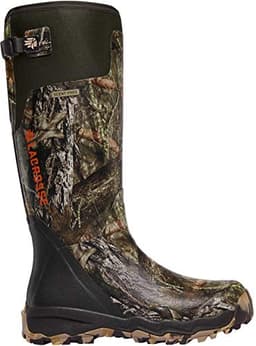
LaCrosse Alphaburly Pro 18"
Scent-conscious whitetail hunting in wet ground
- Height
- 18"
- Material
- Waterproof rubber over neoprene
- Insulation
- Choose 0-1,600 g by model
Price as of September 21, 2026. #ad How we’re funded
Leather pick
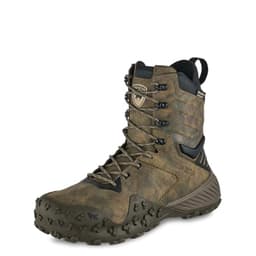
Irish Setter VaprTrek 8"
Early season and hunters who cover ground
- Height
- 8"
- Material
- Leather + nylon, waterproof
- Insulation
- Light / uninsulated (by model)
Price as of September 21, 2026. #ad How we’re funded
The case for rubber
Rubber wins on the two things a stand hunter cares about most. It’s scent-free— a rubber upper holds and broadcasts far less odor than leather, so it lays down less of the one scent trail you can’t play the wind against. And it’s fully waterproof by construction, not by a coating that wears off, so you walk through dew-soaked fields, creek crossings and flooded timber and arrive with dry feet. On a cold sit, dry feet are warm feet, which is a big part of why rubber is the default for stand hunting.
The cost is comfort in motion. Rubber breathes poorly, so heat and sweat have nowhere to go; stand still and that sealed warmth is exactly what you want, but hike in it and your feet sweat, then chill when you stop. Rubber also runs heavier than a leather hiker, which you feel over distance. Rubber is a stand hunter’s boot: best for sits, wet ground and scent control, worst for covering miles.
The case for leather
Leather wins where rubber struggles: on the move. A quality leather boot — usually with a waterproof-breathable membrane like GORE-TEX — breathes, so sweat vapor escapes and your feet stay drier over a long approach. It’s lighter and more supportive underfoot for rough ground, and it molds to your foot as it breaks in, which is why a good leather boot is so comfortable mile after mile. For early season, spot-and-stalk, big-woods walk-ins and anyone who covers ground, leather is the smarter, cooler, less-fatiguing choice.
Its weakness is scent. Leather is porous — it absorbs and releases odor, so it holds more scent than rubber and leaves more of it on your ground trail. Waterproofing also leans on the membrane and the leather’s treatment rather than being sealed by construction, so for standing in water or deep mud, tall rubber is the surer bet. Leather is a walking hunter’s boot: best for early season and miles, weakest for scent control and standing water.
Head to head
| Factor | Rubber | Leather |
|---|---|---|
| Scent control | Scent-free — holds little odor | Porous — holds more scent |
| Waterproofing | Fully waterproof by construction | Waterproof via membrane & treatment |
| Breathability | Poor — seals heat in | Good — vents sweat vapor |
| Weight | Heavier | Lighter for the same height |
| Comfort over miles | Tiring on long walks | Molds to the foot; comfortable |
| Best for | Stand sits, wet ground, scent control | Walking hunts, early season |
Warmth is about grams, not material
A common myth is that rubber is warmer than leather or vice versa. Warmth comes from insulation, measured in grams of synthetic fill (Thinsulate is the reference brand), and both materials come in a range of gram weights. A 1,600 g rubber boot and a well-insulated leather boot can be similarly warm standing still. The real difference is how each keeps you warm: rubber seals heat in for a stationary sit, while leather breathes so your feet stay drier — and dry feet stay warmer — when you’re moving. Match the grams to your coldest sits, and remember that an over-insulated boot on a walking hunt sweats your feet out and backfires. Our insulation guide breaks down the numbers by temperature.
So how you hunt decides
Choose rubberif you mostly sit — stand and blind hunting on wet or muddy ground where scent control is the priority and the walk in is short. It’s the classic whitetail default for good reason.
Choose leatherif you mostly walk — early-season hunts, big-woods approaches, spot-and-stalk, or any day you’ll cover real distance and want a cooler, lighter, more comfortable boot.
And if you hunt both ways across a season, the honest answer is that two pairs beat one: a walking boot for the miles and a rubber boot for the sits. It’s not a cop-out — it’s what most serious whitetail hunters eventually settle on, because no single boot is scent-free, fully waterproof, breathable and light all at once.
General guidance, not legal or safety advice. Hunting regulations vary by state and change every year — always verify seasons, legal equipment and requirements with your own state wildlife agency before you hunt. Wear a full-body harness and stay attached to the tree from the ground up whenever your feet leave the ground.
Frequently asked questions
Are rubber or leather boots better for deer hunting?
Neither is universally better — how you hunt decides. Rubber is scent-free and fully waterproof, which makes it the pick for stand sits, wet ground and scent control. Leather breathes and stays comfortable over miles, which makes it the pick for walking hunts and early season. Many hunters own both and choose by the day.
Do leather hunting boots hold scent?
More than rubber does. Leather is porous and absorbs and releases odor, so it lays down more scent on your walk in than a rubber boot. Good scent discipline helps, but if scent control on the ground trail is a priority — especially on a stand hunt — rubber has the edge.
Are leather hunting boots waterproof?
Many are, thanks to a waterproof-breathable membrane like GORE-TEX, and that membrane lets some sweat vapor escape so the boot breathes. But leather relies on that liner and its treatment rather than being waterproof by construction the way a rubber boot is, so for standing in water or deep mud, tall rubber is the surer bet.
Which is warmer, rubber or leather?
It depends on the insulation, not the material. Both come in a range of gram weights, so a heavily insulated rubber boot and a heavily insulated leather boot can be similarly warm. The bigger difference is use: rubber seals warmth in for stationary sits, while leather breathes better so your feet stay drier — and warmer — when you're moving.
Sources
- 3M — Thinsulate Insulation — Manufacturer reference on Thinsulate synthetic insulation and gram weights (accessed July 22, 2026)
Keep reading
Best rubber hunting boots
The scent-free, waterproof picks for stand sits and wet ground, matched to your season.
See the rubber picksBest hunting boots
The top pick in every category, rubber and leather, from early season to bitter cold.
See all the picksHow to size hunting boots
Get the fit right in either material — room for a wool sock without a sloppy heel.
Read the sizing guideKeeping feet warm in the stand
Why dry beats thick, and how to keep toes through a long, cold sit.
Read the guide