Attractants · Rut tactics
How to Make a Mock Scrape: The Branch Matters More Than the Dirt
Most mock scrapes fail because the hunter built the part a deer does not care about. Here is how to site one, when to start it, what belongs in it, and how to hunt it without burning the spot.
How this is funded:we earn a commission if you buy through our links, at no extra cost to you. It never changes which product we recommend, and we’ll tell you plainly when to skip one. Full disclosure.
Build your mock scrape under an existing overhanging branch, in open ground deer already walk through, weeks before you plan to hunt it — and put a camera on it before you ever sit over it. If you only take one thing from this page, take the branch. The pawed dirt is the part hunters photograph and the part that is easy to make, and it is the less important half of the site.
A scrape is a two-part communication point. The overhanging limb, usually around head height for a standing deer, is where deer deposit scent from the forehead and preorbital glands and work the tip with their mouth. The cleared earth underneath is the visual and olfactory signpost that tells every deer passing at a distance that the branch above is worth checking. Build only the dirt and you have made a bare patch. Build only the branch and you have left the signpost off.
Siting it: visibility, traffic, and your own wind
Three criteria, in this order.
- Deer already go there. A mock scrape does not create traffic, it concentrates traffic that exists. Trail intersections, interior logging roads, field and food-plot edges, benches and saddles all qualify. If you cannot find sign within thirty yards of where you are standing, move.
- It can be seen from a distance. The signpost function only works if deer moving past at forty or eighty yards notice the bare ground. Semi-open cover is ideal: open enough to see, close enough that a mature deer is willing to stand in it in daylight.
- You can hunt it on a wind you will actually get. This is the criterion hunters skip and then regret. Pick the tree first and the scrape second: if there is no wind direction that lets you sit the site without your scent crossing it or the trail deer use to reach it, it is the wrong location no matter how good the branch is.
There is a fourth consideration worth stating because it is the one people get backwards. Deer investigating something interesting tend to check it with their nose before they commit to their eyes. The clearest evidence available on that behavior comes from rattling research rather than scrapes — in Dr. Mickey Hellickson’s three-year study, summarized by the National Deer Association, 60% of responding bucks approached from downwind. That is calling research and we are not going to pretend it is a scrape study, but the behavior it describes is the same one that matters here. Site the scrape so the downwind arc a deer will swing through is still in front of you, not behind you.
Early and late in the day, thermals complicate that. Rising air in the warm part of the day carries your scent up and away; as the ground cools in the evening the current reverses and runs downhill, which can put your scent into exactly the cover you were watching the edge of. Plan the sit around that reversal rather than discovering it.
Making it: less work than you think
Clear the leaf litter down to soil in a patch about two to three feet across, directly under the branch, using a stick or the heel of a boot. That is it. You are not digging a hole; you are exposing bare earth. If anything, err on the side of smaller — deer will enlarge a site they adopt.
If the branch is too high, you can bend and zip-tie a limb down to the right height, or wire a cut branch into position. Both work. What does not work is a perfect bare circle in a place no deer was ever going to walk, which is the most common version of a failed mock scrape.
Wear gloves and keep the visit short. Smell is a deer’s primary defense, and you are standing in the middle of a site you want deer to inspect closely. If you are also hanging a camera on the same trip, do both at once rather than making two intrusions. Our scent control picks cover the sprays and storage that make that routine realistic, and the honest framing is that they are a margin on top of wind discipline rather than a replacement for it.
What to put in it, and the legal check that comes first
A bare scrape under a good branch frequently gets worked with nothing added. If you want to accelerate that, there are three honest options, and only one of them is really about chemistry.
Daylight delivery
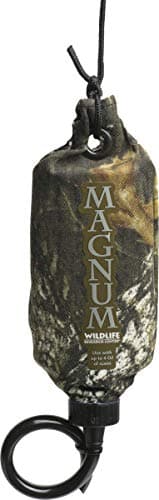
Wildlife Research Center Magnum Scrape Dripper
Turning a nocturnal scrape into a daylight scrape
- Type
- Scrape dripper (refillable)
- Release
- Temperature-driven, daytime
- Capacity
- Not published
Price as of October 6, 2026. #ad How we’re funded
Scrape-specific scent
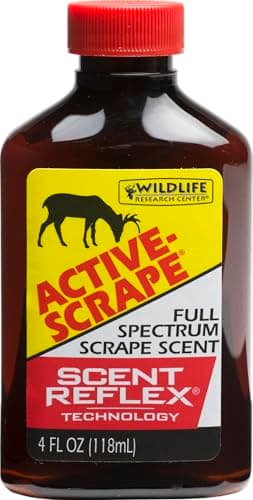
Wildlife Research Center Active-Scrape Scent, 4 oz
Building and maintaining a mock scrape you can hunt over
- Type
- Scrape scent
- Volume
- 4 oz
- Season
- Pre-rut through rut
Cover scent for you
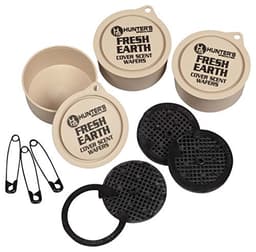
Hunter's Specialties Fresh Earth Cover Scent Wafers, 9-pack
Masking, not attracting — and only as a supplement to wind discipline
- Type
- Cover scent wafers
- Quantity
- 9 wafers, 3 storage containers
- Scent
- Fresh earth
The dripper is the one we would buy first, and not because of what is in the bottle. A temperature-driven dripper releases during warm daylight hours and stops at night, which means the site is being refreshed during the hours you want deer visiting it and is being refreshed without you walking in. That is the only way to build a daylight pattern without polluting the spot every few days.
Check your state before you buy a urine-based product. A number of states restrict or ban natural cervid urine on disease grounds, and synthetic alternatives are generally unaffected. The underlying concern is not hypothetical: the National Deer Association’s work on baiting and feeding explains how concentrating deer at a site increases direct and indirect contact and the spread of diseases including chronic wasting disease, and CDC guidance for CWD areas is to wear gloves when field-dressing, bone out the meat, minimize handling of brain and spinal tissue, and consider testing before eating. Our guide to attractant legality explains how to find the authoritative current rule for your state, and our deer scent picks flag which products are synthetic and which are not.
Run it as a camera site before you run it as a stand site
The most valuable thing a mock scrape produces in its first season is usually information rather than a shot. A camera on the site tells you which deer are using the area, how many, and — most usefully — at what hour. A scrape that is only worked between midnight and four in the morning is telling you something true and specific, and it is not to sit over it at dawn.
Two cautions on reading those pictures. The National Deer Association’s trail-camera work is a good corrective to over-interpreting them: a camera tells you what used a single point, not what lives on a property. And a scrape site in particular concentrates deer tightly, which is exactly the condition the baiting-and-disease research above is concerned with — one more reason to keep the site clean of food. Our camera setup guide covers placement and settings, and our guide to reading trail camera photos covers what the pictures can and cannot support.
Timing: the window is more predictable than the folklore
Mock scrapes get worked year-round, but the stretch where one produces a daylight encounter is the back of the pre-rut through the chase phase, when bucks are moving in daylight and checking sign aggressively.
That window is more repeatable than hunting lore suggests. Nine years of New Brunswick fetal data covering more than 1,600 does found the mean conception date falling inside a 7-day window every single year, and inside the same 4-day window in eight of nine, because breeding is driven by photoperiod rather than by weather or moon phase. Practically, that means the dates that were good on your ground last year are the dates to plan around this year.
The rattling research cited earlier adds a time-of-day signal worth borrowing: 54% of responses came between 7:30 and 10:30 in the morning against 16% at midday, and loud sequences drew nearly three times the responses of quiet ones. Again, that is calling data rather than scrape data — but if you are pairing a call with a scrape sit, the morning is where the evidence points. Our deer call picks cover the grunt tubes, bleat cans and rattle bags, and our whitetail season checklist lays out how the rest of the kit changes across the phases.
The mistakes that kill a mock scrape
- No licking branch. The single most common failure. Bare dirt with nothing above it is a signpost pointing at nothing.
- Built where you can park, not where deer walk. Convenience is not a siting criterion.
- Checked every few days. Each visit is a scent deposit on a site you want deer to inspect nose-first. Use a camera and a dripper so you do not have to.
- Hunted too early and too often. A scrape you sit four times in October is a scrape deer stop using in November. Save it.
- No wind plan. If the only way to sit the site is on a bad wind, you will sit it on a bad wind, because the deer sign will tempt you. Pick the location so that temptation never arises.
General guidance, not legal or safety advice. Hunting regulations vary by state and change every year — always verify seasons, legal equipment and requirements with your own state wildlife agency before you hunt. Wear a full-body harness and stay attached to the tree from the ground up whenever your feet leave the ground.
Frequently asked questions
How do you make a mock scrape?
Find an existing branch hanging about four to five feet over open ground, clear the leaf litter under it down to bare soil in a patch two or three feet across, and leave it alone. That is the whole physical job. The branch is the part deer actually interact with — they work it with their forehead, preorbital glands and mouth — and the pawed dirt below is the visual signpost. A cleared patch with no branch above it is far less likely to be worked.
Do mock scrapes really work?
They work reliably as camera sites and inconsistently as hunting sites, and it is worth separating the two. A well-sited mock scrape under a good licking branch will usually be worked by multiple deer, including does and young bucks, which makes it one of the best inventory tools available. Whether it produces a daylight shot opportunity depends on where it is, how pressured the ground is, and whether you hunted it at the right point in the season.
When should I start a mock scrape?
Earlier than most hunters do. Establishing the site weeks before you intend to hunt it gives deer time to find it and start using it on their own schedule rather than yours, and it means your intrusion to build it has long since faded. Timing the hunt itself is more predictable than folklore suggests: nine years of fetal data from more than 1,600 does found the mean conception date falling inside the same 7-day window every year, because breeding is driven by photoperiod rather than weather or moon phase — so the productive window repeats on roughly the same calendar dates on your ground annually.
Where is the best place to put a mock scrape?
Somewhere deer already travel, where the site is visible from a distance, and where you can hunt it on a usable wind. Field edges, interior logging roads, trail intersections, benches and food-plot edges are all good. The two common mistakes are putting it where it is easy to walk to rather than where deer are, and putting it in thick cover where nothing can see it. Pick the spot from the wind backwards: if there is no wind direction that lets you sit it without your scent crossing the site, it is the wrong spot.
What should I put in a mock scrape?
Often nothing. A bare patch under a good branch gets worked on curiosity alone. If you do add something, the three realistic options are a scrape-specific scent, a dripper that releases scent during daylight hours while you are not there, and a cover scent used on yourself rather than in the scrape. Check your state's rules first — natural cervid urine is restricted or banned in a number of states on disease grounds, and the label will tell you whether a product is synthetic.
Is deer urine legal to use in a mock scrape?
It depends on your state, and this is worth checking rather than assuming. A number of states restrict or ban natural cervid urine products because of disease-transmission concerns, while synthetic lures are generally unaffected. The underlying concern is real: the National Deer Association's work on baiting and feeding explains how concentrating deer at a site increases both direct and indirect contact and the spread of diseases including chronic wasting disease. Read your own agency's current rules for the season you are hunting.
Should I use a scrape dripper?
It is the one product in this category whose value is structural rather than chemical. A temperature-driven dripper releases during the day and shuts off at night, which does two things: it refreshes the site during the hours you want deer visiting it, and it does so without you walking in to pour something out. The scent matters less than the fact that the site stays active while you are absent — which is also the only way to build a pattern without polluting the spot.
How often should I check or refresh a mock scrape?
As rarely as you can stand. Every visit leaves scent on the site and on the trail in, and smell is the sense that keeps a deer alive. A camera on the scrape means you can monitor it without visiting it; a dripper means you can refresh it without visiting it. If you must walk in, do it in the middle of the day, in boots you have not worn elsewhere, and get out quickly rather than standing there studying the tracks.
Can I make a mock scrape on public land?
Check the rules for the specific property first. Some public units restrict or prohibit baiting and attractants, some restrict trail cameras, and the definition of what counts as an attractant is not uniform. A bare scrape with nothing added to it is a different proposition legally from a scrape with a urine product in it, so read the current regulations for the unit rather than generalizing from your home state. Our guide to attractant legality explains how to find the authoritative rule.
Sources
- National Deer Association — Understanding Deer Senses (Dr. Gino D'Angelo) — NDA research summary on the three senses that keep a deer alive — sight, hearing, and, above all, smell (accessed July 22, 2026)
- National Deer Association — To Beat a Buck's Nose, Remember Thermals — NDA on how wind and thermals carry human scent — why playing the wind beats trusting scent products alone (accessed July 22, 2026)
- National Deer Association — No Link Between Moon Phase and Rut Peak — Nine years of New Brunswick fetal data from over 1,600 does: the mean conception date fell inside a 7-day window every year and inside the same 4-day window (November 26-29) in eight of nine; breeding dates are driven by photoperiod and are consistent year to year within a population, regardless of moon phase (accessed August 24, 2026)
- National Deer Association — 10 Tips for Rattling More Bucks Using Science — Dr. Mickey Hellickson's three-year rattling research: a 65% overall response rate (73% for collared bucks), 54% of responses between 7:30 and 10:30 a.m. against 16% midday, better response as temperature and wind dropped and cloud cover rose, greater than one buck per attempt during peak rut, 60% of bucks approaching from downwind, loud sequences drawing nearly three times the responses of quiet ones, and ground-level hunters missing 57% of the responses elevated observers saw (accessed August 24, 2026)
- National Deer Association — Can Baiting and Feeding Really Spread Deer Diseases Faster? — NDA on how concentrating deer at bait and feed sites increases direct and indirect contact and the spread of diseases including CWD (accessed August 7, 2026)
- CDC — About Chronic Wasting Disease (CWD) — Federal guidance: wear gloves when field-dressing, bone out the meat, minimize handling of brain and spinal tissue, and consider testing before eating meat from CWD areas (accessed August 7, 2026)
- National Deer Association — Find Next Season's Buck in Last Season's Trail-Cam Photos — NDA on reading trail-camera data to pattern deer movement and bedding-to-food travel (accessed July 22, 2026)
Keep reading
Best deer scents and lures
Estrus, scrape and cover scents compared — and the urine restrictions to check first.
See the picksAre deer attractants legal?
How to find the authoritative rule for your state, which is the first step here too.
Read the guideBest deer decoys
The other rut tactic that works by being seen — and where it has to stand.
See the picksHow to set up a trail camera
A scrape is a camera site before it is a hunting site. Here is how to run it.
Read the guide