The four types, and what each one is for
Estrus scent
Doe urine collected during oestrus, used to suggest a receptive doe is nearby. It has a genuinely narrow window: roughly the pre-rut and rut, when bucks are actively searching. Outside that window it does very little, and using it in October is mostly wasted product.
Use it on a scent wick hung downwind of your stand at nose height, not on the ground and never on yourself. Small amounts, fresh product. Urine-based lures degrade, which is exactly why the good ones are sold in small bottles — a bottle opened last November is not the same product this year.
Scrape scent
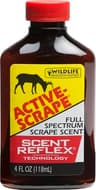
This is the underrated one. Scrape scent is not trying to pull a buck to your stand on a given afternoon; it is trying to make a scrape into a site that bucks keep checking. That turns an event into a pattern, and a pattern is something you can hunt and something a trail camera can confirm.
The window is much longer than estrus — from when scrapes start opening through the rut — and the payoff compounds over weeks rather than depending on one afternoon. If you do not have a natural scrape where you want one, our guide to making a mock scrape covers siting it, why the licking branch matters more than the dirt, and how to hunt it without burning the spot.
Drippers
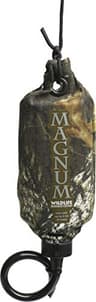
A dripper is what makes scrape scent work properly, and it is the reason it is our top pick. It releases as ambient temperature rises during the day and stops overnight, which conditions deer to visit the scrape in daylight rather than at 2am.
The second benefit is bigger than the first: it refreshes the site without you walking in. Every trip to a scrape to top it up is human scent left at the exact spot you are trying to make attractive. A dripper does the job while you are not there.
Cover scent
Earth, pine, acorn and similar, intended to mask human odor. Be skeptical. The National Deer Association is unambiguous that smell is the sense that keeps a deer alive, and its guidance on thermals makes the point that how air moves through your setup decides whether you are smelled — not what you have sprayed on yourself.
There is also a real argument that adding a strong novel smell makes you more detectable rather than less. Wafers are the sensible format because they release slowly and clip to your pack rather than saturating you. Treat any cover scent as a marginal gain on top of wind discipline, never as a substitute for it.
How to set a mock scrape
The most productive use of anything on this page, and it costs one afternoon in early autumn:
- Find a licking branch. A limb at about head height over open ground — that overhanging branch is the actual communication point, more than the dirt underneath it.
- Clear the ground under it to bare soil, roughly a meter across. A rake, a boot, or a stick all work.
- Put a camera on it before you hunt it. This is the step people skip. A scrape worked only at night is telling you something useful, and what it is telling you is not to sit there at dawn.
- Hang the dripper over the scrape and let it work.
- Then stay away. Let the site develop. Hunt it when your camera shows daylight visits and the wind is right.
Site it where you can hunt it: downwind access, a stand tree with a backdrop, and far enough from bedding that you are not walking through deer to get there. A perfect scrape you cannot approach is a scrape that will only ever be a camera site.
Placement, and the mistake everyone makes
Scent goes downwind of your stand. Always.
Upwind placement seems intuitive — the deer smells it and comes toward it, which means toward you — and it is exactly backwards. A deer that follows a scent line upwind of your stand ends up standing in the place where it can smell you. Downwind placement pulls deer along a line that crosses in front of you.
Use a scent wick or a dripper, never the ground and never your boots. Scent on your boots means you have laid a trail of it from your truck to your tree, alongside the human scent you also laid.
A wick is also the standard pairing for a decoy set, which gives a buck something to see as well as something to smell. Our deer decoy picks cover where that decoy has to stand relative to your wind, and the state rules that apply to both.
The disease question, honestly
Natural deer urine is restricted or banned in a meaningful number of states because prions associated with chronic wasting disease can be shed in bodily fluids, and moving urine between regions is a plausible transmission pathway. Synthetic alternatives exist and are legal everywhere natural urine is not.
There is a related point about scrapes and any other site that concentrates deer. The NDA’s work on baiting and disease transmission is direct that concentrating deer at a single point increases both direct contact between animals and indirect contact with shared surfaces, which increases disease transmission. A mock scrape is a milder version of that than a feeder, but it is the same mechanism, and it is worth knowing rather than ignoring.
None of that means do not use scents. It means check your rules, prefer synthetics where the law requires or where you would rather not take the risk, and do not build a strategy around concentrating deer if you hunt somewhere CWD is established.
What scent will not do
It will not bring deer that are not there. It will not overcome a bad wind. It will not make a stand in the wrong place into a stand in the right place. And it will not make you scent-free — our scent control roundup is honest about which parts of that you can actually influence.
What it will do, used properly, is give a buck a reason to stop or to turn in a spot you have chosen. On the twenty-yard shot that most of whitetail hunting comes down to, a deer that pauses broadside where you wanted it is worth a great deal — and that is the honest case for the whole category.