Bows · Noise
How to Quiet Your Bow for Deer Hunting
A whitetail hears best between about 4 and 8 kHz, with ears that rotate independently to locate a sound. That is the band a bow makes noise in - and it is why the fix starts with the draw, not with the shot.
How this is funded:we earn a commission if you buy through our links, at no extra cost to you. It never changes which product we recommend, and we’ll tell you plainly when to skip one. Full disclosure.
Bow noise is three separate problems, and the one hunters obsess over is the least important. The shot is loud, but by the time it happens the arrow is already gone. The draw is the noise that gets a deer looking at you with a nocked arrow and no shot available — and it is the one almost nobody tests for.
Start with why any of this matters, because the research is more specific than the usual hand-waving. Published work on deer hearing puts their frequency range at roughly 0.25 kHz to 30 kHz, against a human ceiling near 20 kHz, with best sensitivity between about 4 and 8 kHz — the band deer vocalizations fall in, and the band that mechanical clicks and scrapes also fall in. Their ears rotate independently, which means they do not just hear it, they place it. A deer at eighteen yards that hears a click knows which tree it came from.
Noise 1: the draw
This is the one to fix first because it is the only noise that happens while the hunt can still be lost. The usual sources, in order of how often they are the culprit:
- The arrow across the rest. A brush rest holds the shaft in bristles, so drawing drags the shaft and then the vanes through them. Quiet in a garage, audible in still timber.
- The release against the riser or the string loop. A metal release aid swinging on a wrist strap taps whatever it reaches.
- Clothing. A cuff dragging across the string, or a jacket shoulder that creaks under load. Face masks and hoods are a repeat offender.
- The quiver and the arrows in it. Loose arrows clicking together under load, or a quiver bracket that has worked loose over a season.
The test is not complicated and it is not something you can do alone: have someone draw your bow while you stand five yards away in a quiet place, then swap. You cannot hear your own draw properly, which is why most hunters believe their bow is quiet.
Noise 2: the shot
Post-shot noise is vibration in the riser, the limbs and the string, and the single most effective lever on it is arrow weight. A bow releases a fixed quantity of stored energy on every shot. A heavier arrow carries a larger share of it away, which leaves less behind to ring through the bow. That is also why heavier arrows penetrate better, so the trade is paid in trajectory rather than in effectiveness.
Two constraints keep this honest. The Pope & Young Club’s equipment standard sets a 300-grain minimum total arrow weight, which is a floor rather than a target. And you cannot add point weight without affecting spine: Easton’s own guidance is that point weight, insert weight, fletching and bow speed all change the spine a setup needs. Adding 50 grains up front and changing nothing else can turn a tuned bow into an untuned one. Our arrow guide works through the whole calculation.
Noise 3: everything bolted to the bow
This one costs nothing to fix and is where most of the easy wins are. Hold the bow by the string and tap the riser with your palm, then shake it gently and listen. Then go around every screw: sight, rest, quiver bracket, stabilizer, wrist sling. Anything that rattles gets tightened; anything metal that contacts metal gets a strip of felt or moleskin; anything that dangles gets secured. Do the same to the stand and the hooks on the tree while you are at it — a bow hanger that squeaks when you lift the bow off it is the same failure as a noisy rest.
Find the contact point with powder, not with guesswork
If you suspect the arrow is touching something it should not, Easton publishes the procedure for proving it: dust the back quarter of the shaft, the fletching, the rest assembly and the sight window with dry foot powder, shoot into a firm target without burying the fletching, and read where the powder has been scraped off. That tells you where contact is actually happening rather than where you imagine it is. Easton’s related setup figures are worth having in the same session: the arrow point tipped 1/16 to 1/8 inch outside the bowstring for centershot, and the support arm not extending past the outside of the shaft viewed from overhead.
If nothing has been scraped, your rest is not your problem — and that is a useful, money-saving result. Our rest comparison covers the whole category on that basis.
The three purchases that genuinely quiet a bow
Quiet on the draw
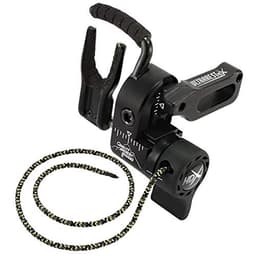
QAD Ultra-Rest HDX
Best overall — full containment at rest, full clearance on the shot
- Type
- Cable-driven drop-away, full containment
- Handedness
- Right-hand (UHXBK-R)
- Containment
- Full capture at rest
Price as of October 16, 2026. #ad How we’re funded
Quieter on the shot
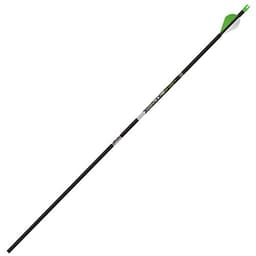
Easton Axis 5mm (340 spine)
Best overall deer arrow
- Spine
- 340
- Shaft diameter
- 5 mm
- Pack
- 6, fletched
Price as of October 16, 2026. #ad How we’re funded
String and cable care
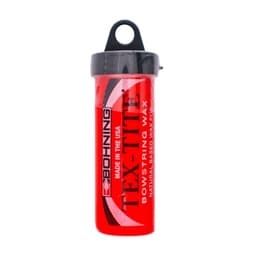
Bohning Tex-Tite Bowstring Wax, 1 oz
String and cable care on any bow or crossbow
- Type
- Bowstring wax
- Volume
- 1 oz
- For
- Strings and cables (not the rail)
Price as of October 16, 2026. #ad How we’re funded
The QAD Ultra-Rest HDX is the fix for the draw: full containment at rest, full clearance on the shot, and a launcher that is not dragging vanes through bristles. The Easton Axis 5mm is here as the heavy, small-diameter hunting shaft — weight is the lever on post-shot noise, and this is the shaft most likely to let you add it without wrecking your spine. The Bohning wax is the consumable: a dry, frayed string is both noisier and closer to failure than a conditioned one, and this is the cheapest item on the site.
What not to spend money on
We are not going to put a decibel figure on any of this, because nobody publishes one for these products and we have not measured anything. Treat any product that claims a specific percentage of noise reduction with the suspicion it deserves. The three noises above, in that order, with a second person listening, will do more than a bag of dampeners.
General guidance, not legal or safety advice. Hunting regulations vary by state and change every year — always verify seasons, legal equipment and requirements with your own state wildlife agency before you hunt. Wear a full-body harness and stay attached to the tree from the ground up whenever your feet leave the ground.
Frequently asked questions
How do you make a compound bow quieter?
Work the three noises in order. First the draw: an arrow dragging across a brush rest or clicking against a loose quiver is the sound that happens while a deer is in range and looking for a reason to leave, and a felt-lined drop-away rest removes it. Second the shot: shoot a heavier arrow, because a heavier arrow absorbs more of the bow's stored energy and leaves less of it to vibrate the riser and limbs. Third, everything hanging off the bow - a loose quiver, a hook, a strap, a release dangling against the riser. Nothing you buy fixes the third one; tightening, taping and padding does.
Can deer hear a bow being drawn?
They can hear far more than hunters assume. Published research on deer hearing puts their range at roughly 0.25 kHz to 30 kHz, above the human ceiling near 20 kHz, with best sensitivity between about 4 and 8 kHz - and their ears rotate independently, so they localise a sound as well as detect it. At twenty yards in still timber, an arrow scraping across bristles is squarely inside that band. This is also why the same research finding is worth repeating: deer were nearly twice as likely to flee human speech as predator calls. Stop talking on the walk in.
Does a heavier arrow make a bow quieter?
Yes, and that is one of the few noise claims with a clear physical basis. A bow puts a fixed amount of energy into the shot. A heavier arrow takes a larger share of it away down range, leaving less behind to shake the riser and limbs - which is the noise and vibration you hear. Heavier arrows also carry more momentum and penetrate better. The constraint is trajectory and the spine the heavier setup needs: the Pope & Young Club's standard sets a 300-grain minimum total arrow weight, and Easton's own guidance is that point weight, insert weight and fletching all change the spine a given bow requires.
Is a whisker biscuit noisier than a drop-away rest?
On the draw, yes, and that is the comparison that matters for hunting. A brush rest holds the arrow in bristles, so drawing means pulling the shaft and then the vanes through them - a quiet sound in your garage and a clearly audible one in still timber at close range. A drop-away rest supports the arrow and then falls out of the way, and a felt-lined full-containment design is quiet on the draw and clear on the shot. The brush rest's compensating advantages are real: nothing to time, nothing to fail, and a much lower price.
How do you tell where bow noise is coming from?
Have someone else draw and shoot it while you stand a few yards away and listen, then swap. You cannot locate a sound you are making with your own hands at full draw. Do it in a quiet place, not at a busy range. Then work the checklist: draw slowly and listen for the arrow on the rest, shake the bow and listen for the accessories, and shoot it and listen for the ring afterward. If you need to find a physical contact point rather than a sound, Easton's rest setup procedure uses dry foot powder on the shaft and fletching to show exactly where something is touching.
Sources
- National Deer Association — Listen to These 5 Facts About Deer Hearing — NDA on deer hearing: a range of roughly 0.25 kHz to 30 kHz against a human ceiling near 20 kHz, best sensitivity between about 4 and 8 kHz — the band deer vocalizations fall in — ears that rotate independently to locate a sound, and research finding deer nearly twice as likely to flee human speech as predator calls (accessed August 24, 2026)
- National Deer Association — Understanding Deer Senses (Dr. Gino D'Angelo) — NDA research summary on the three senses that keep a deer alive — sight, hearing, and, above all, smell (accessed July 22, 2026)
- Easton Archery — Technical Guide to Setting Up the Easton RX-7 Arrow Shaft — Easton's published setup procedure, which is the only objective standard we can find for judging an arrow rest: set centershot by aligning the tip of the arrow point 1/16 in to 1/8 in (1.6-3.2 mm) or less outside the bowstring with the string properly centered; set the nocking point initially about 1/4 in above square with the rest; adjust the arrow rest support arm so that it does NOT extend past the outside of the arrow shaft when viewed from overhead; and test fletching clearance by applying dry powder foot spray, dry deodorant spray or similar to the last quarter of the shaft, the fletching, the rest assembly and the sight window near the rest, shooting into a firm target without burying the fletching, and reading where the powder was scraped away. Where the fletching contacts the rest, rotate the nock 1/32 of a turn at a time until clearance is achieved, or move to a lower-profile fletching (accessed October 12, 2026)
- Easton Archery — Spine Considerations for Bowhunters — How spine is measured (an 880-gram load across 28-inch supports, the deflection in inches becomes the rating) and why point weight, insert weight, fletching and bow speed all change the spine a setup needs (accessed August 19, 2026)
- Pope & Young Club — Equipment Definitions — Bowhunting equipment standards, including the 300-grain minimum arrow weight (accessed July 22, 2026)
Keep reading
Best Arrow Rests
Drop-away against full-capture brush rests, and the measurable test for whether your rest is the problem.
See the rest picksHow to Choose Hunting Arrows
Spine, total weight and FOC - the three numbers that decide both penetration and how loud the shot is.
Read the arrow guideHow to Sight In a Bow
The order to do it in, and the broadhead confirmation step most hunters skip.
Read the sighting guideBow Hunting Gear List
What archery adds to a whitetail kit, and why most of it is about noise and wind rather than hardware.
See the gear list