Bows · Setup
How to Sight In a Compound Bow
Sighting in is two rules and a lot of patience: move the sight toward the arrow, and never adjust off one shot. Here is the order to do it in, the distances that matter for whitetail, and the broadhead check almost everyone skips.
How this is funded:we earn a commission if you buy through our links, at no extra cost to you. It never changes which product we recommend, and we’ll tell you plainly when to skip one. Full disclosure.
Move the sight toward the arrow, and never adjust off fewer than three arrows. Those two rules cover almost everything that goes wrong when someone sights in a compound bow for the first time. The first one is counter-intuitive because it is the opposite of how a rifle scope behaves; the second one is ignored because a bad arrow is so tempting to correct.
The order matters too. Sighting in is not a single task — it is a sequence, and doing it out of order wastes a lot of arrows. You check the bow, then find the paper at close range, then set the 20-yard pin, then gap the rest of the pins at their own distances, then confirm with the broadheads you will actually hunt with. Skip the first step and you will spend an hour chasing a loose sight bracket. Skip the last one and you will find out about it on a deer.
Before you touch the sight
A sight cannot fix a bow that does not fit you. Draw length is the specification that matters most here, because an over-long draw puts your head forward, locks out the bow arm and collapses the anchor — and every one of those moves your impact point in a way no pin adjustment will stabilize. If you have never measured it, do that first: our guide to measuring draw length gives the wingspan method and the full-draw checkpoints.
Then run a hardware check, in this order:
- Every screw on the sight. Bracket to riser, pin guard, pin housing, and the windage and elevation locks. This is the number-one cause of a bow that “will not hold zero.”
- The rest. Mounting bolt, launcher arm, and — on a drop-away — the cord and its timing.
- String and cables. Waxed, no fraying, serving intact, peep and D-loop where they belong.
- Arrows. All the same length, same spine, same point weight, same fletching, and in good condition. Sighting in with a mixed quiver is the fastest way to convince yourself you cannot shoot.
That last point is worth a number. Easton, which defined the spine measurement standard, publishes how spine is measured — an 880-gram load across 28-inch supports, with the deflection in inches becoming the rating — and is explicit that point weight, insert weight, fletching and bow speed all change the spine a setup needs. Easton also recommends 10 to 15% front-of-center for hunting setups and warns that past about 20% FOC the dynamic spine weakens and the arrow destabilizes at distance. Change the point weight and you have changed the arrow, which means you have changed your zero. Our guide to choosing hunting arrows covers spine and FOC properly.
The three things to have in front of you
You need a sight you can adjust in repeatable increments, a target that will take both field points and broadheads so the confirmation step does not require a second purchase, and a matched set of arrows. That is the whole list.
The sight
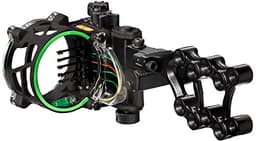
Trophy Ridge Fix 5-Pin Bow Sight
Most whitetail hunters, most of the time
- Type
- Fixed multi-pin
- Pins
- 5
- Fiber diameter
- .019"
The target
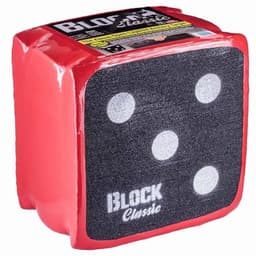
BLOCK Classic Layered Foam Target
One target that handles field points and broadheads
- Stops
- Field points and broadheads
- Dimensions
- 18" x 18" x 13.5"
- Shootable sides
- 2
Matched arrows
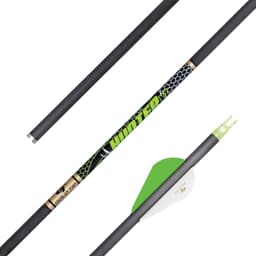
Gold Tip Hunter XT (340)
Best all-round value
- Spine
- 340
- Pack
- 6, fletched with Raptor vanes
- Shaft diameter
- Standard
A fixed multi-pin sight is the right default for a whitetail hunter because it needs no decision at the moment of the shot. A single-pin slider is more precise and asks you to range and dial first, which works when the deer gives you time and fails when it does not — our single-pin versus multi-pin comparison argues that case out in full. On the target, the specification that matters is whether the maker says it stops broadheads: a bag target rated for field points only will be destroyed by a broadhead and will ruin the head. Our archery target picks cover the distinction.
Finding the paper, then setting the 20-yard pin
Start at five to ten yards. The point of close range is not accuracy — it is getting arrows onto the target so you can see what the bow is doing, without burying arrows in the grass behind it. Shoot three, look at the center of the group, and move the sight toward it.
Then move to 20 yards and repeat until the center of a three-arrow group sits on your aiming point. When it does, stop. That pin is now the reference for every other pin on the sight, and the most common self-inflicted wound in this whole process is going back and “tidying up” the 20 after the others are set.
Two mechanical notes. Move windage and elevation one at a time, not together, or you will not know which change did what. And make your adjustments small — the usual mistake is a correction twice the size of the error, which turns sighting in into an oscillation.
Gapping the rest of the pins
On a fixed multi-pin sight, each pin is set at its own distance: 30 yards for the second, 40 for the third, and so on. You do not calculate the gaps, you shoot them. On a single-pin slider you are doing the same thing but marking a sight tape rather than moving a pin.
How many pins you actually need is a hunting decision rather than an equipment one. Most whitetail shots happen inside 30 yards, and bowhunting range guidance for whitetail conventionally treats 40 to 50 yards as a practical outer edge where energy and accuracy have both fallen off. Three pins sighted in correctly is a better setup than five pins each slightly wrong, and the fifth pin is usually a distance you should not take on a deer. Our draw weight for deer guide covers the energy side of that limit.
If you hunt from a stand, there is one more correction you cannot sight in: angle. An arrow follows the true horizontal distance to the animal, not the longer line-of-sight distance your eye measures down a steep angle — so a correctly sighted 30-yard pin still shoots high if the distance you used was the slope distance. Our guide to shooting from a tree stand covers that geometry, and our rangefinder guide covers the angle-compensating modes that solve it.
The broadhead check, which is the step people skip
Field points and broadheads are not interchangeable in flight. A broadhead has blade surface that can act like a wing, and a setup that is slightly out of tune will show you that as a broadhead group sitting away from your field-point group. The check is simple: shoot the exact heads you will hunt with, from the exact arrows you will hunt with, into a broadhead-rated target, at 20 and 30 yards.
If they agree, you are done. If they do not, resist the obvious fix. Re-sighting the bow to the broadhead leaves your field points wrong and hides a tuning problem that will reappear at longer range. Address it properly: check arrow spine and point weight against Easton’s guidance, try a head with less blade surface, or take the bow to a shop with a press. Our fixed versus mechanical broadhead comparison explains why mechanicals are more forgiving here, and our broadhead picks cover both.
One equipment standard worth knowing while you are choosing heads and arrows: the Pope & Young Club’s equipment definitions include a 300-grain minimum total arrow weight for bowhunting. That is a floor, not a target, and most hunting arrows land comfortably above it.
Keeping the zero
A bow that has not changed should not need re-sighting, but it does need verifying. Shoot one three-arrow group at 20 yards before you hunt. Re-sight properly after a new rest, a new sight, a different arrow or point weight, a new string, or any knock hard enough to make you wince.
And add the quiver before you finalise anything. A quiver changes how the bow balances, so a bow sighted in without one and hunted with one is a bow with an unknown zero. Set it up the way you will carry it, and then confirm.
General guidance, not legal or safety advice. Hunting regulations vary by state and change every year — always verify seasons, legal equipment and requirements with your own state wildlife agency before you hunt. Wear a full-body harness and stay attached to the tree from the ground up whenever your feet leave the ground.
Frequently asked questions
Which way do I move my bow sight?
Toward the arrow. If your group lands left of where you aimed, move the sight left; if it lands high, move the sight up. This is the opposite of how a rifle scope works, which is why people get it wrong, and it is the single rule that makes sighting in straightforward. Move in small increments and re-shoot a three-arrow group after every change — never adjust off a single arrow.
What distance should I sight in a bow for deer hunting?
Set the 20-yard pin first and treat it as your reference, then gap pins at 30 and 40. Most whitetail shots happen inside 30 yards, and plenty of hunters cap themselves at 30 deliberately. Three pins sighted in properly beats five pins that are each slightly wrong — and the fifth pin is usually a distance you should not be shooting at a deer anyway.
How many arrows should I shoot before adjusting the sight?
Three, every time. A single arrow tells you nothing about where the bow is pointing, because the spread in your own release is wider than most of the corrections you are about to make. Shoot a three-arrow group, adjust to the center of that group, and shoot again. If the three arrows are scattered, the problem is form or equipment, not sight position — chasing a scattered group with the sight makes the bow worse.
Should I sight in with broadheads or field points?
Sight in with field points, then confirm with broadheads. Field points are cheap, consistent and will not wreck a target. But the confirmation step is not optional: broadheads, especially fixed heads with large blade surfaces, can plane and land away from field points. Shoot the heads you will hunt with into a broadhead-rated target at 20 and 30 yards before season. If they do not agree with your field points, address it through arrow and head selection or a tune rather than re-sighting and leaving the field points wrong.
Why won't my bow hold its zero?
Check the hardware before you blame yourself. The commonest causes are a loose sight bracket or pin guard, a mounting screw backed out on the rest or quiver, a worn or unwaxed string, and a change in arrow weight or point weight. A quiver added or removed between sessions is a surprisingly frequent culprit, because it changes how the bow balances. If the hardware is tight and the arrows are identical, look at anchor point and grip torque — an inconsistent grip moves impact left and right more than anything else on the bow.
Do I need a rangefinder if my pins are sighted in?
From an elevated stand, yes — because the pin is only right if the distance is right. An arrow follows the true horizontal distance to the deer, not the longer line-of-sight distance your eye measures down a steep angle, so holding your 30-yard pin on something your eye calls 30 yards from 20 feet up puts the arrow high. An angle-compensating rangefinder reports the horizontal number the arrow actually flies.
How often should I re-sight my bow?
You should not need to re-sight a bow that has not changed, but you should verify it constantly. Shoot one three-arrow group at 20 yards before every hunt or at least every week of the season. Re-sight properly after any change to the rest, the sight, the arrow or point weight, the string, or after the bow takes a knock. A bow that lived in a truck all gun season gets checked before it gets hunted.
Can I sight in a bow by myself?
Yes, and most people do. What you cannot easily do alone is diagnose a tuning problem, because you cannot watch your own arrow in flight or see your own form at full draw. If arrows are grouping but hitting consistently away from where you aim after the sight has run out of adjustment, or if broadheads will not agree with field points, that is the point to take the bow to a shop with a press rather than keep moving the sight.
Sources
- Pope & Young Club — Equipment Definitions — Bowhunting equipment standards, including the 300-grain minimum arrow weight (accessed July 22, 2026)
- Easton Archery — Spine Considerations for Bowhunters — How spine is measured (an 880-gram load across 28-inch supports, the deflection in inches becomes the rating) and why point weight, insert weight, fletching and bow speed all change the spine a setup needs (accessed August 19, 2026)
- Easton Archery — FAQs About Arrow F.O.C. (Front of Center) — Easton's recommendation of 10-15% FOC for hunting setups, and its warning that FOC past about 20% weakens dynamic spine and destabilizes the arrow at distance (accessed August 19, 2026)
- Bowhunting.com — How Far Should You Shoot With a Crossbow? — On ethical crossbow range for whitetail and how energy drops downrange (accessed July 22, 2026)
- Realtree — Can You Trust Angle-Compensating Rangefinders? — On why an arrow follows the true horizontal distance, not line-of-sight, on an angled shot from a stand (accessed July 22, 2026)
Keep reading
Best bow sights
Fixed multi-pin, single-pin sliders and the pendulum option, compared on published fiber size and pin count.
See the picksSingle pin vs multi pin sights
Which sight suits a stand hunter, and why three pins beats five.
Read the guideBest archery targets
Bag targets against layered foam, and which ones will actually take a broadhead.
See the picksHow to measure draw length
Fix this before you touch the sight — a wrong draw length cannot be sighted out.
Read the guide