Guides · Bowhunting kit
Bow Hunting Gear List
Archery does not add items to a hunting kit so much as it shortens the range, and everything on this list exists because of what happens at twenty-five yards instead of a hundred and fifty.
How this is funded:we earn a commission if you buy through our links, at no extra cost to you. It never changes which product we recommend, and we’ll tell you plainly when to skip one. Full disclosure.
Our complete deer hunting gear list covers the kit every whitetail hunter carries. This page is the layer archery adds on top, and it is organized around the single fact that defines bowhunting: you have to be close.
A rifle hunter can be a hundred and fifty yards away, with the wind doing something unhelpful, wearing a jacket that rustles, and still kill a deer. At twenty-five yards none of that is survivable. That is why a bowhunting gear list is less about archery hardware than people expect and more about noise, wind and getting away with movement.
1. The harness, before the bow
It goes first for the same reason it goes first on every list on this site. Treestand falls are a leading cause of hunting injury, and bowhunters spend more time in trees than anyone else because closing to twenty-five yards on a whitetail from the ground is hard.
Buy the full-body harness with a tether, a tree strap, a lineman’s rope and a suspension-relief strap, and stay attached from the ground up. Our harness guide covers what each component does.
2. A bow you can hold, not the fastest one
Draw weight is where beginners over-buy hardest. The relevant question is not what you can pull on a warm afternoon in a shop; it is what you can draw slowly and hold steady in December, seated, wearing a jacket, with a deer watching.
A hunter who can hold a moderate draw weight indefinitely will shoot better than one heaving something heavy and shaking at full draw. Our draw weight guide works through what a whitetail actually requires, and the compound bow guide covers axle-to-axle, let-off and the rest.
3. Arrows, which matter more than the bow
This is the section experienced bowhunters would put first. The arrow is what actually kills the deer; the bow is the delivery mechanism. An excellent bow launching a badly matched arrow is worse than a modest bow launching a well-matched one.
Spine has to match your draw weight, draw length and point weight, and Easton — the company that defined the spine measurement standard — is clear that point weight, insert weight, fletching and bow speed all change what spine a setup needs. Total finished weight matters too: the Pope & Young equipment standards set a 300-grain minimum for the complete arrow.
Our arrow guide covers spine and FOC properly, and the arrow roundup has the picks.
4. Broadheads, and the practice heads to go with them
Fixed or mechanical is a genuine argument with real considerations on both sides — our comparison works through it. What is not an argument is that you must shoot the broadheads you intend to hunt with, because they do not necessarily fly to the same point of impact as field points.
Buy a practice head of the same model and weight, and shoot it enough to know where it goes. Discovering that your broadheads hit four inches left is a thing to discover in September.
5. Sight and release
Sight
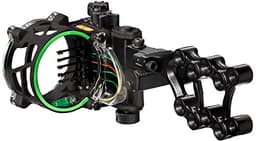
Trophy Ridge Fix 5-Pin Bow Sight
Most whitetail hunters, most of the time
- Type
- Fixed multi-pin
- Pins
- 5
- Fiber diameter
- .019"
Release
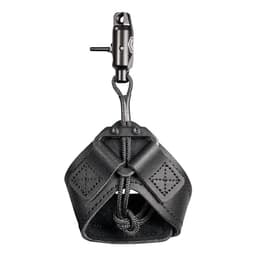
Scott Archery Quick Shot Buckle Strap Release
The quiet, set-and-forget hunting release
- Type
- Wrist-strap caliper release
- Strap
- Buckle
- Trigger
- Not published
Price as of October 6, 2026. #ad How we’re funded
A sight with fewer pins than you think you need — three covers essentially every ethical whitetail shot with far less clutter than five — and a release with a clean trigger and a buckle strap rather than hook-and-loop, because hook-and-loop is loud at exactly the wrong moment.
If you hunt almost entirely from elevated stands, a pendulum sight compensates for the downward angle mechanically. Our sight roundup and release roundup cover both, including the trigger creep that quietly teaches a flinch.
Carry a spare release. It costs about as much as a pack of broadheads and it turns a lost release from a lost hunt into an inconvenience.
6. A rangefinder with angle compensation
The highest-value non-archery purchase in bowhunting. When you shoot down at a deer from a stand, the arrow follows the true horizontal distance, not the longer line-of-sight distance — and at bow ranges with an arrow’s curved trajectory, holding for the wrong number puts the arrow over the back.
Our rangefinder guide explains the geometry, and the picks are in the rangefinder roundup. If you hunt one stand over one trail, pacing and marking your lanes in daylight before the season achieves the same thing for nothing.
7. Clothing, because twenty-five yards is loud
This is the section that separates a bowhunting list from a general one. At bow range a deer can hear your sleeve against your jacket as you draw.
- Test fabric noise before you buy. Rub a fold against itself. If you hear it across a room, a deer hears it at twenty yards.
- Bibs over insulated trousers for stand sitting, and carry them in rather than walking in them. Our bib roundup covers the leg-zip question.
- Check bow clearance on everything. Draw an unloaded bow at home wearing your full hunting layers plus your binocular harness. Anything the string touches has to change now, not at full draw on a deer.
- A quiet rain shell in the pack. Deer move well in light rain, and most rain gear is loud.
8. Recovery gear, because bow-shot deer are tracked
A rifle-shot deer is often visible from where it was shot. A bow-shot deer usually runs and usually has to be trailed, which makes recovery gear a bowhunting-specific need rather than an optional extra.
Flagging tape or tissue for marking blood, a headlamp with real runtime, and ideally a blood light. Our blood tracking guide also covers the waiting times by shot type, which matter more than any of the equipment.
9. The small things that are not optional
- Quiver. Bow-mounted or hip — the choice affects how the bow balances at full draw more than most people expect.
- Bow hanger and haul line. Never climb with a bow in your hand, and never hold it for four hours.
- Wind checker. A puffer bottle is the cheapest genuinely useful item on this page. At twenty-five yards the wind is the whole game.
- Knife. A replaceable-blade knife from our knife roundup, plus gloves.
- Grunt tube. A bowhunter frequently needs a deer to stop in a specific window, and a soft grunt does that.
What to buy in what order
If you are assembling this from nothing: harness, bow, arrows and broadheads, sight and release, quiver, then clothing, then the rangefinder, then everything else. The order is deliberate — each item on the front of that list is either a safety item or something the next item depends on.
And spend the practice time before you spend the last of the money. A modest setup shot two hundred times from an elevated platform in a jacket beats a premium setup shot twenty times off flat ground in a T-shirt, every season, without exception.
General guidance, not legal or safety advice. Hunting regulations vary by state and change every year — always verify seasons, legal equipment and requirements with your own state wildlife agency before you hunt. Wear a full-body harness and stay attached to the tree from the ground up whenever your feet leave the ground.
Frequently asked questions
What gear do you need to start bow hunting deer?
A bow you can draw and hold comfortably, arrows matched to it, broadheads, a sight, a release, a quiver, and a safety harness if you will hunt from a tree. Beyond that the archery-specific additions are a rangefinder with angle compensation and clothing quiet enough for twenty-five yards. Everything else is optimization.
What draw weight do I need for whitetail?
Enough to make a clean pass-through with a well-matched arrow, and less than most beginners assume. What matters more than the number is whether you can draw and hold it steady in cold weather from a seated position — a hunter who can hold forty-five pounds indefinitely is far better equipped than one who has to heave seventy and gets shaky at full draw.
How far should you shoot at a deer with a bow?
Whatever distance you can put every arrow into a paper plate under hunting conditions — cold, seated, wearing a jacket, from an elevated angle. For most bowhunters that is well inside forty yards, and for many it is inside thirty. Practicing off flat ground in a T-shirt tells you almost nothing about your real limit.
Do I need a rangefinder for bow hunting?
It is one of the highest-value purchases in bowhunting, and specifically one with angle compensation. From an elevated stand your arrow follows the true horizontal distance rather than the longer line-of-sight distance, and holding for the wrong one is what puts arrows over backs. If you hunt one stand over one trail you can pre-range the lanes instead.
What is the most important piece of bow hunting gear?
The harness, followed by the arrow. The harness because treestand falls injure more hunters than anything else in the sport, and the arrow because it is the part of the system that actually kills the animal — an expensive bow launching a badly matched arrow is worse than a modest bow launching a well-matched one.
How is bow hunting gear different from rifle hunting gear?
Almost everything follows from range. At twenty-five yards a deer can hear your clothing, see your draw and smell you far more easily than at a hundred and fifty, so quiet fabric, stand position and wind discipline stop being refinements and become requirements. The archery hardware — arrows, broadheads, sight, release — is the smaller half of the difference.
Sources
- Pope & Young Club — Equipment Definitions — Bowhunting equipment standards, including the 300-grain minimum arrow weight (accessed July 22, 2026)
- Bowhunting.com — How Far Should You Shoot With a Crossbow? — On ethical crossbow range for whitetail and how energy drops downrange (accessed July 22, 2026)
- Wasp Archery — How to Calculate the Kinetic Energy of Your Arrow — The kinetic-energy formula (arrow weight and speed) used to judge penetration (accessed July 22, 2026)
- Easton Archery — Spine Considerations for Bowhunters — How spine is measured (an 880-gram load across 28-inch supports, the deflection in inches becomes the rating) and why point weight, insert weight, fletching and bow speed all change the spine a setup needs (accessed August 19, 2026)
- Tree Stand Safety Awareness Foundation — Industry safety foundation tracking treestand-fall statistics and the ABCs of safety (accessed July 22, 2026)
Keep reading
The complete deer hunting gear list
The full kit across every category — this page is the archery-specific layer on top of it.
Read the guideDeer hunting gear for beginners
What to buy first if this is your first season, in the order that matters.
Read the guideDeer hunting gear on a budget
The value pick in every category, and the three places cheap gear costs you the season.
Read the guideCrossbow vs compound bow
If you have not committed to a vertical bow yet, start here.
Read the comparison