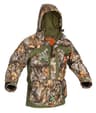
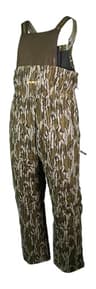
Matched against the original, on published claims only
The Sitka row is the brand’s own published description and price, read on November 7, 2026. Everything else is read from the listing on the date on each card. Where a maker does not publish a figure, the cell says so — and in this category that is most of the cells, including on the original.
| Garment | Quiet face fabric | Wind protection | Insulation published | Listed price |
|---|
| Sitka Fanatic Jacket (the original) | Yes — “shockingly silent” | WINDSTOPPER by GORE-TEX Labs | “Premium insulation” — no figure | $500.00 (brand’s own page, Nov 7 2026) |
| TideWe Silent Fleece-Lined Jacket | Yes — quiet brushed face | Not published | Fleece lining — no figure | See live price above |
| ArcticShield Classic Elite Parka | Not published | Not published | RETAIN heat-reflective lining — no figure | See live price above |
| King’s Camo Wind-Defender Fleece | Yes — quiet fleece face | Wind-Defender membrane | Fleece — no figure | See live price above |
| ArcticShield Heat Echo Sherpa 1/4-zip | Fleece — not claimed as silent | Windproof, water resistant | Retain Active — no figure | See live price above |
| ScentBlocker Drencher rain jacket | Not published | Waterproof breathable | None — shell | See live price above |
The finding is in the fourth column, and it applies to the original as much as to the alternatives. Not one garment in this comparison — including the $500 one — publishes an insulation figure you could use to compare it to anything else. “Premium insulation”, “RETAIN heat-reflective lining” and “fleece lining” are three descriptions of warmth and none of them is a number. There is no gram weight, no fill power, no temperature rating.
That matters because it means nobody can honestly rank these on warmth, us included. We rank them on what is published — whether the fabric is claimed to be quiet, whether a wind membrane is named, and what the garment is cut and marketed for — and we say plainly that warmth is unverifiable across the whole category.
Where the money genuinely goes, and we are not going to pretend otherwise
Two things, and one of them is specific enough to name.
A named, licensed membrane. WINDSTOPPER by GORE-TEX Labs is a specific licensed laminate with a specification behind it, and a brand that uses it has paid for the right to say so and submitted to whatever that licence requires. A “Wind-Defender membrane” or “windproof” on a listing is a claim made by the garment’s own manufacturer with nothing independent behind it. That is a genuine difference in evidence quality, not just in marketing budget, and it is the strongest honest argument for the expensive jacket.
Fit, cut and finish. A jacket designed around drawing a bow — where the sleeve goes, how the hem sits over a harness, whether the pockets are where your hands are when they are cold — is a design problem that money solves. None of it is measurable from a listing, and we will not rank it.
What the money does not buy, on the published evidence, is a verifiable warmth advantage, because neither side publishes a number. And it does not buy concealment: a whitetail is a dichromat without the long-wavelength cone that separates red and orange from green, which is why pattern choice matters far less to a deer than movement, shape and noise do. Our blaze orange picks page goes into that research in full, and it is the reason we do not rank camo patterns anywhere on this site.
Buy the system, not the jacket — which is how you actually close the gap
Here is the strategy that makes this page worth reading, and it is not “buy the cheap jacket”. A $500 jacket is one garment. For the same money you can buy a quiet jacket, an insulated bib, a rain shell and a merino base layer from this page and the ones it links to — and the hunter with four correct layers will be warmer at 4pm in December than the hunter with one excellent jacket and jeans.
That is not a rhetorical flourish; it follows from the federal cold-guidance basics: several loose layers, base layer kept dry, extremities protected. The jacket is one element of a system and it is the element hunters over-invest in because it is the one they can see.
The two most under-bought items in that system are the bib and the base layer. A bib insulates the half of you that is in contact with a cold platform for five hours, which is why the Muddy TRX bib is on this page at all — it is not a Sitka alternative in the literal sense, it is the garment most hunters should buy before they upgrade a jacket. Our bib picks cover the category, and our merino base layer picks cover the layer underneath everything.
Then the extremities, because those are where sits actually end. Our glove picks, hand warmer picks and sock picks are collectively cheaper than the price gap between the Fanatic and the TideWe, and they will do more for your December than the jacket upgrade will.
Who should still buy the expensive jacket
Two hunters, and we would say so to their face.
The hunter who already has the system — base layer, bib, boots, gloves, rain shell all sorted — and whose remaining weak link genuinely is the outer layer. At that point you are buying the thing that is actually limiting you, and the licensed membrane and the hunting-specific cut are real.
And the hunter who hunts a great many days a season in genuinely severe cold. A garment worn eighty days a year for ten years is a different purchase from one worn twelve days a year, and the finish and fabric life that cannot be read off a listing is exactly what decides which of those a jacket survives.
Everyone else — which on this site means the hunter with fifteen or twenty sits in them, mostly in the first half of November — should buy the quiet jacket, the bib and the base layer, keep the change, and spend a fraction of it on a heated vest or heated insoles if the cold is still winning. Our cold-weather jacket roundup ranks these jackets on their own merits rather than against one brand, and the layering guide puts them in order.