Crossbows · Technique
How to Cock a Crossbow
The most common accuracy problem with a crossbow is not the scope, the bolts or the trigger. It is that the string was a few thousandths off center when it was cocked.
How this is funded:we earn a commission if you buy through our links, at no extra cost to you. It never changes which product we recommend, and we’ll tell you plainly when to skip one. Full disclosure.
Ask a hunter why their crossbow throws the occasional flier and you will usually hear a theory about the scope, the bolts, or the trigger. The answer is almost always simpler and happens before the shot: the string was not centered when it latched.
A crossbow string is captured by a latch in the middle of the rail. If the left side of the string is a few thousandths of an inch further forward than the right when it engages, the bolt gets an asymmetric push. That is enough to move point of impact several inches at thirty yards — and because it varies from shot to shot, it looks like random inaccuracy rather than a fixable cause.
Why hand-cocking is the problem
When you pull a crossbow string by hand you have one hand on each side of the rail and a strong side. You will pull harder with it. Every time. Nobody is symmetrical, and on a 175-pound draw nobody is symmetrical enough.
A rope cocking device fixes this mechanically rather than asking you to be careful. The rope runs over the rail with a center mark, both hooks come off the same rope, and the pulley equalizes the load between them. Pull unevenly and the rope simply slides to compensate. The string ends up centered because the geometry makes it centered.
The effort halving is real too — a rope cocker is a two-to-one system, so a 175-pound crossbow feels like roughly 88 pounds — but that is a convenience. Consistency is the reason to own one. Our cocking device picks rank the ropes and cranks on published effort reduction, fit and whether they can de-cock.
The three ways to cock a crossbow
Basic rope
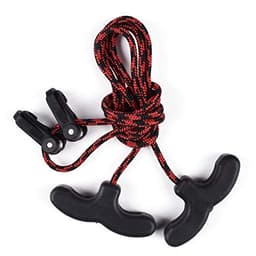
ELONG Outdoor Crossbow Cocking Rope
The cheapest fix for inconsistent hand-cocking
- Type
- Rope cocking device
- Effort reduction
- Not published
- Mounting
- Handheld, hooks over the string
Price as of October 6, 2026. #ad How we’re funded
Premium rope
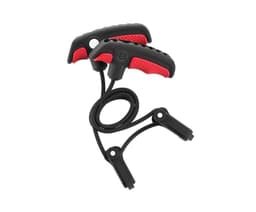
Barnett Premium Rope Cocking Device
A rope cocker that fits properly and lasts several seasons
- Type
- Rope cocking device
- Handedness
- Ambidextrous
- Effort reduction
- Not published
Price as of October 6, 2026. #ad How we’re funded
Crank
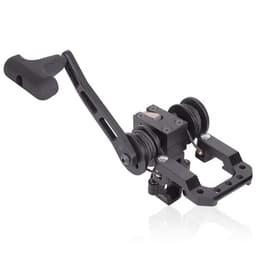
CenterPoint Power Draw Crossbow Crank
Cocking from a seated position, quietly
- Type
- Crank cocking device
- Mounting
- Attaches to the crossbow stock
- Effort reduction
- Not published
Price as of October 6, 2026. #ad How we’re funded
By hand
Covered above. It works, it is free, and it is the reason a lot of crossbows have a reputation for being less accurate than they are. If you have been hand-cocking, the cheapest accuracy upgrade available to you costs about ten dollars.
Rope cocking device
The default. Two hooks, a rope, a pulley and two handles. Halves the effort, centers the string, weighs nothing, lives in a jacket pocket, and adds nothing to the crossbow itself. The step up from a basic rope to a manufacturer’s version buys molded handles that are kinder on cold hands and hooks shaped for a crossbow rail rather than for anything with a string.
The limitation is that a rope cannot let a string back down. Once cocked, you are committed to discharging the crossbow somehow.
Crank cocking device
A crank mounts to the stock and winds the string back through a geared drum. Barnett publishes a 93% reduction in cocking resistance for its crank, and that figure describes the point of the tool accurately: it does not make the crossbow lighter to carry, it makes the one physically demanding moment of using it disappear.
That matters for three groups specifically: hunters with shoulder or back injuries, smaller-framed and younger hunters who genuinely cannot pull a heavy draw, and anyone who wants to cock from a seated position in a stand without standing up and skylining themselves. For everyone else it is added weight, added bulk and a much slower reload.
Cranks are far more model-specific than rope cockers. Confirm the fit against your exact crossbow before you buy.
Loading the bolt
Cock first, load second. Always. Loading a bolt before the crossbow is cocked puts your hand in front of a string that is about to move.
With the crossbow cocked and safe, lay the bolt in the rail channel and slide it back until the nock seats fully against the string. If your bolts have half-moon nocks, the groove must align with the string and the odd-colored fletching goes in the rail channel — that orientation is what stops the string slipping past the nock. Push the bolt fully home; a bolt that is not seated against the string is a dry fire waiting to happen.
Keep the retention spring or clip over the bolt if your crossbow has one, and keep every finger below the rail line from this point until the shot. The string travels through that space at speed and it does not care what is in the way.
De-cocking at the end of the hunt
This is the part people improvise, and improvising here is how crossbows and hands get hurt. There are three legitimate methods, in order of preference:
- The crossbow’s own de-cocking function, if it has one. Many modern crossbows do, and it is the reason to prefer them.
- A crank with a controlled let-down, if your crank supports it and the manual says so.
- Discharging into a target or soft ground at close range, using a discharge bolt or a field point. Not into rock, not into frozen ground, not at an angle where a bolt can skip.
What is never acceptable: dry firing, trying to unhook a latched string by hand, or putting a cocked crossbow in a vehicle. In many jurisdictions a cocked crossbow counts as a loaded weapon for transport purposes — check the rules where you hunt, and see our state regulations overview for where to verify that.
What cocking does to your string
Every cocking cycle drags the string along the rail, which is the wear that eventually ends it. TenPoint recommends changing strings and cables at least once every two years, or every 1,000 shots for hunters who shoot often. Rail lube is what slows that wear down, and a cocking device that centers the string wears it evenly rather than favoring one side.
Practice the whole sequence — cock, check, load, safe — at ground level until it is automatic, and then practice it again wearing the gloves you will hunt in. The gloves change everything, and discovering that at first light in a stand is the wrong time.
General guidance, not legal or safety advice. Hunting regulations vary by state and change every year — always verify seasons, legal equipment and requirements with your own state wildlife agency before you hunt. Wear a full-body harness and stay attached to the tree from the ground up whenever your feet leave the ground.
Frequently asked questions
Can you cock a crossbow by hand?
Physically, on lighter models, yes. Practically it is the wrong answer. Hand-cocking pulls one side of the string harder than the other almost every time, and a string that latches a few thousandths off center changes point of impact — which is why a crossbow that groups on the bench can throw fliers in the field. A rope cocker costs about the same as a pack of bolts and removes the problem.
How much easier does a rope cocker make cocking a crossbow?
Roughly half, because it is a simple two-to-one pulley: you move the handles twice as far as the string moves and pull about half the force. But the effort reduction is the secondary benefit. The real value is that it pulls both sides of the string evenly, which is what makes the crossbow shoot consistently.
Rope cocker or crank cocking device?
A rope is cheaper, lighter, faster to use, and adds nothing to the crossbow. A crank turns cocking from a pull into a wind, which makes heavy draw weights accessible to hunters who cannot pull them, and lets you cock quietly from a seated position in a stand without standing up. If either of those describes you, buy the crank; otherwise the rope is the sensible default.
How do you de-cock a crossbow safely?
Use whatever method your manual specifies. Many modern crossbows have a purpose-built de-cocking function, and some cranks can let the string down under control. If yours has neither, the standard answer is to shoot a bolt into a target or into soft ground at close range with a discharge bolt or field point. Never shoot into hard ground, never dry fire, and never try to unhook a cocked string by hand.
Is it bad to leave a crossbow cocked all day?
It is normal to leave one cocked for the duration of a hunt, and manufacturers design for that. Leaving it cocked for days is different and puts sustained load on the limbs, cables and string. The bigger issue is that a cocked crossbow in a vehicle or a house is a loaded weapon, and in many jurisdictions that is also a legal problem — de-cock at the end of the hunt.
Why does my crossbow shoot left or right consistently?
Before you touch the scope, check how you are cocking it. A string that latches off center sends bolts consistently to one side, and it will do so no matter how you adjust the windage. Cock it with a rope cocker, check the string sits symmetrically against the rail, and re-test. If the group moves, the cocking was the problem.
Sources
- TenPoint — 3 Critical Maintenance Tips to Keep Your Crossbow in Top Shooting Form — Manufacturer guidance: check every nut, bolt and screw for tightness; inspect strings and cables each session and condition when dry; TenPoint recommends changing strings and cables at least every two years, or every 1,000 shots if you shoot often; oil the trigger, dry-fire inhibitor, axles and cam bearings one drop at a time (accessed August 22, 2026)
- National Crossbow Association — State Regulations — State-by-state crossbow legality overview; always verify with your state agency (accessed July 22, 2026)
- Bowhunting.com — How Far Should You Shoot With a Crossbow? — On ethical crossbow range for whitetail and how energy drops downrange (accessed July 22, 2026)
Keep reading
How to sight in a crossbow
Once the cocking is consistent, this is the sequence for getting the scope right.
Read the guideCrossbow maintenance
Rail lube, string wax and the replacement intervals — including how cocking devices wear a string.
Read the guideCrossbow hunting for beginners
Where cocking fits in the whole first-season sequence, from buying to the first shot.
Read the guideBest crossbow bolts
Nock style, minimum weight and the specs your crossbow's manual dictates.
See the picks