Field gear · Storage
How Long Does Venison Last in the Freezer?
Nine to twelve months properly wrapped, and up to about a year at 0°F, according to the figures Penn State Extension publishes. Where you land in that range is decided by air, temperature stability and portion size — in that order.
How this is funded:we earn a commission if you buy through our links, at no extra cost to you. It never changes which product we recommend, and we’ll tell you plainly when to skip one. Full disclosure.
Nine to twelve months, properly wrapped. Penn State Extension states that properly wrapped game meat will store in the freezer for 9 to 12 months, and separately that game meat stored at 0°F will last up to a year or so. Those are quality figures rather than safety figures, which is the distinction that makes this question confusing: venison that has stayed solidly frozen at 0°F is very likely still safe at two years, and will not be worth cooking.
Where you land inside that nine-to-twelve-month window is not luck. It is decided by three things, in descending order of importance: how much air is in the package, how stable your freezer temperature is, and how big the portions are.
The published figures
| Source | Condition | Published storage life |
|---|---|---|
| Penn State Extension (venison, field to table) | Properly wrapped, meal-size portions with air removed | 9 to 12 months |
| Penn State Extension (wild game processing) | Freezer at 0°F | Up to a year or so |
| UConn Extension | Perishable vacuum-packed food, frozen | Must be at 0°F — or refrigerated at 34 to 38°F |
Note what all three have in common: a temperature condition. “A year in the freezer” means a year at 0°F. A freezer compartment inside a refrigerator often runs warmer than that and cycles more, which is why the same meat keeps better in a chest freezer than in the top of the fridge.
Ground venison and sausage sit at the shorter end of every range above, for a straightforward physical reason: grinding multiplies the surface area exposed to whatever air is left in the package. If you are planning a season’s eating order, eat the ground meat first and save the whole-muscle cuts.
Air is the enemy, which is why packaging beats everything
Freezer burn is not contamination. It is moisture subliming out of the surface of the meat and refreezing elsewhere in the package, which leaves the dry gray patches and the flat, oxidized flavour people recognize. The mechanism needs air, so the single most effective thing you can do is remove it.
Penn State Extension’s packaging instruction is the standard to work to: package meat in meal-size portions of about one pound, using freezer wrap, heavy-duty foil, vacuum bags or freezer bags with the air removed. Notice that vacuum bags are one of four acceptable options, not the only one. Oregon State University Extension makes the same point from the other direction — traditionally recommended freezing and packaging methods, carried out carefully, produce high-quality products with reasonably lengthy storage times.
Writing for the National Deer Association, Mark Turner is blunter still: a vacuum sealer is nice to have, but plastic wrap followed by freezer paper also works for freezing venison. So if the sealer is what is stopping you from processing your own deer, skip it this year. Our processing equipment page sets out the buying order that gets you to a working setup for less.
Portion size is a storage decision, not a convenience one
One-pound packages are not just easier to cook. They are the thing that stops you refreezing, and refreezing is where most real quality loss happens in a home freezer. Every freeze-thaw cycle ruptures more cell structure and costs moisture and texture, and venison has almost no fat to buffer it — Penn State’s nutrition table lists 3 ounces of roasted deer at 2.7 grams of total fat.
Smaller packages also freeze faster, which produces smaller ice crystals and less cell damage on the way in. The practical rule is: package the way you will actually cook, label with the cut and the date, and never freeze a five-pound block of anything you will use a pound of at a time. Our guide to how much meat you get from a deer gives the package count to plan for — roughly 45 one-pound portions from an average antlerless deer and 62 from an average buck.
The safety point people get wrong: a vacuum bag is not preservation
This is worth stating as flatly as the extension publications do. Oregon State University Extension states that vacuum packing is not a substitute for refrigerating or freezing food that would otherwise require it, and that perishable foods must be refrigerated or frozen after packing. The reason is the part that should change your behavior: removing oxygen slows the spoilage bacteria that warn you with odor or sliminess, while some pathogens reproduce well in vacuum-packaged foods — so food can become unsafe with no indicator at all.
UConn Extension puts the specific risk on the table: botulism is most likely to result from low-acid, moist foods canned or vacuum packaged in an air-free environment, including meats vacuum-sealed on a kitchen table, and the food can look, smell and taste fine. Their storage requirement is 34 to 38°F refrigerated or 0°F frozen — never room temperature.
Two operational rules follow, and both are easy to break accidentally:
- Two hours total. Oregon State’s guidance is that perishable food being vacuum packaged should be out of refrigeration no longer than two hours total above 40°F. On a long packaging session that is a real constraint — work in batches out of a cooler rather than spreading a whole deer across the counter.
- Open the bag to thaw. UConn’s instruction is to open the package to let some air in when it comes out of the freezer, then defrost in the refrigerator. A sealed bag thawing on a shelf is still an anaerobic environment.
If you are buying a sealer, buy it to your volume
All three of these will get a deer into the freezer. The difference is how many bags you are sealing in one session and how much counter space you are prepared to give up.
Occasional sealing
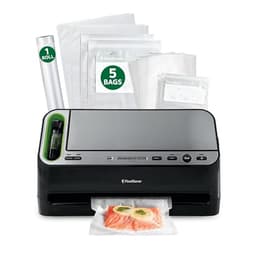
FoodSaver V4400 2-in-1 Vacuum Sealer
Occasional sealing, and a helper who has never used a sealer
- Type
- External (edge) sealer, automatic bag detection
- Moist-food setting
- Yes, automatic moisture detection + manual Moist/Dry
- Drip tray
- Removable, top-rack dishwasher safe
Price as of October 10, 2026. #ad How we’re funded
One deer, no counter space
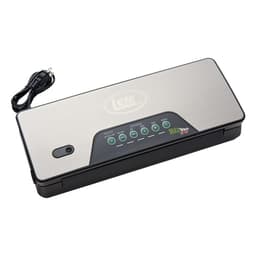
LEM Products MaxVac 100 Vacuum Sealer, Compact (#1722)
One deer a season and no counter space to give up
- Type
- External (edge) sealer, compact
- Vacuum pump
- 22 inHg, 90 W
- Rated continuous use
- 100+ consecutive seals
Price as of October 10, 2026. #ad How we’re funded
A whole deer in one session
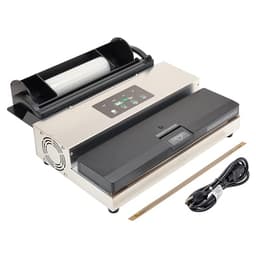
LEM Products MaxVac 500 Vacuum Sealer (#1253)
Sealing a whole deer, or several, in one session
- Type
- External (edge) sealer, fan cooled
- Vacuum pump
- 21 inHg, 462 W
- Rated continuous use
- 500 consecutive seals (up to 5 hours)
One specification to compare that nobody shops on: the duty cycle. The FoodSaver manual’s own instruction is to wait at least 20 seconds between seals to let the appliance cool, and its troubleshooting table says that under heavy usage the appliance shuts off automatically and to wait 20 minutes. If you are sealing 45 packages in an evening, that is the number that decides whether the job takes one hour or three.
Two more useful lines from the same manual, both of which prevent a failed seal: pre-freeze meat for one to two hours before vacuum sealing to retain juice and shape and give a better seal, or place a folded paper towel between the meat and the top of the bag below the seal area; and leave at least three inches of bag material between the contents and the top. It also notes that beef may appear darker after vacuum sealing because oxygen has been removed, which is not an indication of spoilage — the same is true of venison, and it is a common false alarm. Our vacuum sealer picks compare the category on published wait times, bag widths and gasket material.
The clock that matters more than the freezer
Freezer life is the last link in a chain, and the earlier links decide more. University of Wisconsin-Madison Extension’s guidance is that the cooling process should begin within a couple of hours of harvesting the deer, and that propping open the body cavity, keeping the carcass in the shade and exposing it to air movement all improve cooling. The same guidance adds a mistake at the other end: do not allow the carcass to freeze within the first six hours after harvest, as this can make the meat tough.
Meat that was cooled quickly and handled cleanly will be good at twelve months. Meat that sat warm in the back of a truck will not be good at three, however well you seal it. Our guide to how long a deer can hang covers the temperature-and-time rules, and our cooler picks cover the equipment that buys you the time.
General guidance, not legal or safety advice. Hunting regulations vary by state and change every year — always verify seasons, legal equipment and requirements with your own state wildlife agency before you hunt. Wear a full-body harness and stay attached to the tree from the ground up whenever your feet leave the ground.
Frequently asked questions
How long does venison last in the freezer?
Penn State Extension's venison guidance states that properly wrapped game meat will store in the freezer for 9 to 12 months, and its wild-game processing publication states that game meat stored in a freezer at 0F will last up to a year or so. Both figures assume the meat was handled and cooled correctly before packaging and that your freezer actually holds 0F. Ground venison and sausage realistically sit at the shorter end of that range because they have far more surface area exposed to air.
Is two-year-old venison still good?
It is very likely still safe if it has stayed solidly frozen, because freezing at 0F stops bacterial growth rather than slowing it. What it will not be is good to eat — past the published 9-to-12-month window the quality loss from freezer burn and fat oxidation becomes obvious, and in venison it shows up as a dry texture and a strong liver-like flavour. Safety and quality are two different clocks, and the published figures above are quality figures.
Does vacuum sealing make venison last longer in the freezer?
Yes, because the thing that degrades frozen meat is contact with air, and a vacuum bag removes most of it. But do not overstate it: Oregon State University Extension notes that traditionally recommended freezing and packaging methods, carried out carefully, produce high-quality products with reasonably lengthy storage times too. Writing for the National Deer Association, Mark Turner is explicit that plastic wrap followed by freezer paper also works for freezing venison. A sealer buys convenience and consistency more than it buys months.
Can vacuum-sealed venison be stored at room temperature?
No, and this is the most important safety point on this page. Oregon State University Extension states plainly that vacuum packing is not a substitute for refrigerating or freezing food that would otherwise require it. The reason matters: removing oxygen slows the spoilage bacteria that warn you with odor or sliminess, while some pathogens reproduce well in a vacuum package — so food can become unsafe with no indicator at all. UConn Extension adds the numbers: perishable vacuum-packed foods must be refrigerated between 34 and 38F or frozen at 0F.
How do you thaw vacuum-sealed venison?
Open the bag as it comes out of the freezer, then defrost in the refrigerator. That is UConn Extension's guidance, and the reason is specific: a package that stays sealed while it thaws is still an anaerobic environment, which is exactly the condition some pathogens prefer. Oregon State Extension makes the same point — thawing under refrigeration is essential for vacuum-packaged food, and perishable food being vacuum packaged should be out of refrigeration no longer than two hours total above 40F. Never thaw on the counter.
What causes freezer burn on venison?
Air contact and temperature cycling. Freezer burn is moisture subliming out of the surface of the meat and refreezing elsewhere in the package, which leaves grayish, dried patches. Two things accelerate it: air left in the package, and a freezer that warms and re-cools — a self-defrosting freezer cycles by design, and a chest freezer that is opened often cycles by accident. Tight packaging in roughly one-pound portions addresses the first; keeping the freezer full and leaving it shut addresses the second.
How should venison be packaged for the freezer?
Penn State Extension recommends meal-size portions of about one pound, in freezer wrap, heavy-duty foil, vacuum bags or freezer bags with the air removed. Portion size matters more than people expect: a one-pound package freezes faster, thaws faster and — critically — does not have to be refrozen after you take what you need. Refreezing is where most of the real quality loss happens in a home freezer.
Can you refreeze thawed venison?
You can if it was thawed in the refrigerator and has stayed cold, but you should design your packaging so that you never need to. Each freeze-thaw cycle ruptures more cell structure and costs moisture and texture, and venison — which carries almost no fat to buffer that, at 2.7 grams of total fat per 3-ounce serving in Penn State's table — shows it faster than beef does. Packaging in one-pound meal portions is the fix.
Sources
- Penn State Extension — Proper Care and Handling of Venison from Field to Table — Updated November 18, 2020; prepared by Catherine N. Cutter, food safety specialist. Thoroughly clean and sanitize all equipment, including the tabletop meat grinder, before and after use; package meat in meal-size portions (about one pound) in freezer wrap, heavy-duty foil, vacuum bags or freezer bags with the air removed; properly wrapped game meat will store in the freezer for 9 to 12 months; cook ground meat to 160F (accessed September 16, 2026)
- Penn State Extension — Proper Processing of Wild Game and Fish — Updated June 30, 2023. On sausage making from game meat: start with clean equipment and sanitize surfaces with 1 tablespoon chlorine bleach per gallon of water; select the proper lean-to-fat ratio for texture and binding; keep the temperature of the meat as cold as possible (below 40F) during grinding and mixing; coarse-grind, add the other ingredients, and regrind; clean grinding and stuffing equipment thoroughly and sanitize when done. Its minimum cooking-temperature table lists ground venison, sausage and deer bologna at 160F, and it states game meat stored in a freezer at 0F will last up to a year or so. Its nutrition table lists 3 oz of roasted deer at 2.7 g of total fat. Its canning instructions add one part high-quality pork fat to three or four parts venison before grinding (accessed September 16, 2026)
- Oregon State University Extension — Should I Vacuum Package Food at Home? (SP 50-603) — Nellie Oehler, revised March 2013 (source: University of Georgia, Elizabeth L. Andress). Vacuum packing is not a substitute for refrigerating or freezing food that would otherwise require it; perishable foods must be refrigerated or frozen after packing. Removing oxygen slows the spoilage bacteria that warn you with odor or sliminess, while some pathogens reproduce well in vacuum-packaged foods, so food may become unsafe with no indicators; C. botulinum grows at room temperature in low-acid moist foods under anaerobic conditions. Refrigeration at 38-40F is critical for low-acid vacuum-packaged foods. Vacuum packaging can be safe for food stored frozen, but thawing under conditions such as refrigeration is essential, since a package that stays closed while thawing is still a vacuum environment. Perishable food being vacuum packaged should be out of refrigeration no longer than two hours total above 40F. Traditionally recommended freezing and packaging methods, carried out carefully, produce high-quality products with reasonably lengthy storage times (accessed September 21, 2026)
- UConn Extension — Is Home Vacuum Packaging a Safe Way to Preserve Food? — Diane Wright Hirsch, Extension Educator/Food Safety, October 7, 2015. Botulism is most likely to result from low-acid, moist foods canned or vacuum packaged in an air-free environment, including meats vacuum-sealed on a kitchen table; the food can look, smell and taste fine. Perishable foods packed in a vacuum package must be refrigerated between 34 and 38F or frozen at 0F and cannot be safely stored at room temperature. When defrosting foods frozen in vacuum bags, open the package to let some air in when it comes out of the freezer, then defrost in the refrigerator (accessed September 21, 2026)
- FoodSaver — V4400 Series Owner's Manual — Wait at least 20 seconds between seals to allow the appliance to cool; under heavy usage the appliance shuts off automatically, and the troubleshooting table says to wait 20 minutes for it to cool. Pre-freeze meat and fish for 1-2 hours before vacuum sealing to retain juice and shape and give a better seal; if that is not possible, place a folded paper towel between the meat and the top of the bag, below the seal area. Leave at least 3 inches of bag material between contents and the top of the bag. Protect the bag from sharp edges by wrapping the item in soft cushioning material such as a paper towel. Beef may appear darker after vacuum sealing due to the removal of oxygen, which is not an indication of spoilage. Vacuum sealing is NOT a substitute for refrigeration or freezing; always thaw in the refrigerator or microwave, never at room temperature. Five-year limited warranty for the original retail purchaser (accessed September 21, 2026)
- National Deer Association — Do-It-Yourself Deer Processing (equipment and cost) — Mark Turner, November 14, 2018: most processors charge at least $60 per deer, a rate at which the author paid for his basic equipment in one season; he added a vacuum sealer, grinder and small digital scale, calls the vacuum sealer and grinder the two costs that hurt the most but got both on sale for less than $200, and puts the entry cost at around $200 of equipment or less; aside from the backstraps, tenderloins and the other cuts he names, he usually ends up throwing everything else into the grinder; three to five hours per deer as a beginner; a vacuum sealer is nice to have, but plastic wrap followed by freezer paper also works for freezing venison (accessed September 16, 2026)
- University of Wisconsin-Madison Extension — Handling Venison Safely — Extension guidance on venison: the cooling process should begin within a couple of hours of harvesting the deer, and propping open the body cavity, keeping the carcass in the shade and exposing it to air movement all improve cooling; do not allow the carcass to freeze within the first six hours after harvest, as this can make the meat tough; aging means holding carcasses at 35 to 45 degrees, and it can take 7 to 10 days of aging to produce a noticeable eating difference (accessed September 8, 2026)
Keep reading
Best vacuum sealers for venison
External against chamber machines, published wait times between seals and bag widths.
See the picksHow much meat do you get from a deer?
The published yield figures, and the package count and freezer space they imply.
Read the guideBest deer processing equipment
The six purchases that take a deer from the gut pile to the freezer.
See the picksHow long can a deer hang?
The temperature-and-time rules that govern everything before the freezer.
Read the guide