Field gear · Meat care
How Long Can a Deer Hang? It Depends Entirely on the Thermometer
Aging a deer is a temperature question with a time answer attached, not the other way round. Here are the numbers university extension services actually publish, and the point at which hanging longer stops improving the meat and starts ruining it.
How this is funded:we earn a commission if you buy through our links, at no extra cost to you. It never changes which product we recommend, and we’ll tell you plainly when to skip one. Full disclosure.
The short answer: about a week at 40°F, up to two weeks at 34 to 37°F, and a few days at most if daytime highs are hitting 60 or 70. Above 50°F, stop thinking about aging altogether and start thinking about refrigeration — Clemson Cooperative Extension’s guidance in that case is to get the carcass refrigerated within three to four hours of the kill.
That is an unsatisfying answer to the question hunters actually ask, which is usually “can I leave it until Sunday?” But the reason it has to be framed this way is that hanging time is a consequence of temperature rather than an independent variable. Two deer hung for the same five days, one at 38 degrees and one at 58, are not two versions of the same thing. One is aged and one is on its way to being spoiled.
The numbers, from the people who publish them
Three university extension services publish specific aging guidance for deer, and they broadly agree. Where they differ is in the band they recommend, which is worth seeing side by side:
| Source | Temperature | Aging time for deer |
|---|---|---|
| Colorado State University Extension | 40°F | 7 days |
| Clemson Cooperative Extension | 34–37°F | 7–14 days (two weeks maximum) |
| UW–Madison Extension | 35–45°F | 7–10 days to notice a difference |
| Colorado State University Extension | 60–70°F daytime | Butcher and freeze within a few days |
Two things fall out of that table immediately. First, the useful window is narrow and cold: everything productive happens between roughly 34 and 45 degrees, which in most of the whitetail range is a walk-in cooler or a cold snap rather than a garage. Second, a three-day hang — which is what most hunters mean by “hanging a deer” — is below the threshold at which any of these sources says you would notice a difference. UW–Madison puts that at 7 to 10 days.
Cooling comes first, and it has its own clock
Before aging is even a question, the carcass has to lose its field heat, and that clock starts at the shot. UW–Madison Extension says the cooling process should begin within a couple of hours of harvesting the deer, and names the three things that help: propping the body cavity open, keeping the carcass in the shade, and exposing it to air movement. Colorado State says the same in different words — hang the animal in the shade so the cavity drains and air can circulate around it.
The part that trips people up is that a deer’s hindquarters are a large mass of dense muscle with poor surface-to-volume ratio, and they hold heat for a long time after the carcass feels cool to the hand. That is why the single most effective thing a hunter can do in warm weather is not a better hanging spot, it is quartering sooner. A quartered deer in a cooler of ice drops through the danger range in a fraction of the time an intact hanging carcass takes. Our quartering guide covers the sequence, and our field dressing guide covers the step before it.
What to protect the meat with, and what not to
Whatever you hang the deer in has to do two jobs that pull against each other: keep flies, dust and debris off the meat, and let heat and moisture out. Breathable cotton or cotton-poly bags do both. Airtight plastic does the first and actively defeats the second — Clemson Cooperative Extension warns directly that airtight game bags and tarps hold in heat and will cause meat to spoil rapidly, which makes a contractor bag one of the few genuinely dangerous shortcuts in meat care.
Both CSU and Clemson also recommend ground black pepper on exposed meat to help keep flies away, alongside cheesecloth or light cotton bags. It is an old trick with extension-service endorsement behind it, and it costs nothing.
The gear that makes the temperature rule achievable
There are only two realistic answers to “where does the deer go?” for a hunter without a walk-in: a breathable bag on a hook in a genuinely cold shed, or quarters in a cooler on ice. The first is cheap and depends entirely on the weather; the second works in any weather and is the only option when the forecast is warm.
Hanging in a cold shed
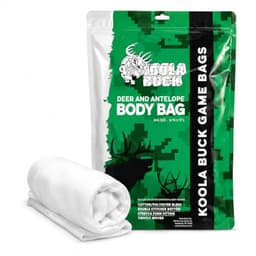
Koola Buck Standard Series Deer Body Bag, 16" x 72"
Hanging a field-dressed deer to cool and age in a shed, garage or walk-in
- Type
- Full-body bag, single
- Size
- 16" x 72"
- Material
- Cotton/poly blend, breathable
Price as of October 6, 2026. #ad How we’re funded
One deer on ice
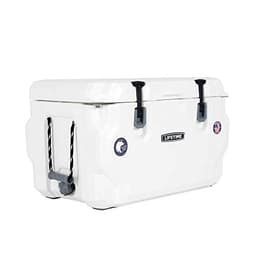
Lifetime 65 Quart High Performance Cooler
One deer, quartered or boned out, held on ice for a few days
- Capacity
- 65 quarts
- Ice retention (claimed)
- Up to 8 days
- Ice capacity
- Not published
Published ice capacity
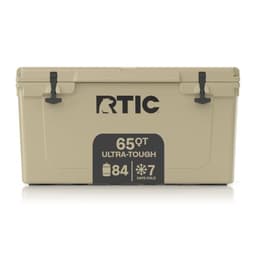
RTIC 65 QT Ultra-Tough Hard Cooler
Quartered venison that has to lie flat, with the ice weight planned in advance
- Capacity
- 65 quarts, 84 cans (no ice)
- Ice retention (claimed)
- Up to 7 days (following RTIC's cooling tips)
- Ice capacity
- 58 lb
Price as of October 6, 2026. #ad How we’re funded
A note on what these makers publish, because it varies a lot. RTIC publishes real numbers for its 65-quart cooler — 26 by 13 by 12 inches of interior space, a 58-pound ice capacity, a 37.7-pound empty weight, up to 2.4 inches of closed-cell foam and a claim of up to 7 days of cold when its cooling tips are followed — while publishing no drain system and no warranty term on that page. Lifetime claims up to 8-day ice retention and an IGBC bear certification for its 65, but its specification tab did not render when we read it, so it publishes no dimensions and no weight at all. Both numbers are manufacturer claims, under ideal conditions, with nothing warm inside.
Which is the practical caveat worth ending on: those ice-retention claims are measured with a pre-chilled cooler and no load. A 90-pound field-dressed deer going into a cooler at ambient temperature will melt ice far faster than any published figure suggests, so plan on more ice than the capacity implies and drain the melt water rather than letting the meat sit in it. Our cooler picks go through sizing for a whole deer against a quartered one.
Freezing: the mistake at the other end
Cold is the goal, but there is a floor. UW–Madison Extension says not to allow the carcass to freeze within the first six hours after harvest, because doing so can make the meat tough — rigor mortis has to run its course before the muscle goes below freezing. On a night that is going to drop hard, hang the deer in an unheated outbuilding out of the wind rather than in the open, or get the quarters into a cooler and let the ice hold them at refrigerator temperature instead.
At the far end of the process, Penn State Extension’s venison guidance is to package in meal-size portions of about one pound using freezer wrap, heavy-duty foil, vacuum bags or freezer bags with the air removed, and says properly wrapped game meat will store in the freezer for 9 to 12 months.
A decision rule you can use in the truck
Put the forecast high for the next 24 hours next to these three thresholds and the decision makes itself.
- Below 40°F: hang it. A breathable bag in a shed is fine, and you are in the band where aging genuinely works — give it 7 days or more if the cold holds.
- 40 to 50°F: Clemson strongly recommends the carcass go to a cooler the day of the kill. Skin and quarter it, get it on ice, and age it in the cooler rather than on a hook.
- Above 50°F: three to four hours to refrigeration. Quarter it in the field if you can, keep the meat above the ice, drain the cooler as it melts, and plan to butcher and freeze within a few days rather than aging at all.
The National Deer Association’s own do-it-yourself walkthrough describes the same habit from the other direction: backstraps and tenderloins come off first and go straight into a cooler, hindquarters next, then the shoulders and neck for the grinder, keeping the meat above the ice and draining the cooler as it goes. If you are working through that sequence for the first time, the equipment side is covered in our processing equipment picks.
General guidance, not legal or safety advice. Hunting regulations vary by state and change every year — always verify seasons, legal equipment and requirements with your own state wildlife agency before you hunt. Wear a full-body harness and stay attached to the tree from the ground up whenever your feet leave the ground.
Frequently asked questions
How long can a deer hang before processing?
At around 40 degrees Fahrenheit, Colorado State University Extension's aging recommendation for deer is 7 days. Clemson Cooperative Extension says to hold carcasses at 34 to 37 degrees for 7 to 14 days and to limit aging to a maximum of two weeks. University of Wisconsin-Madison Extension describes aging as holding carcasses at 35 to 45 degrees and says it can take 7 to 10 days to produce a noticeable eating difference. Warmer than that and the window shortens fast: CSU notes that a carcass exposed to 60 or 70 degrees during the day should be butchered and frozen within a few days.
What temperature is too warm to hang a deer?
Clemson Cooperative Extension is the most specific: if the air temperature is above 50 degrees the carcass should be refrigerated within three to four hours of the kill, and if the weather is over 40 degrees it is strongly recommended that the carcass go to a cooler the day it is killed. Above 50 degrees you are not aging the deer, you are racing it. That is the situation a cooler and ice is for, rather than a hook in the garage.
Can I hang a deer overnight at 50 degrees?
It is on the edge, and the published guidance says to get it cold instead. Clemson's three-to-four-hour rule applies above 50 degrees, which an overnight hang exceeds several times over. If you cannot get it into a cooler or walk-in that evening, the compromise that actually helps is to skin and quarter it immediately and get the quarters onto ice — a quartered deer in a cooler cools in a fraction of the time an intact carcass takes, because the problem is the mass of the hindquarters, not the surface.
Does hanging a deer actually make it taste better?
It can, with two qualifications. University of Wisconsin-Madison Extension says it can take 7 to 10 days of aging at 35 to 45 degrees to produce a noticeable eating difference — so three days in the garage is not aging, it is just waiting. And the gain is tenderness and flavor concentration, not a fix for meat that was handled badly in the field. A deer that sat warm for six hours before you opened it does not improve by hanging.
Should I hang a deer with the hide on or off?
Either works and each has a cost. The hide slows cooling, which is the wrong direction in warm weather, but it protects the meat from drying out and from flies, and it comes off far more easily on a fresh carcass than on a cold one. In warm weather, skin it to get heat out and then protect the exposed meat — extension guidance from both CSU and Clemson recommends cheesecloth or light cotton bags, plus ground black pepper on exposed meat to help keep flies off. In cold weather, hide on is fine and simpler.
Can a deer freeze while hanging?
Yes, and the first six hours are the ones that matter. University of Wisconsin-Madison Extension says not to allow the carcass to freeze within the first six hours after harvest, because that can make the meat tough. Rigor mortis needs to run its course before the meat goes below freezing. On a hard-freeze night, hang the deer in an unheated outbuilding rather than out in the open wind, or bring the quarters inside to a cooler at refrigerator temperature.
How fast do I need to start cooling a deer?
University of Wisconsin-Madison Extension says the cooling process should begin within a couple of hours of harvesting the deer. Propping the body cavity open, keeping the carcass in the shade and exposing it to air movement all improve cooling — CSU makes the same point, recommending you hang the animal in the shade so the cavity drains and air circulates around it. The single biggest improvement available to most hunters is skinning and quartering sooner than they would like to.
Is it safe to eat a deer that hung too long?
Judge it on temperature history rather than on the calendar, and when in doubt do not eat it. Meat that was held in the 34-to-40-degree band the whole time is in the range extension services publish for aging; meat that spent a warm afternoon at 60 or 70 degrees has been in the range where spoilage organisms multiply, and Clemson's guidance in that case is to butcher and freeze within a few days rather than to keep aging. Souring in the deep hindquarters and around the spine is the classic failure, and it is not always obvious from the outside.
Sources
- Colorado State University Extension — Field Care of Big Game — Extension guidance on field care: hang the animal in the shade to drain the body cavity and circulate air around it; carry enough cheesecloth or old sheets to cover the carcass; sprinkle black pepper on exposed meat to help keep flies away; aging recommendations at 40 degrees are 3 days for antelope, 7 days for deer, 7 days for cow elk and 14 days for bull elk; temperatures warmer than 40 degrees shorten the recommended aging period, and a carcass exposed to 60 or 70 degrees during the day should be butchered and frozen in a few days (accessed September 8, 2026)
- University of Wisconsin-Madison Extension — Handling Venison Safely — Extension guidance on venison: the cooling process should begin within a couple of hours of harvesting the deer, and propping open the body cavity, keeping the carcass in the shade and exposing it to air movement all improve cooling; do not allow the carcass to freeze within the first six hours after harvest, as this can make the meat tough; aging means holding carcasses at 35 to 45 degrees, and it can take 7 to 10 days of aging to produce a noticeable eating difference (accessed September 8, 2026)
- Clemson Cooperative Extension (HGIC) — Safe Handling of Wild Game Meats — Extension guidance on deer carcass care: if the air temperature is above 50F the carcass should be refrigerated within three to four hours after killing; if the weather is over 40F it is strongly recommended the carcass go to a cooler the day of the kill; do not use airtight game bags or tarps that hold in heat and will cause meat to spoil rapidly; use ground pepper and cheesecloth or light cotton bags to protect the skinned carcass; hold carcasses at 34 to 37F for 7 to 14 days to age, limiting aging to a maximum of two weeks (accessed September 8, 2026)
- Penn State Extension — Proper Care and Handling of Venison from Field to Table — Updated November 18, 2020; prepared by Catherine N. Cutter, food safety specialist. Thoroughly clean and sanitize all equipment, including the tabletop meat grinder, before and after use; package meat in meal-size portions (about one pound) in freezer wrap, heavy-duty foil, vacuum bags or freezer bags with the air removed; properly wrapped game meat will store in the freezer for 9 to 12 months; cook ground meat to 160F (accessed September 16, 2026)
- National Deer Association — Do-It-Yourself Deer Processing — NDA on breaking a deer down at home: backstraps and tenderloins first into a cooler, then the hindquarters, then shoulders and neck for the grinder; three to five hours per deer as a beginner; keep meat above the ice and drain the cooler (accessed August 22, 2026)
- Lifetime — 65 Quart High Performance Cooler (product page) — Manufacturer's published figures: up to 8-day ice retention; certified by the IGBC and strong enough to withstand a bear for up to an hour when locked; capped drain spout, garden-hose compatible; durable stainless steel hinge rod; two rubber latches opened with one hand; dual-purpose grip-and-slide feet; heavy-duty polyethylene construction with urethane, polypropylene and polyester rope; gasket; 5-year warranty. Lifetime's specification tab did not render when checked, so the page publishes no dimensions or weight. Cited as manufacturer claims (accessed September 24, 2026)
- RTIC Outdoors — 65 QT Ultra-Tough Hard Cooler (product page) — Manufacturer's published figures: exterior 31.62 x 17.5 x 17 in; interior 26 x 13 x 12 in; can capacity 84 cans with no ice; ice capacity 58 lb; empty weight 37.7 lb; up to 2.4 in of closed-cell foam insulation and a freezer-style gasket lock in the cold for up to 7 days when following RTIC's cooling tips; rotomolded construction, rubber T-latches, molded tie-down slots and heavy-duty rope handles, and the cooler doubles as a step stool or tabletop. RTIC publishes no drain system and no warranty term on this page. Cited as manufacturer claims (accessed September 24, 2026)
Keep reading
Best coolers for deer hunting
Published ice-retention claims and the sizing that actually holds a quartered whitetail.
See the picksBest game bags
Why breathability is the whole specification, and what an airtight bag does to meat.
See the picksBest deer processing equipment
The six purchases that take a deer from the gut pile to the freezer.
See the picksHow to quarter a deer
The fastest route to a cold deer is a quartered one — here is the sequence.
Read the guide