Field gear · Processing
How Much Meat Do You Get From a Deer?
About 48% of the field-dressed weight — roughly 62 pounds from an average buck and 45 from an antlerless deer, according to the figures the National Deer Association publishes. Here is where that number comes from and what it tells you to buy.
How this is funded:we earn a commission if you buy through our links, at no extra cost to you. It never changes which product we recommend, and we’ll tell you plainly when to skip one. Full disclosure.
About 48% of the field-dressed weight. In the clearest published figures we can find, an average buck gives 62.51 pounds of venison and an average antlerless deer gives 45.05 pounds. Those come from an Ohio DNR study summarized by the National Deer Association: bucks averaged 129.69 pounds field-dressed for 62.51 pounds of venison, which is 48.2%, and antlerless deer averaged 92.27 pounds field-dressed for 45.05 pounds, which is 48.83%. Combined, 48.52% — the arithmetic behind the rule of thumb that you keep roughly 48%.
That is the whole answer, and the rest of this page is about the two things the number is actually useful for: not being surprised, and buying the right size of everything.
The published figures
| Deer | Average field-dressed weight | Average venison yield | Percentage |
|---|---|---|---|
| Bucks | 129.69 lb | 62.51 lb | 48.2% |
| Antlerless deer | 92.27 lb | 45.05 lb | 48.83% |
| Combined | — | — | 48.52% |
Two cautions about using them. First, these are averages from one state’s study: a mature northern buck and a young southern doe are different animals, and regional body size varies enormously across the whitetail range. The percentage travels much better than the absolute weights.
Second, and this is where most of the confusion in this question lives: the figures above are percentages of field-dressedweight, not live weight. A deer loses a substantial share of its live weight when the internal organs come out, so applying 48% to a live weight will overstate your yield badly. Whenever someone tells you a deer “weighed 180 pounds,” the first question is which weight that was.
Which 52% you are not keeping
The missing half is not waste in any meaningful sense. It is bone, hide, head, lower legs, and connective tissue — plus whatever trim you decide is not worth the effort. The last category is the only one you control, and it is where yields actually differ between hunters.
The National Deer Association’s own do-it-yourself processing walkthrough describes the order: backstraps and tenderloins come off first and go straight into a cooler, then the hindquarters, then the shoulders and neck, which are the grinder meat. Writing for the NDA, Mark Turner is candid that aside from the backstraps, tenderloins and the other cuts he names, he usually ends up throwing everything else into the grinder. That is the practical difference between a 40% yield and a 48% one: the shoulders, the neck and the rib trim are the cuts a hurried job leaves on the carcass.
He is equally candid about the cost of that yield in time rather than money: three to five hours per deer as a beginner. Our guide to quartering a deer covers the cuts and our field dressing guide covers the step before them.
What the number tells you to buy
This is where a yield figure earns its keep, because almost every processing purchase is a sizing decision and most people size by guesswork. Work from the yield and the answers fall out:
- Game bags: a five-pack of quarter bags covers four quarters plus the loose cuts from one deer, which is why five-packs are the standard unit in this category. One deer, one pack.
- Cooler: 65 quarts takes a quartered or boned-out whitetail with ice. The mistake is thinking of 65 quarts as 65 quarts of meat — most of that volume is the ice you need to hold everything below 40°F.
- Freezer bags or vacuum bags: at roughly one-pound portions, an average antlerless deer is about 45 packages and an average buck about 62. Buy bags in those quantities, not in tens.
- Freezer space: budget roughly one cubic foot per 25 to 30 pounds of packaged meat as a planning figure, so about two cubic feet for an average deer — and note that tightly sealed one-pound portions take far less room than loosely wrapped packages.
On the cooler, one note from the maker’s own guidance, because ice-retention claims are heavily conditional. Lifetime’s own explanation of its up-to-eight-day claim lists what it depends on: pre-chill the cooler and the contents, because the inside will settle at the average temperature of what is in it; layer food below ice rather than on top of it; keep the lid closed, because every opening exchanges cold air for warm; and keep it out of direct sunlight. Lifetime states the goal as keeping food below 40°F, which it attributes to FDA guidance for safe food.
The three purchases the yield figure actually dictates
One bag set, one cooler, one sealer. Size each from the number above rather than from the shelf.
One deer, one pack
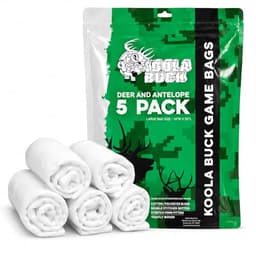
Koola Buck Standard Series Deer Quarter Bags, 5-Pack
The hunter who quarters or bones out and wants one set that covers the whole animal
- Type
- Quarter bags, 5-pack
- Size
- 16" x 50" each
- Material
- Cotton/poly blend, breathable
Price as of October 10, 2026. #ad How we’re funded
One deer plus ice
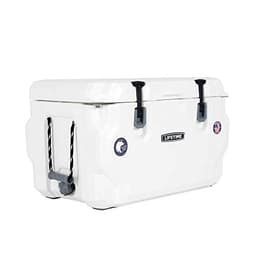
Lifetime 65 Quart High Performance Cooler
One deer, quartered or boned out, held on ice for a few days
- Capacity
- 65 quarts
- Ice retention (claimed)
- Up to 8 days
- Ice capacity
- Not published
45 to 62 packages
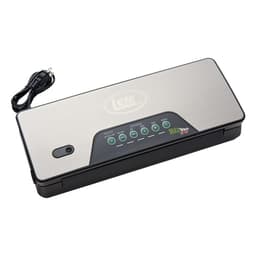
LEM Products MaxVac 100 Vacuum Sealer, Compact (#1722)
One deer a season and no counter space to give up
- Type
- External (edge) sealer, compact
- Vacuum pump
- 22 inHg, 90 W
- Rated continuous use
- 100+ consecutive seals
Price as of October 10, 2026. #ad How we’re funded
On the bags, Clemson Cooperative Extension is worth quoting because the cheap substitute here actively ruins meat: do not use airtight game bags or tarps, which hold in heat and will cause meat to spoil rapidly. A breathable cotton-poly weave lets heat and moisture out while keeping flies and debris off, which is the entire job. Clemson also suggests ground pepper and cheesecloth or light cotton bags to protect a skinned carcass.
On the sealer, Penn State Extension’s venison guidance is the standard to package against: meal-size portions of about one pound, in freezer wrap, heavy-duty foil, vacuum bags or freezer bags with the air removed. That is the specification the 45-to-62 package count above comes from. Our game bag picks, cooler picks and vacuum sealer picks cover each category in full, and our processing equipment page puts the whole setup together.
The yield is only yours if you keep it cold
A 48% yield assumes the meat is still good when you get to it, and the clock starts at the shot rather than at the kitchen. Clemson’s guidance is specific: if the air temperature is above 50°F the carcass should be refrigerated within three to four hours of the kill, and if the weather is over 40°F it is strongly recommended that the carcass go to a cooler the day it is killed.
Which is why the cooler and the bags are not accessories to the knife — they are the step that protects the number at the top of this page. Our guide to how long a deer can hang covers the temperature-and-time rules in full, and our tracking guide covers the decision at the other end: how long to wait before you start, and what the weather does to that calculation.
And the fat question, because it changes what you buy
Venison is lean to the point that it does not behave like beef. Penn State Extension’s nutrition table lists 3 ounces of roasted deer at 2.7 grams of total fat. For ground meat that means added fat is not a flavour preference, it is what makes burger hold together: grinder guidance calls for a minimum of 10% pork fat for burger and at least 20% for sausage, and Penn State’s canning instructions use one part high-quality pork fat to three or four parts venison before grinding.
So if your 45 pounds of venison includes 20 pounds of grinder meat, you are also buying roughly two pounds of pork fat — and your package count goes up accordingly. Our meat grinder picks cover head sizes and published grinding rates, including the rule that meat has to be at 40°F or colder to grind properly at all.
General guidance, not legal or safety advice. Hunting regulations vary by state and change every year — always verify seasons, legal equipment and requirements with your own state wildlife agency before you hunt. Wear a full-body harness and stay attached to the tree from the ground up whenever your feet leave the ground.
Frequently asked questions
How much meat do you get from a deer?
Roughly 48% of the field-dressed weight. The clearest published figures come from an Ohio DNR study summarized by the National Deer Association: bucks averaged 129.69 pounds field-dressed and produced 62.51 pounds of venison (48.2%), while antlerless deer averaged 92.27 pounds field-dressed for 45.05 pounds of venison (48.83%) — a combined 48.52%. That is where the working rule of thumb of about 48% comes from.
How much venison from a 150 pound deer?
It depends on whether 150 pounds is live weight or field-dressed weight, and that distinction accounts for most of the confusion in this question. If 150 pounds is the field-dressed weight, apply the 48% figure and expect roughly 72 pounds of venison. If 150 pounds is the live weight, the field-dressed weight will be substantially lower, and so will the yield. Ask which weight you have been given before you do any arithmetic.
How many pounds of meat from a doe?
The published average for antlerless deer in the Ohio DNR figures is 45.05 pounds of venison from a 92.27-pound field-dressed carcass, which is 48.83%. Individual deer vary a great deal with age, region, season and how well the animal was fed, so treat 45 pounds as a planning figure rather than a prediction. The percentage is far more stable than the absolute weight.
How many meals is a deer?
If you package in the roughly one-pound meal-size portions Penn State Extension recommends, an average antlerless deer at 45 pounds of venison gives you about 45 packages and an average buck at 62.5 pounds gives you about 62. How far that goes depends on your household: a one-pound package of ground venison is a generous meal for two to three people, so one antlerless deer realistically covers a meal a week for most of a year for a small family.
What size cooler do I need for one deer?
A 65-quart cooler takes a quartered or boned-out whitetail with ice, which makes it the standard single-deer size. The thing people underestimate is the ice: you are not filling 65 quarts with venison, you are filling it with venison plus enough ice to keep everything below 40 degrees, which is the temperature target cooler makers cite from FDA guidance. If you fill more than one tag or need to hold a deer longer than a weekend, size up or run a second cooler.
How much freezer space does a deer take?
Plan on roughly one cubic foot per 25 to 30 pounds of packaged meat as a rough planning figure, which puts an average deer in the region of two cubic feet — but the real variable is your packaging. Bulky, loosely wrapped packages take far more space than tight vacuum-sealed one-pound portions, and that difference can easily be 50%. Penn State Extension recommends meal-size portions of about one pound with the air removed, which is the same practice that minimizes freezer burn.
How much of a deer is wasted?
Less than the 48% figure suggests, because the other 52% is not waste — it is bone, hide, head, lower legs and the trim you choose not to keep. Writing for the National Deer Association, Mark Turner is candid that aside from the backstraps, tenderloins and the other named cuts, he usually ends up putting everything else through the grinder, which is how you get the yield up. The shoulders, neck and rib trim are the cuts most often left behind by a hurried job.
Is venison lean enough to need added fat?
For ground meat, yes. Penn State Extension's nutrition table lists 3 ounces of roasted deer at 2.7 grams of total fat, which is why venison binds and cooks poorly as plain burger. Grinder manuals and extension guidance both call for added fat: a minimum of 10% pork fat for burger and at least 20% for sausage, with the meat held cold throughout. Penn State's canning instructions use a similar ratio — one part high-quality pork fat to three or four parts venison before grinding.
Sources
- National Deer Association — How Much Venison Can You Expect From Your Deer? — Ohio DNR study figures: bucks averaged 129.69 lb field-dressed for 62.51 lb of venison (48.2%), antlerless deer 92.27 lb for 45.05 lb (48.83%) — a combined 48.52%, which is why 48% is the working rule of thumb (accessed August 22, 2026)
- National Deer Association — Do-It-Yourself Deer Processing — NDA on breaking a deer down at home: backstraps and tenderloins first into a cooler, then the hindquarters, then shoulders and neck for the grinder; three to five hours per deer as a beginner; keep meat above the ice and drain the cooler (accessed August 22, 2026)
- National Deer Association — Do-It-Yourself Deer Processing (equipment and cost) — Mark Turner, November 14, 2018: most processors charge at least $60 per deer, a rate at which the author paid for his basic equipment in one season; he added a vacuum sealer, grinder and small digital scale, calls the vacuum sealer and grinder the two costs that hurt the most but got both on sale for less than $200, and puts the entry cost at around $200 of equipment or less; aside from the backstraps, tenderloins and the other cuts he names, he usually ends up throwing everything else into the grinder; three to five hours per deer as a beginner; a vacuum sealer is nice to have, but plastic wrap followed by freezer paper also works for freezing venison (accessed September 16, 2026)
- Penn State Extension — Proper Care and Handling of Venison from Field to Table — Updated November 18, 2020; prepared by Catherine N. Cutter, food safety specialist. Thoroughly clean and sanitize all equipment, including the tabletop meat grinder, before and after use; package meat in meal-size portions (about one pound) in freezer wrap, heavy-duty foil, vacuum bags or freezer bags with the air removed; properly wrapped game meat will store in the freezer for 9 to 12 months; cook ground meat to 160F (accessed September 16, 2026)
- Penn State Extension — Proper Processing of Wild Game and Fish — Updated June 30, 2023. On sausage making from game meat: start with clean equipment and sanitize surfaces with 1 tablespoon chlorine bleach per gallon of water; select the proper lean-to-fat ratio for texture and binding; keep the temperature of the meat as cold as possible (below 40F) during grinding and mixing; coarse-grind, add the other ingredients, and regrind; clean grinding and stuffing equipment thoroughly and sanitize when done. Its minimum cooking-temperature table lists ground venison, sausage and deer bologna at 160F, and it states game meat stored in a freezer at 0F will last up to a year or so. Its nutrition table lists 3 oz of roasted deer at 2.7 g of total fat. Its canning instructions add one part high-quality pork fat to three or four parts venison before grinding (accessed September 16, 2026)
- Clemson Cooperative Extension (HGIC) — Safe Handling of Wild Game Meats — Extension guidance on deer carcass care: if the air temperature is above 50F the carcass should be refrigerated within three to four hours after killing; if the weather is over 40F it is strongly recommended the carcass go to a cooler the day of the kill; do not use airtight game bags or tarps that hold in heat and will cause meat to spoil rapidly; use ground pepper and cheesecloth or light cotton bags to protect the skinned carcass; hold carcasses at 34 to 37F for 7 to 14 days to age, limiting aging to a maximum of two weeks (accessed September 8, 2026)
- Lifetime — Lifetime 65-Quart High Performance Cooler (maker's ice-retention guidance) — Lifetime's own explanation of what its up-to-8-day claim depends on: pre-chill the cooler and its contents, because the inside of the cooler will be the average temperature of the items inside; layer food below ice, because covering the contents with a layer of ice makes the ice last longer; keep the lid closed, because every opening lets warm air in and cold air out; and keep the cooler out of direct sunlight. Lifetime states the goal as keeping food below 40 degrees Fahrenheit, which it attributes to the FDA's recommendation for safe food. Cited as a manufacturer's own conditions on its own claim (accessed September 24, 2026)
Keep reading
How to quarter a deer
The cuts that produce the yield above, in the order you take them off.
Read the guideBest deer processing equipment
The six purchases that take a deer from the gut pile to the freezer, with the food-safety rules for each.
See the picksBest coolers for deer hunting
Sizing for a quartered whitetail, and what an ice-retention claim is actually conditional on.
See the picksHow long does venison last in the freezer?
What decides freezer life once the meat is packaged, and the thawing rule people get wrong.
Read the guide