Field gear · Meat care
Why Venison Tastes Gamey
Gamey is not a flavor a deer is born with. It is almost always something that happened between the shot and the freezer - and four of the five causes are decided in the first three hours.
How this is funded:we earn a commission if you buy through our links, at no extra cost to you. It never changes which product we recommend, and we’ll tell you plainly when to skip one. Full disclosure.
Gamey is a handling result, not a species trait. The usual cause is a carcass that stayed warm too long, and the published windows are tighter than most hunters realise: Clemson Extension says a carcass should be refrigerated within three to four hours when the air is above 50F, and UW-Madison Extension puts the start of cooling within a couple of hours of the kill. Four of the five causes below are decided before you ever get the deer home.
The five causes, in the order they do damage
1. Slow cooling
This is the big one, and it is a clock rather than a technique. The published guidance lines up across three extension services: cooling should start within a couple of hours; above 40F the carcass should go to a cooler the day of the kill; above 50F you have three to four hours before refrigeration. Propping the cavity open, keeping the animal in the shade and getting air moving around it all speed cooling, and so does breaking it down — a quartered deer in ice loses heat far faster than a whole one hanging in still air.
The corollary matters too: do not let it freeze in the first six hours. UW-Madison is explicit that freezing that early can make the meat tough. The target for those hours is cold, not frozen.
2. Contamination
Hair, dirt and digestive contents all carry flavor onto meat and they are hard to get back off. Clemson’s guidance is to protect the skinned carcass with ground pepper and cheesecloth or light cotton bags, and — the part people get wrong — never to use airtight bags or tarps, which hold in heat and cause meat to spoil rapidly. A plastic contractor bag over a warm quarter is the single most common unforced error in deer meat care. The CDC’s CWD guidance points the same direction for a different reason: gloves on, bone the meat out, keep away from brain and spinal tissue.
3. Fat and silverskin left on
Deer fat does not behave like beef fat, and the connective tissue over the muscle holds flavor tenaciously. LEM’s own grinder manual instructs that meat be free of gristle, sinew, silver skin and bone before it is ground, and the same rule applies to steaks and roasts. This is the one cause on the list you can still fix at the kitchen table: trim harder than feels necessary. If you grind, the manual’s other instruction is to add a minimum of 10% pork or beef fat for burger — venison on its own is extremely lean, which reads as dry rather than gamey but gets blamed the same way.
4. Aging at the wrong temperature
Aging improves venison inside a band and degrades it outside one. The published figures: 34–37F for 7 to 14 days with a two-week cap (Clemson), 7 days at 40F for deer (Colorado State), and 35–45F for 7 to 10 days before the difference is noticeable (UW-Madison). Colorado State also gives the warm-weather answer plainly: a carcass exposed to 60 or 70F during the day should be butchered and frozen within a few days. If you cannot hold the band, skip aging and get the meat cut, packaged and cold. Our hanging guide works through the whole table.
5. Freezer time and packaging
Freezer burn tastes like the thing people call gamey, and it comes from air. Penn State Extension’s guidance is to package in meal-size portions of about one pound in freezer wrap, heavy-duty foil, vacuum bags or freezer bags with the air removed, and that properly wrapped game meat stores 9 to 12 months. A year-old package in a grocery bag is not a deer problem.
What to look for in the gear that fixes this
Only three purchases genuinely bear on flavor, and they map onto the first three causes:
- Breathability in a game bag, not water resistance. The bag’s job is to keep hair, dirt and flies off while letting heat out. Anything airtight does the opposite of what you bought it for.
- Interior length in a cooler, not nominal quarts. A cooler is how you hit the three-to-four-hour window on a warm opener. What decides whether a quarter lies flat under ice is the published interior measurement — two coolers both sold as 65 quart can differ by more than two inches of usable length.
- A blade that stays sharp through one animal. A dull knife tears rather than cuts, which drags hair into meat and leaves silverskin behind. Replaceable-blade knives solve this by changing the blade instead of chasing an edge in the field.
The three purchases
Breathable quarter bags
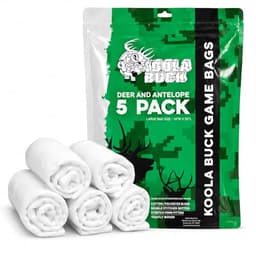
Koola Buck Standard Series Deer Quarter Bags, 5-Pack
The hunter who quarters or bones out and wants one set that covers the whole animal
- Type
- Quarter bags, 5-pack
- Size
- 16" x 50" each
- Material
- Cotton/poly blend, breathable
Price as of October 16, 2026. #ad How we’re funded
Ice for the first hours
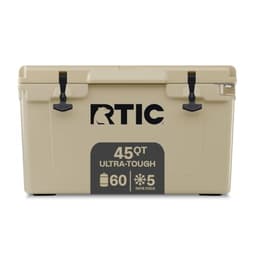
RTIC 45 QT Ultra-Tough Hard Cooler
Backstraps and tenderloins iced separately, or a second cooler for a boned-out deer
- Capacity
- 45 quarts, 60 cans
- Ice retention (claimed)
- Up to 5 days (following RTIC's cooling tips)
- Ice capacity
- 41 lb
Price as of October 16, 2026. #ad How we’re funded
A blade that stays sharp
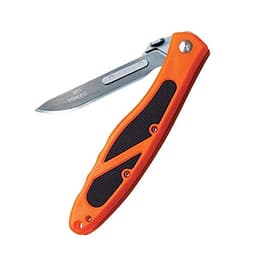
Havalon Piranta-Edge
Best replaceable-blade knife for skinning and caping
- Type
- Replaceable-blade folder
- Blade
- #60A replaceable (~2-3/4 in)
- Included
- 12 replacement blades
The Koola Buck five-pack is a breathable cotton-poly blend at 16 by 50 inches per bag, which covers a whole deer’s worth of quarters in one purchase — our game bag comparison covers the rest of the group and the one that publishes washing instructions. The RTIC 45 is the small cooler that makes sense as the first one in the truck: 41 lb of published ice capacity and a dual-plug drain, for backstraps and tenderloins iced separately while the rest of the animal is still being worked. The Havalon is the caping and skinning pick from our knife comparison, and it ships with 12 blades, which is more than any one deer needs.
The hour-by-hour version
- Hour 0–1. Gloves on. Field dress or go gutless. Keep hair and gut contents off the meat — that is a knife-sharpness problem as much as a care one.
- Hour 1–3. Get heat out. Skin or quarter, bag the quarters in something breathable, and get them onto ice or into a cooler if the air is above 40F.
- Hour 3–6. Cold, not frozen. Keep the meat above the meltwater and drain the cooler; the National Deer Association’s processing guidance says the same.
- Day 1–14. Age only if you can hold 34–45F. Otherwise cut and package now.
- Packaging. Trim every scrap of fat and silverskin, portion to about a pound, remove the air, label with the date, and eat it inside a year.
General guidance, not legal or safety advice. Hunting regulations vary by state and change every year — always verify seasons, legal equipment and requirements with your own state wildlife agency before you hunt. Wear a full-body harness and stay attached to the tree from the ground up whenever your feet leave the ground.
Frequently asked questions
Why does my venison taste gamey?
In order of likelihood: the carcass cooled too slowly, the meat picked up contamination from hair or the digestive tract, fat and silverskin were left on the cuts, or the meat spent too long in the freezer in permeable packaging. Clemson Extension's guidance is that above 50F a carcass should be refrigerated within three to four hours of the kill, and that above 40F it is strongly recommended it goes to a cooler the day of the kill. University of Wisconsin-Madison Extension puts the start of cooling within a couple of hours of harvest. Miss those windows on a warm afternoon and no amount of marinade fixes what follows.
How do you get the gamey taste out of deer meat?
You mostly prevent it rather than remove it. The one thing you can genuinely fix after the fact is trimming: take off every scrap of fat, silverskin and connective tissue before packaging, because deer fat carries flavor differently from beef fat and holds it strongly - LEM's own grinding manual tells you to get gristle, sinew and silverskin out before the meat ever reaches the plate. After that, package in meal-size portions with the air removed, keep freezer time under 9 to 12 months, and cook ground venison to 160F rather than beyond it.
Does hanging a deer make it taste better?
Only inside a narrow temperature band, and most garage hangs do not reach it. Clemson recommends holding carcasses at 34 to 37F for 7 to 14 days and capping aging at two weeks. Colorado State Extension's figure for deer is 7 days at 40F, and warns that a carcass exposed to 60 or 70F during the day should be butchered and frozen within a few days instead. UW-Madison puts useful aging at 35 to 45F for 7 to 10 days before you notice an eating difference. A 48-hour hang in a 55F garage is not aging - it is just waiting, at a temperature that is working against you.
Can you freeze a deer carcass right away?
Not in the first six hours. UW-Madison Extension's guidance is explicit that the carcass should not be allowed to freeze within the first six hours after harvest, because that can make the meat tough. The goal in those hours is fast cooling, not freezing: prop the cavity open, keep it in the shade, get air moving around it, or get it onto ice. Freezing comes after the meat has cooled and, ideally, after it has been cut and packaged properly.
Does a gut shot ruin the meat?
It makes contamination the main risk rather than temperature. Rinse and trim aggressively, discard anything that took stomach contents directly, and get the carcass cooled fast. The CDC's chronic wasting disease guidance also applies to every deer regardless of the shot: wear gloves, bone out the meat, minimise handling of brain and spinal tissue, and consider testing before eating meat from a CWD area.
Sources
- Clemson Cooperative Extension (HGIC) — Safe Handling of Wild Game Meats — Extension guidance on deer carcass care: if the air temperature is above 50F the carcass should be refrigerated within three to four hours after killing; if the weather is over 40F it is strongly recommended the carcass go to a cooler the day of the kill; do not use airtight game bags or tarps that hold in heat and will cause meat to spoil rapidly; use ground pepper and cheesecloth or light cotton bags to protect the skinned carcass; hold carcasses at 34 to 37F for 7 to 14 days to age, limiting aging to a maximum of two weeks (accessed September 8, 2026)
- Colorado State University Extension — Field Care of Big Game — Extension guidance on field care: hang the animal in the shade to drain the body cavity and circulate air around it; carry enough cheesecloth or old sheets to cover the carcass; sprinkle black pepper on exposed meat to help keep flies away; aging recommendations at 40 degrees are 3 days for antelope, 7 days for deer, 7 days for cow elk and 14 days for bull elk; temperatures warmer than 40 degrees shorten the recommended aging period, and a carcass exposed to 60 or 70 degrees during the day should be butchered and frozen in a few days (accessed September 8, 2026)
- University of Wisconsin-Madison Extension — Handling Venison Safely — Extension guidance on venison: the cooling process should begin within a couple of hours of harvesting the deer, and propping open the body cavity, keeping the carcass in the shade and exposing it to air movement all improve cooling; do not allow the carcass to freeze within the first six hours after harvest, as this can make the meat tough; aging means holding carcasses at 35 to 45 degrees, and it can take 7 to 10 days of aging to produce a noticeable eating difference (accessed September 8, 2026)
- National Deer Association — Do-It-Yourself Deer Processing — NDA on breaking a deer down at home: backstraps and tenderloins first into a cooler, then the hindquarters, then shoulders and neck for the grinder; three to five hours per deer as a beginner; keep meat above the ice and drain the cooler (accessed August 22, 2026)
- Penn State Extension — Proper Care and Handling of Venison from Field to Table — Updated November 18, 2020; prepared by Catherine N. Cutter, food safety specialist. Thoroughly clean and sanitize all equipment, including the tabletop meat grinder, before and after use; package meat in meal-size portions (about one pound) in freezer wrap, heavy-duty foil, vacuum bags or freezer bags with the air removed; properly wrapped game meat will store in the freezer for 9 to 12 months; cook ground meat to 160F (accessed September 16, 2026)
- LEM Products — MightyBite #8 (#1158) 500 Watt Electric Meat Grinder instruction manual — Manual dated June 2014. When making burger from wild game, add a minimum of 10% pork fat, or beef fat if pork is unavailable; meat should be 40 degrees or colder and free of gristle, sinew, silver skin and bone; grind through the coarse plate first, then unplug, clean the head of sinew, fat or gristle and regrind through the fine plate; if meat mashes instead of extruding in strings, chill it to 40 degrees and check the plate and knife, because a dull knife or plate also causes mashing; for sausage use at least 20% fat and keep the meat well chilled (28 to 32F); do not grind bones or deep-frozen food; parts are not dishwasher safe and should be hand-dried immediately (accessed September 16, 2026)
- CDC — About Chronic Wasting Disease (CWD) — Federal guidance: wear gloves when field-dressing, bone out the meat, minimize handling of brain and spinal tissue, and consider testing before eating meat from CWD areas (accessed August 7, 2026)
Keep reading
How Long Can a Deer Hang?
The temperature-and-time tables from three extension services, and what a garage hang really achieves.
Read the hanging guideBest Game Bags
Breathable quarter bags against whole-carcass bags - and why an airtight bag spoils meat.
See the game bag picksHow to Quarter a Deer
The gutless method, the order of cuts, and keeping hair off the venison while you work.
Read the quartering guideBest Coolers for Venison
Interior length against nominal quarts, published ice capacity, and the retention claims that are not comparable.
See the cooler picks