Field gear · Processing
How to Quarter a Deer
Breaking an animal down where it lies is how you get meat out of places you cannot drag from — and how you cool it fast enough that the walk out does not cost you the venison.
How this is funded:we earn a commission if you buy through our links, at no extra cost to you. It never changes which product we recommend, and we’ll tell you plainly when to skip one. Full disclosure.
There are two reasons to break a deer down where it fell rather than dragging it out whole. The obvious one is access: some of the best whitetail ground is exactly the ground you cannot get a vehicle to — or a game cart— and a deer is far easier to carry in four pieces than in one.
The less obvious one is temperature, and it matters more. A whole carcass is a single large mass that holds heat in its center for hours. Four quarters in mesh bags are four small masses with air moving around each one. If it is warm — and early-season whitetail hunting frequently is — quartering is the fastest way to get the meat cooling, and cooling is what decides whether the venison is good.
The gutless method, and why it is usually right
The method described step by step above never opens the body cavity. You take the meat from the outside, working one side at a time, and the only moment you go inside is reaching behind the last rib for the tenderloins.
The advantages are substantial. No contact with the digestive tract, so no possibility of tainting a quarter with a punctured gut. No pile of viscera to work around. Far less mess on your hands, your knife and the meat. And it is faster, particularly for one person working alone.
It also lines up with disease guidance. The CDC’s advice on chronic wasting disease is to wear gloves, bone out the meat, and minimize handling of brain and spinal tissue, and the National Deer Association specifically recommends learning the gutless method for hunters in CWD management areas. A gutless breakdown does all three as a side effect of how it works.
The order of cuts, and why the backstraps come out early
The National Deer Association’s processing guidance takes the backstraps and tenderloins first and gets them into a cooler before anything else. That ordering is deliberate rather than sentimental.
The loins are the best meat on the animal and they are also the most exposed to whatever goes wrong next — dropped hide, hair, dirt, a knife that has been in the wrong place. Take them while everything is still clean, bag them, and put them somewhere they cannot be contaminated. Then work through the shoulders, hindquarters, neck and rib meat.
How much you should end up with
Useful for knowing whether you left meat behind. An Ohio DNR study cited by the NDA found bucks averaged 129.69 lb field-dressed producing 62.51 lb of venison (48.2%) and antlerless deer 92.27 lb producing 45.05 lb (48.83%) — a combined average of 48.52%. Forty-eight percent of field-dressed weight is the working rule of thumb.
So a 130-pound field-dressed buck should give you about 62 pounds of boneless venison. If you are getting substantially less, the usual culprits are neck meat, rib meat and flank left on the carcass. All three are grinder meat, and our meat grinder picks for processing deer cover how to size a grinder to the amount of trim you actually bring home. Packaged at about a pound apiece, as Penn State Extension recommends, those 62 pounds are roughly 60 freezer packages — which is why our vacuum sealer picks for venison rank machines on how many bags they can seal in a row.
The gear that actually matters
Replaceable blade
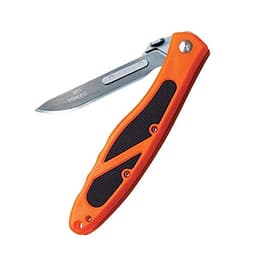
Havalon Piranta-Edge
Best replaceable-blade knife for skinning and caping
- Type
- Replaceable-blade folder
- Blade
- #60A replaceable (~2-3/4 in)
- Included
- 12 replacement blades
Replaceable blade, larger
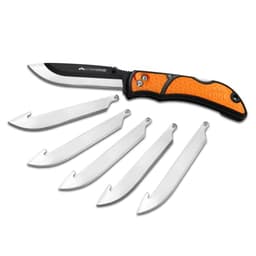
Outdoor Edge RazorLite EDC
Best all-round replaceable-blade folder
- Type
- Replaceable-blade folder
- Blade
- 3.5 in replaceable
- Included
- 6 replacement blades
Price as of October 6, 2026. #ad How we’re funded
Pack for quarters
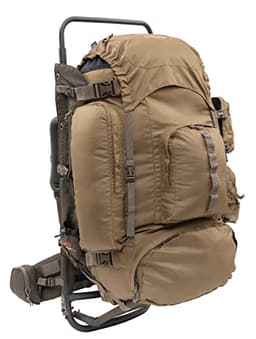
ALPS OutdoorZ Commander + Pack Bag (freighter frame)
Best budget freighter frame for hauling meat
- Type
- Freighter frame pack
- Frame
- Anodized aluminum freighter with shelf and lashing straps
- Capacity
- 5,250 cu in (pack bag)
Price as of October 6, 2026. #ad How we’re funded
A replaceable-blade knife is close to ideal for this job. Quartering one deer will dull any fixed blade you own — hide is abrasive and joints are hard — and a fresh scalpel-sharp blade is safer than a dull knife you are forcing. Change blades rather than pushing through.
Beyond the knife: disposable gloves, four game bags (mesh or cotton, not plastic), a small tarp or the game bags themselves to keep meat off the ground, and a pack that will actually carry a hindquarter. Plastic bags are the classic mistake — they trap heat and moisture, which is the opposite of what you want.
Keeping hair and dirt off the meat
Hair is the thing people complain about afterward and it is almost entirely preventable.
- Peel, do not cut. Pull the hide away from the muscle and use the knife on the connective tissue, not through the hair. Cutting hide from the outside throws hair everywhere.
- Keep the hide flat. Fold it back and lay it down. A flapping hide brushes hair onto everything.
- Wipe the blade. A blade that has picked up hair transfers it to the next cut.
- Bag it immediately. Meat goes from the animal into a bag, not onto the leaves.
Some hair is inevitable. Pick it off dry meat later — it comes away easily. Do not wash it off with water in the field: wet meat spoils faster and you cannot dry it properly out there.
Getting it cool, and getting it home
Hang the bags where air can move around them if you have to leave them while you make a second trip — off the ground, in shade, spread apart rather than in a pile. Body heat trapped between two quarters stacked together is exactly the problem you were solving.
At the truck, into a cooler on ice. The NDA’s guidance is to keep the meat on top of the ice and drain the cooler regularly so it is not sitting in meltwater. Waterlogged venison is a real and avoidable way to spoil good meat. Buy the cooler on interior length rather than quarts — a quartered deer needs a box that will take the pieces lying flat.
Then it is a home-processing job. The NDA reckons three to five hours per deer for a beginner, which is a fair estimate — and worth knowing before you start at ten at night after a long track.
Check the transport rules before you travel
Many states restrict moving carcass parts out of chronic wasting disease management zones, and the restrictions frequently allow boned-out meat while prohibiting an intact carcass or spinal column. Quartering therefore often makes travel legal where dragging the whole animal out would not.
The specifics change annually and vary by state, so verify with the agency for the ground you are hunting rather than relying on what was true last season. That is the same principle we apply to every regulatory question on this site — see our attractant legality guide for how to find the authoritative source for your state.
General guidance, not legal or safety advice. Hunting regulations vary by state and change every year — always verify seasons, legal equipment and requirements with your own state wildlife agency before you hunt. Wear a full-body harness and stay attached to the tree from the ground up whenever your feet leave the ground.
Frequently asked questions
What is the gutless method for a deer?
Breaking the animal down by removing the meat from the outside without opening the body cavity. You skin one side, take the shoulder, backstrap and hindquarter, roll the deer over and repeat, then reach in behind the last rib for the tenderloins. It is faster, far cleaner, and it means you never handle the digestive tract.
How much meat do you get from a deer?
Roughly 48% of field-dressed weight as boneless venison. An Ohio DNR study cited by the National Deer Association found bucks averaged 129.69 lb field-dressed for 62.51 lb of venison (48.2%) and antlerless deer 92.27 lb for 45.05 lb (48.83%) — a combined 48.52%. So a 130 lb field-dressed buck is about 62 lb of meat.
Do you have to gut a deer before quartering it?
No — that is the whole point of the gutless method, and it is usually the better choice. Not opening the cavity means no contact with the digestive tract, less mess, no risk of tainting meat with a punctured gut, and a faster job in the field. The only time you reach inside is to take the tenderloins.
How do you keep hair off deer meat?
Peel the hide away from the meat rather than cutting through it, keep the hide flat against the ground rather than flapping, and wipe your blade whenever it picks up hair. Once meat is off the animal it goes into a game bag rather than onto the ground. Some hair is inevitable; picking it off dry meat later is easy, washing it off is not.
Should you quarter a deer if you have CWD in your area?
Boning out the meat is exactly what public health guidance points toward. CDC guidance on chronic wasting disease recommends wearing gloves, boning out the meat, and minimizing handling of brain and spinal tissue — all of which a gutless breakdown does naturally. Many states also restrict transporting carcass parts out of CWD zones, so check the local rules before you travel with the animal.
How long can a deer sit before you quarter it?
The variable is temperature, not a clock. Cooling is the whole job: a carcass that stays warm spoils from the inside out, and warm weather shortens the window sharply. Quartering speeds cooling dramatically because you have turned one large mass into several small ones with air around each — which is a strong argument for doing it in the field rather than hanging the animal whole.
Sources
- National Deer Association — Do-It-Yourself Deer Processing — NDA on breaking a deer down at home: backstraps and tenderloins first into a cooler, then the hindquarters, then shoulders and neck for the grinder; three to five hours per deer as a beginner; keep meat above the ice and drain the cooler (accessed August 22, 2026)
- National Deer Association — How Much Venison Can You Expect From Your Deer? — Ohio DNR study figures: bucks averaged 129.69 lb field-dressed for 62.51 lb of venison (48.2%), antlerless deer 92.27 lb for 45.05 lb (48.83%) — a combined 48.52%, which is why 48% is the working rule of thumb (accessed August 22, 2026)
- CDC — About Chronic Wasting Disease (CWD) — Federal guidance: wear gloves when field-dressing, bone out the meat, minimize handling of brain and spinal tissue, and consider testing before eating meat from CWD areas (accessed August 7, 2026)
- National Deer Association — How to Blood-Trail a Deer — NDA guidance on waiting by shot type (one hour on an arrow lung shot, a minimum of two on liver, four to six on a paunch hit), reading blood color, marking every drop with tissue, and grid-searching when the trail dies (accessed August 22, 2026)
- Penn State Extension — Proper Care and Handling of Venison from Field to Table — Updated November 18, 2020; prepared by Catherine N. Cutter, food safety specialist. Thoroughly clean and sanitize all equipment, including the tabletop meat grinder, before and after use; package meat in meal-size portions (about one pound) in freezer wrap, heavy-duty foil, vacuum bags or freezer bags with the air removed; properly wrapped game meat will store in the freezer for 9 to 12 months; cook ground meat to 160F (accessed September 16, 2026)
Keep reading
How to field dress a deer
The traditional approach — when opening the cavity is the right call and how to do it cleanly.
Read the guideBest hunting knives
Replaceable-blade versus fixed-blade for a job that dulls a knife fast.
See the picksHow to sharpen a hunting knife
Because quartering one deer will take the edge off any blade you own.
Read the guideBest hunting backpacks
Getting quarters out on your back — which is the whole reason to quarter in the first place.
See the picks