Trail cameras · Head to head
No-Glow vs Low-Glow Trail Cameras
One flash type is invisible and gives you worse night photos. The other gives you better night photos and a faint red glow anything can see. Here is how to pick the right trade.
How this is funded:we earn a commission if you buy through our links, at no extra cost to you. It never changes which product we recommend, and we’ll tell you plainly when to skip one. Full disclosure.
Every trail camera has to solve the same problem after dark: light the scene without wrecking the thing it is trying to photograph. Manufacturers solve it two ways, and the difference between them comes down to a single property of the infrared LEDs behind the lens — their wavelength. That one property decides how good your night photos are, whether anything can see the camera working, and, on public ground, whether the camera is still there when you come back. Here is the trade, and how to pick a side.
No-glow example (selectable)
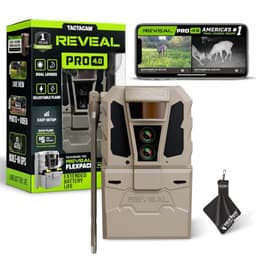
Tactacam Reveal Pro 4.0
Cellular scouting on any carrier
- Connectivity
- Cellular (multi-carrier LTE, auto-carrier selection)
- Flash
- Selectable no-glow (80 ft) or low-glow (96 ft) infrared
- Ongoing cost
- Data plan required; no activation fee
Price as of October 3, 2026. #ad How we’re funded
Low-glow example
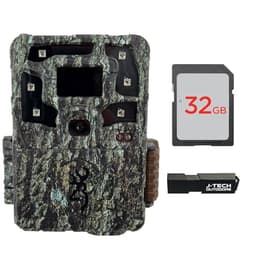
Browning Strike Force Pro X 1080
No-subscription scouting with great image quality
- Connectivity
- Non-cellular (SD card)
- Flash
- Low-glow infrared
- Ongoing cost
- None — no data plan
Price as of October 3, 2026. #ad How we’re funded
The one difference that causes all the others
Both flash types are infrared. Neither produces a white flash. What separates them is where on the infrared spectrum they sit:
- Low-glow (also sold as “red-glow”) emits at the shorter end of infrared — just past visible red, close enough that a human eye still catches it. That is why you see a dull red ring if you look straight into the LED array while it fires.
- No-glow (also sold as “black flash” or “invisible”) emits at a longer wavelength, beyond the edge of human vision. Nothing is visible at all, from any angle, at any distance.
The catch is physics, not marketing. As the wavelength gets longer, less of the emitted energy comes back to the sensor as usable image data. So the flash type that hides itself best is also the one that gives you the darkest, grainiest, shortest-range night photos. No camera escapes that trade — premium no-glow models simply throw more emitters at it and narrow the gap.
What deer actually see
This is where most of the argument goes wrong. The National Deer Association’s summary of the research on deer vision is blunt about the mechanism: deer are essentially red-green colorblind because they lack the long-wavelength cone that lets a human separate red and orange from green. Their color vision is built around the short (blue) and middle (green) wavelengths. A low-glow flash is operating past the far end of that — beyond visible red even for us.
Deer do hold real advantages over us at night. The same NDA research notes they carry a higher concentration of rods than humans, and that they lack the ultraviolet filter our eyes have, which is why they see so well at last light and why a UV-bright jacket is a genuine problem. Neither of those advantages helps at the long-wavelength end of the spectrum. If you are picturing a mature buck staring into a glowing red eye and abandoning the property, the biology does not support it.
What does spook deer at a camera site is far more ordinary: the human scent left on the tree and the ground, the disturbance of hanging the camera, the mechanical click and motor whir of some models, and the sheer novelty of an object that was not there last week. Fix those and the flash question shrinks. Hang cameras scent-consciously, get in and out fast, and let the site settle for a couple of weeks before you judge it.
Then why does no-glow exist?
Because deer are not the only thing that walks past a trail camera. A low-glow flash is plainly visible to a person standing in front of it in the dark, and a visible camera on public land or an unfenced boundary is a camera someone can find and take. That is the real no-glow argument, and it is a good one.
Buy no-glow when:
- You hunt public ground. Foot traffic is guaranteed, theft is common, and a camera nobody notices is a camera that survives the season.
- You have already lost a camera there. Once it has happened on a property, treat it as a standing condition of that property rather than bad luck.
- The camera sits near a road, trail or property line. Anywhere a passer-by could catch a red glow from outside your ground.
- You are watching one specific mature buck. Not because he will see the flash, but because these are usually your least-disturbed, highest-value sites — and on the site you care most about, buying the extra margin is cheap even when the risk is small.
And when low-glow is the better buy
On ground where nobody else walks, low-glow wins on the things you notice every single time you pull a card:
- Brighter, cleaner night images. More usable light means less grain, and the difference is obvious at the far end of the detection zone.
- Better reach. The flash lights subjects further out, so a deer at the edge of a field or across a trail comes back identifiable rather than as a gray smudge.
- Better motion freeze. More light generally allows a shorter exposure, which matters enormously for a walking deer — the usual cause of a blurred night photo is not a bad sensor, it is a long exposure and a moving animal.
- A lower price. Nearly every budget camera is low-glow, so at any given price you get more camera by choosing it.
The specs that matter more than either
Flash type is a second-order decision. Two other specs decide whether you get a usable photo at all, and both outrank it:
- Trigger speed. A deer crossing a trail covers ground quickly. A camera that takes a full second to wake gives you a photo of the empty trail the deer just left, and no flash type rescues you from that.
- Detection range and zone shape. A flash that reaches 80 feet is wasted if the sensor only detects to 50, and a sensor that detects to 100 is frustrating if the flash dies at 60. The two have to match, which is why we treat them as one decision.
Both are covered in the trigger speed and detection range guide, which is the page to read before this one if you are buying your first camera. And once the camera is on the tree, how you hang it — height, angle, and which way it faces relative to the sun — changes night image quality more than the flash spec does. That is covered in how to set up a trail camera.
A note on mixing both
Most hunters running several cameras end up with a mix, and that is the sensible outcome rather than a failure to decide. Put no-glow where the risk is people — boundaries, access trails, public ground, anywhere a camera has gone missing before. Put low-glow deep in the interior of ground you control, where the only thing walking past has four legs and cannot see the flash anyway. You end up with better night photos where they are safe to have, and invisibility where you need it.
How to decide, in one paragraph
Ask who walks your ground. If the answer is “other people, or people I do not know”, buy no-glow and accept grainier night photos as the price of a camera still on the tree in January. If the answer is “nobody”, buy low-glow, take the brighter night images and the lower price, and put the savings toward a faster trigger or a second camera on a second trail. What you should not do is buy no-glow because you are worried about spooking deer — that is the one reason the evidence does not support, and it is the reason most people buy it.
Frequently asked questions
Can deer see the flash on a low-glow trail camera?
Almost certainly not in the way people fear. Deer lack the long-wavelength cone that lets humans distinguish red, so the faint red LED array on a low-glow camera sits at the very edge of what their eyes are built to register. What deer notice is far more likely to be the camera itself, your scent on the tree, and the disturbance you caused hanging it. The ones most likely to see a low-glow flash are other people.
Is no-glow worth the worse night photos?
It depends entirely on who else walks your ground. On leased or private land where nobody else is around, low-glow is the better buy — brighter, cleaner night images for less money. On public ground, or anywhere you have had a camera stolen, no-glow's invisibility is worth the grainier photo, because a camera that gets taken produces no photos at all.
What is the actual difference between no-glow and low-glow?
Both use infrared LEDs to light the scene at night. Low-glow (sometimes called red-glow) emits at a shorter infrared wavelength that sits just inside what a human eye can faintly detect — you see a dull red ring if you look at it head-on. No-glow emits at a longer wavelength, past the edge of human vision, so nothing shows at all. The longer wavelength carries less usable light to the sensor, which is why no-glow night photos are darker and grainier.
Which flash type has better night image quality?
Low-glow, consistently. The shorter wavelength puts more usable light on the subject, so images come back brighter, less grainy and better able to freeze a moving deer. If you are trying to count points on a buck at 2 a.m., low-glow gives you a better chance of it.
Do no-glow cameras have shorter flash range?
Generally yes, all else being equal. A no-glow emitter puts less usable light downrange than a low-glow one of the same power, so the far edge of the detection zone tends to come back darker. Manufacturers compensate with more or stronger LEDs, but the physics still favors low-glow on reach.
Does flash type matter for daytime photos?
No. The infrared array only fires at night. Daytime image quality comes from the sensor and lens, and is unaffected by whether the camera is no-glow or low-glow.
Sources
- National Deer Association — The Hunter's Guide to Deer Vision — Deer lack the long-wavelength (red) cone, so they cannot distinguish red or orange from green; they lack a UV filter and carry more rods than humans, which is why they see so well at last light (accessed August 19, 2026)
- National Deer Association — Find Next Season's Buck in Last Season's Trail-Cam Photos — NDA on reading trail-camera data to pattern deer movement and bedding-to-food travel (accessed July 22, 2026)
- National Deer Association — Understanding Deer Senses (Dr. Gino D'Angelo) — NDA research summary on the three senses that keep a deer alive — sight, hearing, and, above all, smell (accessed July 22, 2026)
Keep reading
Best cellular trail cameras
Our cellular picks, including both no-glow options, compared on connectivity and plan cost.
See the picksBest trail cameras without a subscription
SD-card cameras with no running cost — where most low-glow value sits.
See the no-fee picksTrigger speed and detection range explained
The two specs that decide whether you get a photo of a deer or a photo of an empty trail.
Read the guideStealth Cam vs SPYPOINT
A low-glow SD-card camera against a no-glow cellular one — the same trade, priced out.
Compare the two