Tag & Timber

Tree stands · Safety

Best Tree Stand Safety Harnesses: The Numbers Makers Publish, and the Ones They Do Not

A harness is the only thing in your truck with an expiration date, and almost the only product whose maker will not name the standard it is built to. Seven picks, ranked on the figures that actually exist.

By Stephen V.Last updated How we pick

Most gear on this site is a preference. A stand, a boot, a pair of binoculars — buy the wrong one and you are mildly annoyed for a season. A harness is the one purchase where being wrong has a different shape, and it is also, strangely, the category with the least published data. Three of the products below do not state a weight capacity anywhere we could read. Exactly one names the standard it is tested against. One maker publishes a replacement interval that most hunters have never heard of and the rest say nothing at all.

So we ranked on what is actually printed, in this order:

  • Does it publish a capacity, and is yours inside it? Three hundred pounds is the ceiling across most of this category, and it is a ceiling that includes your late-season layers, your pack and your bow. One pick here publishes 400.
  • Does it name a standard, or just claim one? There is a real difference between “certified to meet or exceed the ASTM standards recognized by the TMA” and “surpasses all industry safety standards.” The first is a testable claim. The second is a sentence.
  • Does the box cover the climb? A harness protects you standing on the platform. Most falls happen on the way up, on the way down, or in the step between the sticks and the seat, so a tree strap, a lineman’s rope and a lifeline are not accessories — they are the rest of the product.
  • What is its service life, and what is the warranty? One maker says replace the harness every three to five years. Another sells a one-year warranty. A third publishes five. For a product you are asked to retire on a schedule, those numbers are a specification.

Prices are live and dated. We have not fall-tested any of this and will not pretend otherwise — the reasoning below comes from each maker’s own published figures, from the figures they decline to publish, and from the hunter-education guidance every state teaches. If you want the mechanics of how a fall-arrest system works before you shop, read our tree stand safety and harness guide first.

How this is funded:we earn a commission if you buy through our links, at no extra cost to you. It never changes which product we recommend, and we’ll tell you plainly when to skip one. Full disclosure.

Quick picks

Ranked on published specs, package value and buyer fit. Select a row to jump to the full write-up. We have not tested these products — here is exactly what we do instead.

#ProductBest forPrice
1
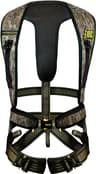
Hunter Safety System Ultra-Lite Harness (Mossy Oak Bottomland)

Hunter Safety System Ultra-Lite Harness (Mossy Oak Bottomland)

The harness to buy if the reason you sometimes skip one is bulk. At a published 2.5 pounds with a mesh upper body and 1.25-inch webbing, it is the lightest thing HSS sells that still comes with a tree strap and a suspension relief strap in the box, and it has lineman's loops built in so you can add a climbing rope later without buying a different vest. The one thing it does not give you is a named standard: HSS says it surpasses all industry safety standards and declines to say which.

Best overall
$132.99 · View on Amazon

Price as of October 6, 2026. #ad How we’re funded

2
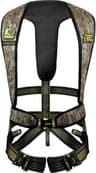
Hunter Safety System X-1 Bowhunter Harness

Hunter Safety System X-1 Bowhunter Harness

The single most important piece of tree-stand gear, and it is cheap. A full-body harness is what turns a fall from fatal into a scare, and the X-1 is the version of that with nothing added: a 2.5 lb vest with no weave-through buckles and no dangling straps, the tree strap and suspension relief strap in the box, and a published 5-year warranty that is longer than anything else in this group. It is the harness to buy if the price of a premium vest is the reason you do not own one.

Best value
$79.99 · View on Amazon

Price as of October 6, 2026. #ad How we’re funded

3
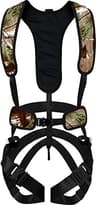
Muddy The Safeguard Harness (with Safe-Line and lineman's rope)

Muddy The Safeguard Harness (with Safe-Line and lineman's rope)

The only harness here that arrives as a whole fall-arrest system rather than a vest plus a shopping list. The box includes the harness, a bungee tether with a one-hand carabiner, a lineman's rope for hanging and climbing, and a Safe-Line with two prusiks — one for you and one for whoever hunts the stand next. Buying the same three parts separately costs more than this package does, which is why it is the pick for a hunter setting up their first stand.

Best complete kit
$79.99 · View on Amazon

$93.9915% off

Price as of October 6, 2026. #ad How we’re funded

4
Summit Treestands Pro Safety Harness (SU83082)

Summit Treestands Pro Safety Harness (SU83082)

The pick for anyone who wants a certification rather than a slogan. Summit is the only maker in this group that names what its harnesses are tested against — ASTM industry standards recognized by the Treestand Manufacturer's Association — and it publishes a 300 lb limit, a waist range per size and a one-year warranty instead of leaving all three blank. The Pro itself is the padded, MOLLE-equipped version of that line, and it is the natural companion to a Summit climbing stand.

Best named certification
$109.99 · View on Amazon

Price as of October 6, 2026. #ad How we’re funded

5
Hunter Safety System HSS-9 Big Boy Harness, 4X/5X

Hunter Safety System HSS-9 Big Boy Harness, 4X/5X

The answer to a question most of this category ignores. Nearly every harness here tops out at 250 or 300 pounds, which quietly excludes a lot of hunters from the only piece of gear that keeps them alive twenty feet up; HSS publishes this one as the only harness available to fit hunters up to 400 pounds. It also arrives with the lineman's rope and the tree strap in the box, so the whole climb is covered on day one.

Best for bigger hunters
$209.99 · View on Amazon

Price as of October 6, 2026. #ad How we’re funded

6
Hunter Safety System Reflective Lifeline

Hunter Safety System Reflective Lifeline

The cheapest thing on this page and the one that closes the gap most falls happen in. A harness protects you once you are standing on the platform; a lifeline is the rope that keeps you attached from the ground, up the sticks, through the transition onto the stand, and back down in the dark. The reflective sheath is not a gimmick either — it answers a flashlight beam, which is how you find the right tree at 5 a.m.

Best lifeline
$39.99 · View on Amazon

Price as of October 6, 2026. #ad How we’re funded

7
Hunter Safety System Lineman's Climbing Rope

Hunter Safety System Lineman's Climbing Rope

The piece that turns a one-person stand hang from a stunt into a job. Clipped around the trunk and into your harness loops, a lineman's rope holds you against the tree so both hands are free to run a stick, a bracket or a ratchet strap — and it keeps you attached during the part of a hang where you are highest, most tired and least secured. At 8.5 feet it fits most trees a whitetail hunter is working with.

Best for hanging stands
$39.99 · View on Amazon

Price as of October 6, 2026. #ad How we’re funded

The picks in full

#1Best overall

Hunter Safety System Ultra-Lite Harness (Mossy Oak Bottomland)

The harness to buy if the reason you sometimes skip one is bulk. At a published 2.5 pounds with a mesh upper body and 1.25-inch webbing, it is the lightest thing HSS sells that still comes with a tree strap and a suspension relief strap in the box, and it has lineman's loops built in so you can add a climbing rope later without buying a different vest. The one thing it does not give you is a named standard: HSS says it surpasses all industry safety standards and declines to say which.

Strengths

  • Published at 2.5 lb — light enough that early-season heat stops being a reason to leave it in the truck
  • Capacity is published per size (S/M 100-175 lb, L/XL 175-250 lb, 2X/3X 250-300 lb) rather than as one vague number
  • Comes with the adjustable tree strap and a suspension relief strap that doubles as a deer drag, so the box is a complete stand-level system
  • Built-in lineman's loops mean you can add a lineman's rope later and be attached on the climb too

Trade-offs

  • HSS names no standard, no test and no certifying body on this page — only that the harness surpasses all industry safety standards
  • No warranty period is published for this model, which matters on a product the same maker says to replace every 3-5 years
  • Mesh and 1.25-inch webbing is less padded than a heavier vest, which some hunters feel on a six-hour sit
  • Costs more than twice what the brand's own basic vest does, and the extra buys lightness, not a higher rating
TypeFull-body harness vest, mesh upper
Harness weight2.5 lb
CapacityS/M 100-175 lb; L/XL 175-250 lb; 2X/3X 250-300 lb
Webbing1.25 in upper body
In the boxTree strap, suspension relief strap/deer drag, instructions
Standard namedNot published

Worth knowing. HSS publishes its own replacement rule in its FAQ: replace the harness every 3-5 years, or immediately if it shows wear, damage or has been in a fall.

Specs read from the product listing, on October 5, 2026. “Not published” means the manufacturer does not state that figure.

#2Best value

Hunter Safety System X-1 Bowhunter Harness

The single most important piece of tree-stand gear, and it is cheap. A full-body harness is what turns a fall from fatal into a scare, and the X-1 is the version of that with nothing added: a 2.5 lb vest with no weave-through buckles and no dangling straps, the tree strap and suspension relief strap in the box, and a published 5-year warranty that is longer than anything else in this group. It is the harness to buy if the price of a premium vest is the reason you do not own one.

Strengths

  • Published at 2.5 lb and low-profile enough that it does not fight a bow or a crossbow
  • Comes with a Primary Treestrap and a suspension relief strap, so it is usable the day it arrives
  • A published 5-year warranty, which HSS calls the strongest in the industry and which no other pick here matches
  • Costs a fraction of a premium vest, which is the only reason anyone ever hunts without one

Trade-offs

  • A harness alone does not protect you on the climb — add a lineman's rope and a lifeline
  • No standard, test or certifying body is named on the listing
  • No weight capacity is published, so sizing is by garment size rather than by hunter weight
  • Minimal padding and no pockets: this is a safety device, not a vest you organize gear in
TypeFull-body safety harness (vest)
Harness weight2.5 lb
In the boxPrimary Treestrap, suspension relief strap, safe-use instructions
Warranty5 years (maker's claim)
CapacityNot published
Standard namedNot published

Worth knowing. A harness only helps if you're attached to the tree from the ground up — a lineman's rope on the climb and a lifeline on the trunk close the gap most falls happen in.

Specs read from the product listing, on October 5, 2026. “Not published” means the manufacturer does not state that figure.

#3Best complete kit

Muddy The Safeguard Harness (with Safe-Line and lineman's rope)

The only harness here that arrives as a whole fall-arrest system rather than a vest plus a shopping list. The box includes the harness, a bungee tether with a one-hand carabiner, a lineman's rope for hanging and climbing, and a Safe-Line with two prusiks — one for you and one for whoever hunts the stand next. Buying the same three parts separately costs more than this package does, which is why it is the pick for a hunter setting up their first stand.

Strengths

  • Harness, tether, lineman's rope and a two-prusik Safe-Line in one box — the whole ground-to-stand chain, not just the stand
  • Two prusik knots means a hunting partner can use the same lifeline without re-rigging the tree
  • Bungee tether with a one-hand carabiner gives 360-degree movement around the trunk so you can turn on an approaching deer
  • Quick-release leg buckles are easy to work with gloves on and in the dark

Trade-offs

  • Muddy publishes no harness weight; the listing's 1 lb item weight cannot cover a padded harness plus two ropes and hardware, so treat the figure as a shipping artifact
  • No published weight capacity anywhere we could read, which is the one number a fall-arrest product should state
  • No standard or certification is named on the listing
  • Sized by garment size rather than by hunter weight, so size up carefully over late-season layers
TypeFull-body padded harness + lifeline kit
In the boxHarness, bungee tether, lineman's rope, Safe-Line with 2 prusiks, carabiner
TetherBungee, one-hand carabiner, 360-degree movement
CapacityNot published
Harness weightNot published
Standard namedNot published

Worth knowing. A lifeline with two prusiks is the detail worth paying for on shared ground: the second knot lets a partner clip the same rope without anyone free-climbing to re-rig it.

Specs read from the product listing, on October 5, 2026. “Not published” means the manufacturer does not state that figure.

#4Best named certification

Summit Treestands Pro Safety Harness (SU83082)

The pick for anyone who wants a certification rather than a slogan. Summit is the only maker in this group that names what its harnesses are tested against — ASTM industry standards recognized by the Treestand Manufacturer's Association — and it publishes a 300 lb limit, a waist range per size and a one-year warranty instead of leaving all three blank. The Pro itself is the padded, MOLLE-equipped version of that line, and it is the natural companion to a Summit climbing stand.

Strengths

  • Summit publishes that its harnesses are designed and certified to meet or exceed the ASTM standards recognized by the TMA — the only named standard in this roundup
  • Published 300 lb weight limit and published waist ranges (Medium 28-35 in, Large 35-46 in) rather than a generic size chart
  • Padded shoulder straps and a torso strap, which is the difference between a harness you tolerate and one you forget you have on
  • MOLLE webbing takes a bino pouch or a release holder without adding a second strap across your chest

Trade-offs

  • The 1-year limited warranty is the shortest here, on a product the industry says to retire after a few seasons
  • Summit's published component list (tether with locking carabiner, 8 ft rope with adjustable prusik) is written for the Sport; the Pro is only described as comparable with added features, so confirm what is in your box
  • No harness weight is published for the Pro — Summit publishes 2 lb for the lighter Element and nothing for this one
  • Waist-sized rather than weight-sized, so a 300 lb hunter at a 47-inch waist has no size here
TypeFull-body harness, padded shoulders, torso strap
Standard namedASTM standards recognized by the TMA (maker's claim)
Capacity300 lb
SizingMedium 28-35 in waist; Large 35-46 in waist
Warranty1-year limited
Harness weightNot published

Worth knowing. Summit's own service-life instruction is to inspect before every use and replace frayed webbing, cracked buckles or compromised stitching immediately.

Specs read from the product listing, on October 5, 2026. “Not published” means the manufacturer does not state that figure.

#5Best for bigger hunters

Hunter Safety System HSS-9 Big Boy Harness, 4X/5X

The answer to a question most of this category ignores. Nearly every harness here tops out at 250 or 300 pounds, which quietly excludes a lot of hunters from the only piece of gear that keeps them alive twenty feet up; HSS publishes this one as the only harness available to fit hunters up to 400 pounds. It also arrives with the lineman's rope and the tree strap in the box, so the whole climb is covered on day one.

Strengths

  • Published to fit hunters up to 400 lb — the only harness in this roundup that goes past 300
  • Ships with a Lineman's Climbing Rope and a rope-style treestrap, so you are attached from the ground up without a second purchase
  • Two suspension relief strap / deer drags, which matters more the heavier you are: suspension after a fall is the real danger
  • Ten pockets including zippered waist pockets, plus integrated bino and rangefinder straps

Trade-offs

  • HSS again names no standard, no test and no certifying body — only that it surpasses all industry safety standards
  • No harness weight is published, and a ten-pocket 4X/5X vest is not a light garment
  • Priced at the top of the category, and a hunter who needs this size has no cheaper option to compare it against
  • Only one size range, so it is the right harness for 4X/5X and the wrong one for anybody else
TypeFull-body harness vest, 4X/5X
CapacityUp to 400 lb (maker's claim)
In the boxLineman's climbing rope, rope-style treestrap, 2 suspension relief straps
PocketsTen, including 2 zippered waist pockets
Standard namedNot published
Harness weightNot published

Worth knowing. HSS publishes the included rope at a 31.99 USD value and the treestrap at 24.99 USD, which is most of the price gap between this harness and a bare vest.

Specs read from the product listing, on October 5, 2026. “Not published” means the manufacturer does not state that figure.

#6Best lifeline

Hunter Safety System Reflective Lifeline

The cheapest thing on this page and the one that closes the gap most falls happen in. A harness protects you once you are standing on the platform; a lifeline is the rope that keeps you attached from the ground, up the sticks, through the transition onto the stand, and back down in the dark. The reflective sheath is not a gimmick either — it answers a flashlight beam, which is how you find the right tree at 5 a.m.

Strengths

  • Keeps you connected from the ground to the stand and back again, which is the window a harness alone does not cover
  • Reflective material lights up off a flashlight beam, so you find your tree and your rope in the dark
  • Ships with the carabiner and sound dampeners, so it is quiet against the trunk
  • Cheap enough to buy one per stand, which is how they actually get used

Trade-offs

  • It has a service life: HSS states the rope lasts 3 years from date of purchase, superseding the 2-year warning printed on some ropes
  • No published breaking strength, rope diameter or material on the listing
  • Left on the tree it is exposed to UV and weather all year, and a faded rope is a rope to retire
  • Only useful if you also own a harness — this is a component, not a system by itself
TypeLifeline with prusik, carabiner and sound dampeners
Service life3 years from date of purchase (maker's updated statement)
VisibilityReflective sheath
LengthNot published
Breaking strengthNot published

Worth knowing. HSS states on this listing that although some ropes carry a printed 2-year lifespan warning, the current policy is a 3-year lifespan from date of purchase.

Specs read from the product listing, on October 5, 2026. “Not published” means the manufacturer does not state that figure.

#7Best for hanging stands

Hunter Safety System Lineman's Climbing Rope

The piece that turns a one-person stand hang from a stunt into a job. Clipped around the trunk and into your harness loops, a lineman's rope holds you against the tree so both hands are free to run a stick, a bracket or a ratchet strap — and it keeps you attached during the part of a hang where you are highest, most tired and least secured. At 8.5 feet it fits most trees a whitetail hunter is working with.

Strengths

  • Frees both hands at height, which is the whole reason hang-on setups go wrong
  • Published at 8.5 ft, long enough for most mature hardwoods a stand goes in
  • Includes two carabiners, so it is ready to use with harness lineman's loops out of the package
  • Adjusts quickly while you are on the tree rather than requiring you to re-tie

Trade-offs

  • Needs a harness with lineman's loops, which not every budget vest has
  • No published rope diameter, breaking strength or service life on the listing
  • 8.5 ft is short for a big-timber trunk, and there is no longer option in this SKU
  • It is for the climb and the hang — it is not a substitute for a tether or a lifeline once you are seated
TypeLineman's rope for hanging stands, sticks and steps
Length8.5 ft
HardwareTwo Recon carabiners included
Breaking strengthNot published
Service lifeNot published

Worth knowing. The maker's stated use is hands-free installation of ladder sections, hang-on stands or tree steps when used with a tree strap.

Specs read from the product listing, on October 5, 2026. “Not published” means the manufacturer does not state that figure.

You are not buying a vest, you are buying three parts

The thing sold as a “safety harness” is one component of a fall-arrest system, and a system with a missing part is not a system. State-approved hunter education describes it the same way everywhere: a full-body harness, a tether that connects you to the tree, and a strap around the trunk that the tether attaches to. The harness distributes the load across your chest, waist and thighs instead of your abdomen, and the tether is what keeps a fall short enough for that distribution to matter.

The gap that kills people is the climb. A harness worn on the ground and clipped in only after you have settled into the seat leaves you unprotected for the exact minutes you are least stable — one hand on a stick, one foot searching for a platform, in the dark, often cold. The hunter-education rule is to be attached from the ground up, every hunt, and in practice that means two cheap items most hunters skip: a lineman’s rope that holds you to the trunk while your hands work, and a lifeline that runs the length of the tree so you can be clipped in before your boots leave the dirt.

That is why two of the seven picks on this page are ropes. They are the least exciting items here and the ones most likely to change the outcome. If the budget only stretches to a harness this season, buy the harness — then buy a lifeline for your most-used tree before you buy anything else for your stand.

The capacity number, and who publishes it

Weight capacity is the one figure a fall-arrest product should state on the front of the box, and the category treats it as optional. Summit publishes 300 pounds across its harness line. Hunter Safety System publishes capacity per size on the Ultra-Lite — S/M for 100 to 175 pounds, L/XL for 175 to 250, 2X/3X for 250 to 300 — which is more useful, because it tells you that buying a bigger size is not just about girth. The Muddy Safeguard publishes no capacity at all, and neither does the X-1 vest, which is otherwise the best-value harness in the group.

Two things follow from this. First, the number has to cover everything suspended, not just you: layers, boots, a pack, a bow, a release, a rangefinder and whatever is in your pockets. A 240-pound hunter in late-season gear with a loaded pack is not comfortably inside a 250-pound rating. Second, the hunters this category most quietly excludes are the ones above 300 pounds, which is why the HSS Big Boy earns a slot here on the strength of a published figure rather than a feature: it is the only harness we could verify as published to fit a hunter up to 400 pounds.

One maker names a standard. The rest claim one.

This is the finding that reordered our picks. Summit states on its own harness page that its harnesses are “designed and certified to meet or exceed the ASTM industry standards recognized by the Treestand Manufacturer’s Association (TMA)” — a named standards body, a named industry association, and the word certified. Hunter Safety System, which is the dominant brand in this category and makes four of our seven picks, says on page after page that its harnesses “surpass all industry safety standards.” It does not say which standards, what test, or who did the testing.

We are not telling you HSS harnesses are unsafe; they are the most widely used fall-arrest products in American deer hunting and the company publishes more honest detail than most about service life, which is a harder thing to admit. But as a buyer, an unnamed claim is not something you can check, and a named one is. If two harnesses are otherwise close on weight, capacity and included parts, the one that names the standard should win, and that is how the Summit Pro got its slot ahead of better-padded vests.

Harnesses expire — and this is the part nobody is told at the counter

Hunter Safety System publishes its own replacement rule in its FAQ, and it is the single most useful sentence in this category: replace your harness every three to five years, or immediately if it shows signs of wear, damage, or has been involved in a fall. Before every hunt, check for frayed stitching, worn straps and damaged buckles, and do not use it if anything looks questionable.

Read that against the warranties and the picture gets clearer. The X-1 publishes a five-year warranty, which brackets the replacement window neatly. Summit publishes a one-year limited warranty on harnesses it also tells you to inspect before every use. The Ultra-Lite publishes no warranty period at all. None of that is a scandal — a warranty covers defects, not wear — but it does mean the real cost of a harness is its price divided by about four seasons, which makes the gap between a budget vest and a premium one smaller than it looks.

Ropes expire faster. The HSS lifeline listing is explicit that although some ropes carry a printed two-year lifespan warning, the current policy is three years from the date of purchase. A lifeline left on a tree lives outdoors through a full year of UV, rain and freeze cycles, so write the purchase date on the storage bag with a marker, because in four seasons you will not remember. A faded, stiff, fuzzy rope is a rope to cut up and throw away.

Suspension relief is the part you hope never matters

Every harness on this page includes a suspension relief strap, usually doubling as a deer drag, and it exists because surviving the fall is only the first problem. Hanging motionless in leg straps compresses the blood vessels in your thighs; hunter-education material teaches that you need a way to take weight off those straps and a plan to get back to the platform or down to the ground promptly, not eventually.

Practically, that means three things. Set the relief strap up at home, with the harness on, so you know which loop your boot goes in without thinking. Carry a phone in a harness pocket rather than a pack pocket, because a pack hanging below you is a pack you cannot reach. And tell one person which tree you are in, which costs nothing and is the single most effective safety measure in this entire article.

Which one fits how you hunt

Ladder stands and permanent stands on your own ground. The climb is the dangerous part and it is the same climb every time, which makes a lifeline the best money you can spend. One lifeline per stand, hung in daylight in September, and a vest you find comfortable. See our ladder stand picks for the platforms these go on.

Hang-on stands and sticks, set by one person. You want lineman’s loops on the harness and a lineman’s rope in your hand, because a solo hang is where both hands are busy and nothing is holding you. Our guide to hanging a stand walks the sequence; the rope is what makes the sequence safe.

Climbing stands. You are attached to a moving platform and you will be shifting constantly, so padding and a torso strap stop being luxuries. The Summit Pro is the obvious pairing for a Summit climber, and our climbing stand picks cover the stands.

Saddle hunters. A saddle is a different system — the saddle itself is your harness, with a tether, a bridge and a lineman’s belt included or sold alongside. Do not stack a stand harness over a saddle; buy the saddle’s own components. Our saddle picks cover what comes in each kit.

Five things to do before opening day

Check the date on everything. If you cannot remember which season you bought the harness, you are probably at the back end of the three-to-five-year window. Ropes get replaced sooner.

Hang the lifelines in daylight. Setting a rope on a trunk in the dark on opening morning is the exact situation lifelines exist to prevent.

Put the harness on over your late-season layers. A vest that fits in a T-shirt in August and will not buckle over a parka in December gets left in the truck in December.

Practice the transition at three feet. The step from the sticks onto the platform, with the tether being swapped, is the move most worth having done before it counts. Do it standing on the ground.

Rehearse the relief strap once. Hanging in a harness for the first time should not happen twenty feet up after something has already gone wrong.
Frequently asked questions

Do I need to buy a harness if my tree stand came with one?

Not necessarily — most new stands ship with a full-body harness because the industry made that a condition of certification, and a bundled harness is a real harness. Check three things before trusting it: that it is a full-body harness rather than a belt or a chest strap, that it fits over the clothing you hunt in, and how old it is. A stand bought used years ago may come with a harness already past the three-to-five-year replacement window its maker publishes, in which case you are buying a stand with a strap-shaped souvenir attached.

How long does a tree stand safety harness last?

Hunter Safety System publishes the clearest answer in the category: replace the harness every three to five years, or immediately if it shows signs of wear or damage, or has been involved in a fall. Inspect it before every hunt for frayed stitching, worn straps and damaged buckles. Ropes are shorter-lived — HSS states that its lifeline has a three-year lifespan from the date of purchase, superseding the two-year warning printed on some older ropes. A lifeline that lives on a tree year-round is exposed to UV and weather the whole time, so write the purchase date on it.

What is the difference between a harness, a tether, a lifeline and a lineman's rope?

The harness is what you wear. The tether is the short rope from your harness to a strap around the trunk, and it is what limits how far you fall once you are in the stand. A lifeline is a long rope that runs from the ground to above your platform with a sliding prusik knot on it, so you can be attached during the entire climb and descent. A lineman's rope is a short adjustable rope that goes around the trunk and back to loops on your harness, holding you against the tree with both hands free while you hang sticks or a stand. A complete setup is all four; most hunters own only the first two.

Are hunting safety harnesses actually certified to a standard?

Some are, and most do not say. Summit publishes that its harnesses are designed and certified to meet or exceed the ASTM industry standards recognized by the Treestand Manufacturer's Association. Hunter Safety System, the biggest brand in the category, claims only that its harnesses surpass all industry safety standards, without naming the standard, the test or the certifying body — and Muddy's listing names nothing either. That does not make the unnamed products unsafe, but a named standard is the only version of the claim a buyer can check, and it is a fair tiebreaker between two otherwise similar harnesses.

What weight can a tree stand harness hold?

Three hundred pounds is the common published ceiling: Summit states a 300 lb limit across its harness line, and Hunter Safety System publishes capacity per size on the Ultra-Lite, with 2X/3X rated for 250 to 300 lb. Remember that the rating covers everything suspended — you, your clothing, your boots, your pack and your weapon — so a 240 lb hunter in December gear is closer to the limit than the bathroom scale suggests. Hunters above 300 lb have very few options; HSS publishes its 4X/5X Big Boy harness as fitting hunters up to 400 lb, and it is the only one we could verify.

Can I use a construction or roofing harness for hunting?

We would not. A fall-protection harness sold for roofing is designed around different anchor geometry and a different working position, it does not come with the tether, tree strap or suspension relief strap a tree-stand system needs, and no maker publishes test data for using one in a tree. Practically it is also loud, bulky and not camouflaged. Buy a harness sold and tested for tree-stand hunting; the cheapest one here costs less than a box of premium broadheads.

What should I do if I fall and end up hanging in my harness?

Act immediately rather than waiting for help. Get weight off the leg straps using the suspension relief strap that came with the harness — hanging motionless in leg straps compresses the blood vessels in your thighs, which is why every harness here includes one. Then get back to the platform or down to the ground as quickly as you safely can. The reason to set the relief strap up at home, carry a phone in a harness pocket rather than in your pack, and tell someone which tree you are hunting is that all three of those decisions are impossible to make after the fall.

Do I need a harness in a ladder stand or a ground blind?

Yes in a ladder stand, no in a ground blind. A ladder stand still puts you fifteen or twenty feet up, and the climb and the step over the rail onto the platform are exactly where falls happen — a lifeline on a ladder stand is some of the cheapest safety you can buy. A ground blind has nothing to fall from, so a harness is unnecessary there; the relevant safety gear in a blind is blaze orange where your state requires it and a clear shooting plan.

Can you wash a tree stand harness?

Neither HSS nor Summit publishes washing instructions for their harnesses, which is itself the answer: do not put a fall-arrest product through a washing machine or a dryer, where heat and agitation work on the stitching and the webbing you are trusting. Sponge off mud with water, hang it to dry out of the sun, and store it dry and out of daylight. If you want a scent-controlled harness, buy one that ships with scent-control treatment rather than treating a harness yourself.

Sources

  • Summit Treestands — Safety Harnesses (product line page) — Manufacturer's published figures for the Element, Sport and Pro harnesses: all three are designed and certified to meet or exceed the ASTM industry standards recognized by the Treestand Manufacturer's Association (TMA); all three carry a 300 lb weight limit; sizing is Medium for a 28-35 in waist and Large for a 35-46 in waist; all three carry a 1-year limited warranty covering defects in materials or workmanship for the original purchaser; all include suspension relief straps and instructions for use; the Element is published at 2 lb; the Sport ships with a tether with a locking carabiner and an 8 ft safety rope with an adjustable Prusik knot, and the Pro is described as comparable with added features. Summit's own instruction on service life is to inspect the harness for wear before every use and replace frayed webbing, cracked buckles or compromised stitching immediately. Cited as manufacturer claims (accessed October 5, 2026)
  • Hunter Safety System — Frequently Asked Questions — The maker's own service-life rule, in its own words: it recommends replacing your harness every 3-5 years, or immediately if it shows signs of wear, damage, or has been involved in a fall; and before every hunt, checking for frayed stitching, worn straps or damaged buckles, and not using the harness if anything looks questionable. The FAQ does not address lifeline rope lifespan, TMA certification, weight limits or washing. Cited for the replacement interval, which almost no buyer of a harness knows exists (accessed October 5, 2026)
  • Hunter Safety System — Ultra-Lite Realtree Harness (product page) — Manufacturer's published figures: harness weight 2.5 lb; 1.25 in upper-body webbing; weight capacity by size, with S/M rated 100-175 lb, L/XL 175-250 lb and 2X/3X 250-300 lb; ventilating mesh fabric, rubber-coated leg buckles, quick snap buckles, built-in lineman's loops and a shock-absorbing tether; the box contains the harness, an adjustable tree strap, a suspension relief strap that doubles as a deer drag, a tree stand safety DVD, safe-use instructions and a warranty card. On standards the page says only that the harness surpasses all industry safety standards — it names no standard, no test and no certifying body — and it publishes no warranty period. Cited as manufacturer claims (accessed October 5, 2026)
  • Hunter Safety System — HSS-9 Big Boy Harness, 4X/5X (product page) — Manufacturer's published figures: described as the only harness available to fit hunters up to 400 pounds; ten pockets including two zippered pockets built onto the waist strap; integrated adjustable bino and rangefinder straps; a shock-absorbing tether; built-in lineman's loops; rubber-coated leg buckles and quick snap buckles. The box contains the harness, a rope-style treestrap with carabiner (published at a 24.99 USD value), a Lineman's Climbing Rope (published at a 31.99 USD value), two suspension relief strap / deer drags, a tree stand safety DVD, safe-use instructions and a warranty card. As with the rest of the line, the page claims only that it surpasses all industry safety standards. Cited as manufacturer claims (accessed October 5, 2026)
  • Hunter-Ed — Fall-Arrest Systems (FAS) — State-approved hunter-ed guidance on full-body harness + fall-arrest components (accessed July 22, 2026)
  • Hunter-Ed — Fall-Arrest System Safety Guidelines — Hunter-ed rule: stay attached to the tree from the ground up, every hunt (accessed July 22, 2026)
  • Tree Stand Safety Awareness Foundation — Industry safety foundation tracking treestand-fall statistics and the ABCs of safety (accessed July 22, 2026)
  • National Deer Association — Treestand Accidents: Can We Stop the Insanity? — NDA on the leading causes of treestand falls and the case for a harness on every hunt (accessed July 22, 2026)
  • Wisconsin DNR — Tree Stand Safety — State wildlife agency guidance on harnesses and safe stand use (accessed July 22, 2026)

Keep reading