Tree stands · Technique
How to Hang a Tree Stand
Hanging a stand is the most exposed thing a whitetail hunter does — at height, with both hands full, on a platform that is not yet attached. Here is the order that keeps you connected throughout.
How this is funded:we earn a commission if you buy through our links, at no extra cost to you. It never changes which product we recommend, and we’ll tell you plainly when to skip one. Full disclosure.
The National Deer Association and the Tree Stand Safety Awareness Foundation both make the same point about treestand accidents: most of them are not falls from a seated hunter. They happen while climbing, while hanging, and during the transition between the climbing system and the platform. Those are precisely the minutes covered by this page.
Hunter-Ed’s fall-arrest guidance reduces to one rule that solves almost all of it: stay attached to the tree from the moment your feet leave the ground until they touch it again. Everything below is just the practical sequence for doing that while also getting a stand into a tree.
The kit, and the one piece people skip
A hang-on setup is the stand, the sticks, and a fall-arrest system. Most hunters own the first two and a harness. Fewer own a lineman’s rope, and the lineman’s rope is the piece that makes the whole job safe.
A tether attaches you above your head when you are standing on the platform. It does nothing for you while you are on a stick fifteen feet up trying to hold a stand against a trunk with one hand and ratchet a strap with the other. That is what the lineman’s rope is for: it goes around the trunk, clips to both side rings of your harness, and lets you lean back into it with both hands free. Our safety harness picks cover the ropes as well as the vests, including which harnesses ship with lineman’s loops already built in.
Sticks
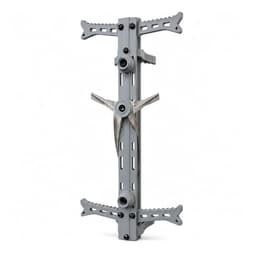
Hawk Helium Climbing Sticks (4-pack)
Getting up to a hang-on or saddle
- Type
- Aluminum climbing sticks (set of 4)
- Pairs with
- Hang-on stands and saddles
- Material
- Aluminum (lightweight)
Price as of October 6, 2026. #ad How we’re funded
Harness
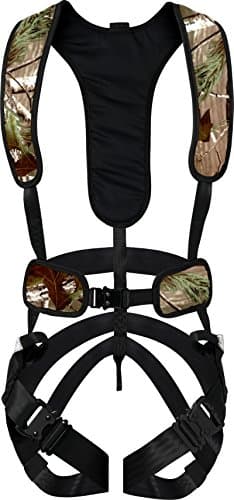
Hunter Safety System X-1 Bowhunter Harness
Every tree-stand and saddle hunter — and the first harness to put on a new hunter
- Type
- Full-body safety harness (vest)
- Harness weight
- 2.5 lb
- In the box
- Primary Treestrap, suspension relief strap, safe-use instructions
Price as of October 6, 2026. #ad How we’re funded
Hang-on stand
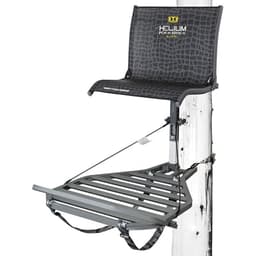
Hawk Helium Kickback XL
Comfortable lock-on hunting on any tree
- Type
- Hang-on / lock-on stand
- Weight capacity
- 300 lb
- Best tree
- Almost any tree (with climbing sticks)
Price as of October 6, 2026. #ad How we’re funded
Choosing the tree
Hunters choose trees for how easy they are to climb and then wonder why the shot never presents. Choose in this order:
- Shot angle to the trail you expect deer to use, with the prevailing wind carrying your scent away from it rather than along it.
- Backdrop. A tree with limbs, a fork or another trunk behind you breaks your outline. A lone straight pole against open sky makes you a silhouette at any height.
- Access. Can you get to this tree in the dark without walking through bedding or across the field you are hunting?
- Then soundness. Alive, no dead limbs overhead, no significant lean, and thick enough for the trunk diameter the stand specifies.
A slight lean toward you is comfortable to hunt from and generally fine. A lean away from you puts you out over nothing and makes the platform feel wrong all day.
The sequence
The step-by-step above is the whole method, but three points deserve expansion because they are where things go wrong.
Harness on at the truck
Not at the tree. A harness in your pack is a harness you will decide you do not have time for when you are running late and the sky is getting gray. Put it on with the tether and lineman’s rope already attached, then walk in wearing it.
Never climb with the stand on your back
Carry it in on your back, absolutely. Get it up the tree on a haul line. Climbing sticks with twenty pounds of steel and mesh hanging off your shoulders changes your center of gravity in exactly the wrong direction, and it occupies the hand you would use to catch yourself.
The transition is the moment
You are on the top stick. The stand is hung. The temptation is to unclip the lineman’s rope, step across, and then sort the tether out once you are standing on something solid. That order is backwards and it is the sequence that appears again and again in accident accounts.
Attach the tether first, from the sticks, above the height of your head when standing on the platform. Then step across with the tether taking the load. Then, and only then, remove the lineman’s rope. You are never unattached.
Setting the platform
Hook the stand over the trunk, run the strap around and cinch or ratchet it tight, then stand on the platform and work your weight down and back so the teeth or bracket bite into the bark. Most hang-on stands are designed to be settled under load; a stand hung finger-tight and not weighted can shift the first time you stand up on it.
Bounce it, with the tether short, before you trust it. Then look at the angle: the platform should be level or very slightly nose-down, not tipped back at you, and the top climbing stick step should sit comfortably below the platform rather than level with it — you want to step up onto the stand, not across at it.
Lanes, hooks and the haul line
Trim two or three lanes and no more. Every cut branch is a change in the woods and a hole in your own cover. A tree trimmed until you have a 360-degree view is a tree you are perfectly visible from in 360 degrees.
Hang a bow hook and a pack hook while you are up there, and leave a haul line. On the hunt itself the bow goes up on the line after you do — climbing with a bow in one hand is the same mistake as climbing with the stand on your back, in a smaller package.
Then get down the way you came up: tether off only after the lineman’s rope is back on, sliding it down ahead of you, one stick at a time.
Do this in summer
Everything above — the noise, the trimming, the scent, the hour of blundering about — costs you nothing in July and costs you the spot in October. Hang stands months early, let the woods absorb them, and let the first time you walk to that tree in season be a hunt rather than a project.
Then inspect before you climb: straps degrade in sunlight, and a stand that has hung through a summer is hanging on webbing that has had a summer of it. Look for fading, stiffness and fraying every single year, and replace anything you are unsure about.
General guidance, not legal or safety advice. Hunting regulations vary by state and change every year — always verify seasons, legal equipment and requirements with your own state wildlife agency before you hunt. Wear a full-body harness and stay attached to the tree from the ground up whenever your feet leave the ground.
Frequently asked questions
What do I need to hang a tree stand?
A hang-on stand, a set of climbing sticks, a full-body harness with a tether and tree strap, a lineman's rope, and a haul line. The lineman's rope is the one people leave out and it is the one that keeps you attached while both hands are busy hanging the platform — which is the most exposed moment in the process.
How do you use a lineman's rope?
Run it around the trunk and clip both ends to the side rings on your harness, so you can lean back against it with both hands free. As you climb, slide the rope up ahead of you before each move, and never climb above it. It keeps you connected to the tree continuously from the ground until the tether takes over at the platform.
When is the most dangerous part of hanging a tree stand?
The transition from the top climbing stick onto the platform. You are at full height, moving your weight from one thing to another, and it is exactly when hunters have removed the lineman's rope but not yet attached the tether. Attach the tether above the platform first, then step across with it taking the load.
How high should I hang a tree stand?
Let the cover and the shot angle decide rather than a number. Enough height to be outside a deer's normal scanning plane and to clear brush in your lanes, and no more — steeper angles mean a smaller vital area and a shorter margin for error. Sixteen feet with a good backdrop beats twenty-two feet silhouetted against open sky.
Should I hang tree stands before the season?
Yes, well before. Deer notice new objects, and a stand hung in summer has become part of the scenery by October. Hanging in summer also means you can cut lanes, make noise and leave scent at a time when it costs you nothing, rather than the week before you want to hunt the spot.
How many shooting lanes should I cut?
Two or three, and no more than you need. Every branch you remove is a change a deer can notice and a hole in your own cover, and an over-trimmed tree leaves you silhouetted. Cut the minimum that gives you a clean shot to the trail you expect to use, then stop.
Sources
- Hunter-Ed — Fall-Arrest Systems (FAS) — State-approved hunter-ed guidance on full-body harness + fall-arrest components (accessed July 22, 2026)
- Hunter-Ed — Fall-Arrest System Safety Guidelines — Hunter-ed rule: stay attached to the tree from the ground up, every hunt (accessed July 22, 2026)
- Tree Stand Safety Awareness Foundation — Industry safety foundation tracking treestand-fall statistics and the ABCs of safety (accessed July 22, 2026)
- National Deer Association — Treestand Accidents: Can We Stop the Insanity? — NDA on the leading causes of treestand falls and the case for a harness on every hunt (accessed July 22, 2026)
- Wisconsin DNR — Tree Stand Safety — State wildlife agency guidance on harnesses and safe stand use (accessed July 22, 2026)
Keep reading
Climbing sticks guide
The half of this setup that gets you to the platform — spacing, attachment and how many you need.
Read the guideTree stand safety harness guide
The harness, the tether, the lineman's rope and the suspension-relief strap, explained properly.
Read the guideBest tree stands for deer hunting
The hang-on stands worth hanging, compared on weight, platform size and how they set.
See the picksLadder stand vs hang-on
Whether you should be hanging a stand at all, or leaving a ladder stand where it is.
Read the comparison