Crossbows · Shot selection
Crossbow Effective Range for Deer: Where the Speed Stops Helping
A modern crossbow will put a bolt through a deer at a hundred yards. That is a very different question from whether you should shoot at one, and the limit that matters is not the one printed on the box.
How this is funded:we earn a commission if you buy through our links, at no extra cost to you. It never changes which product we recommend, and we’ll tell you plainly when to skip one. Full disclosure.
Forty yards is a sensible working maximum for most crossbow hunters, fifty is the outside edge, and thirty is where a first-season hunter should stop. None of those numbers is set by the crossbow. Every unit in our registry is published between 390 and 450 feet per second and carries enough energy to pass through a whitetail considerably further out than any of them.
That gap — between what the equipment can do and what the hunter should do — is the whole subject. Crossbows are marketed on speed because speed is a single number that gets bigger, and a buyer reading 435 FPS reasonably concludes they have bought reach. What they have actually bought is a slightly flatter trajectory and a slightly shorter flight time, neither of which addresses the three things that actually decide whether a 60-yard shot ends well.
What the speed numbers actually buy
Here is what the crossbows on this site publish, side by side. The column worth noticing is the third one:
| Crossbow | Published speed | Published kinetic energy |
|---|---|---|
| Ravin R29X | Up to 450 FPS | Not published |
| Killer Instinct LOGIX 435 | 435 FPS | Not published |
| Ravin R8 | 420 FPS (400 gr arrow) | 156 ft-lb |
| CenterPoint Hellion 400 | 400 FPS | Not published |
| TenPoint Titan X | 400 FPS | Not published |
| Wicked Ridge Rampage XS | 390 FPS | Not published |
One maker out of six publishes the figure that actually relates to killing a deer. Everyone publishes the one that relates to marketing. And the two are not interchangeable, because energy depends on bolt weight as well as speed — a fast crossbow shooting a light bolt can carry less energy than a slower one shooting a heavy one.
You can do the arithmetic yourself. The standard archery formula, as explained by Wasp Archery, multiplies total arrow weight in grains by the square of velocity in feet per second and divides by 450,240. A 400-grain bolt at 400 FPS returns about 142 ft-lb. Run it on Ravin’s own published figures for the R8 — 420 FPS with a 400-grain arrow — and you get 156.7, which is where their published 156 comes from. The formula checks out, which also means the gap between 390 and 435 FPS with the same bolt is about 25% more energy: genuinely more, and nowhere near the difference between a recovered deer and a lost one.
Two caveats on that number. It is calculated at the muzzle, so the figure at 40 yards is lower — Bowhunting.com’s discussion of crossbow range turns on exactly this point, that energy drops downrange and the practical ceiling arrives before the mechanical one. And on the input side, the Pope & Young Club’s equipment definitions set a 300-grain minimum total arrow weight, which is a useful floor to know when you are tempted to chase speed with a lighter bolt.
The three things that actually set your limit
1. Your group size from a hunting position
The number that matters is not your best group off a bench. It is the worst group you shoot from the position you will be in: seated, in a coat, with a rail or a knee for a rest and a cold trigger finger. A vital-sized circle on a whitetail is roughly 8 inches. If your hunting-position group opens past that at 50 yards, 50 yards is not your range, regardless of what the crossbow does on paper.
That is also why practice targets have a speed rating and why it matters: the BLOCK Infinity on this page publishes 520 FPS, which covers any crossbow in the table above. Shooting a 400 FPS crossbow into a target rated for 300 is how people bury bolts to the fletching and snap them pulling them out. Our archery target picks cover the ratings across the category.
2. Flight time, and what the deer does during it
At 400 FPS a bolt covers 20 yards in about 0.15 seconds, 40 yards in about 0.3, and 100 yards in roughly three quarters of a second. A deer at full alert can drop into a crouch and load its legs inside that window, which is the familiar “jumping the string” problem, and it gets worse with every yard you add. Distance does not make a deer calmer; it makes your bolt slower to arrive.
Crossbows are quieter than they used to be and faster than they used to be, and both help. Neither changes the fact that a deer that is already looking at your tree has more time to react at 60 yards than at 25.
3. Whether you actually know the distance
Flat trajectory is often sold as freedom from ranging, and it is not. Crossbow scopes ship with multiple aiming points precisely because the bolt drops, and at 50 yards a 5-yard error in your estimate is a meaningful miss on an 8-inch target.
Elevated hunters have a second problem on top of that one. The bolt follows the true horizontal distance to the deer, not the line-of-sight distance your eye naturally uses — so on a steep shot from a tall stand, using the line-of-sight number makes you shoot high. An angle-compensating rangefinder does that conversion for you, which is why it is the one optical feature we think an elevated hunter should refuse to give up. Our rangefinder guide covers how the feature works, and our rangefinder picks cover the units that have it.
The three purchases that actually extend your range
Nothing here is a faster crossbow, which is the point. Range comes from knowing the distance, from a bolt that flies the same way every time, and from enough practice at that distance to trust the first two.
Know the true distance
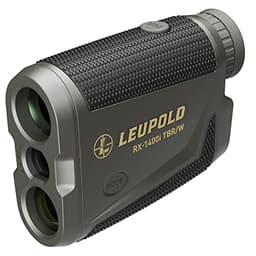
Leupold RX-1400i TBR/W Gen 2
Stand hunters who want angle-compensated range
- Max range (reflective)
- 1,400 yd
- Magnification
- 6x
- Angle compensation
- Yes — TBR/W (true horizontal + wind hold)
Price as of October 6, 2026. #ad How we’re funded
Shoot the specified bolt
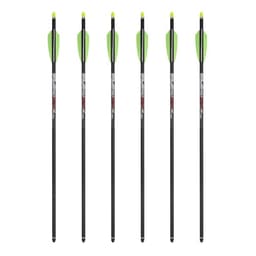
TenPoint Pro Elite 400 20-inch, 6-pack
TenPoint and Wicked Ridge owners buying the specified bolt
- Length
- 20"
- Shaft
- Carbon
- Nock
- Alpha-Nock HP (aluminum bushing)
Price as of October 6, 2026. #ad How we’re funded
Practice at range
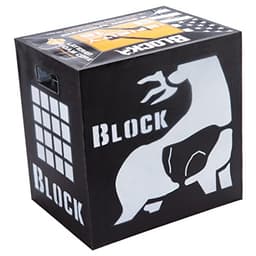
BLOCK Infinity Crossbow
Crossbows and the fastest compounds
- Stops
- Field points and broadheads
- Dimensions
- 16" x 16" x 16"
- Shootable sides
- 6
On the bolt: nock style is a safety specification rather than a preference. A flat nock in a crossbow specified for a half-moon can let the string slip past the bolt on release, which is a dry fire and the fastest way to destroy a crossbow. Buy what your manual specifies, in the weight it specifies. Our bolt picks cover the nock question in full.
On the crossbow itself: consistency at range depends on the string and cables being in good order, and TenPoint’s own maintenance guidance is to inspect strings and cables every session, condition them when they look dry, and replace them at least every two years or every 1,000 shots for frequent shooters. A crossbow that shot 2-inch groups two seasons ago and will not now is usually telling you about its string rather than about you. Our maintenance guide covers the routine.
Set your limit before the season, not in the stand
The useful version of this whole article is a number you write down. Shoot five-bolt groups from your hunting position at 20, 30, 40 and 50 yards. Find the furthest distance at which every group stays inside 8 inches, subtract ten yards for the conditions you cannot practice — cold, adrenaline, a deer that is not standing still — and that is your limit for the season.
Most hunters doing that honestly land between 30 and 45 yards. That is not a limitation of modern crossbows; it is an accurate description of what a person can do with one. Long-range practice is still worth doing, because shooting at 60 or 70 yards magnifies every flaw in your hold and makes 30 feel easy — just treat it as diagnosis rather than as permission.
One last thing to check before you shop on specifications at all: draw weight, minimum bolt length and broadhead requirements are all commonly legislated, the rules are not uniform across states, and they change. Our crossbow laws by state overview explains how to find the authoritative current rule for where you hunt.
General guidance, not legal or safety advice. Hunting regulations vary by state and change every year — always verify seasons, legal equipment and requirements with your own state wildlife agency before you hunt. Wear a full-body harness and stay attached to the tree from the ground up whenever your feet leave the ground.
Frequently asked questions
What is the effective range of a crossbow on deer?
For most hunters, 40 yards is a sensible working maximum and 50 is the outside edge, even though the equipment is capable of far more. The limit is set by three things that have nothing to do with the crossbow's speed rating: how reliably you can keep every bolt in a vital-sized circle at that distance from a hunting position, how long the bolt takes to arrive, and whether you can judge the range exactly. Bowhunting.com's discussion of crossbow range makes the same point from the energy side — energy drops downrange, and the practical ceiling arrives well before the mechanical one.
Can you kill a deer at 100 yards with a crossbow?
A 400 FPS crossbow carries more than enough energy to kill a deer at 100 yards, and that is exactly why the question is misleading. At 100 yards the bolt is in the air for roughly three quarters of a second, a deer can move a long way in that time, a 5-yard error in range estimation puts the bolt well off target, and any wind or twig you did not see has three times the distance in which to act. The equipment is not the limiting factor. Everything else is.
How do I calculate my crossbow's kinetic energy?
Multiply the total bolt weight in grains by the square of the velocity in feet per second, then divide by 450,240 — the standard archery formula, explained by Wasp Archery. A 400-grain bolt at 400 FPS gives about 142 ft-lb. You can check the arithmetic against a maker that publishes both: Ravin lists 420 FPS with a 400-grain arrow and 156 ft-lb for the R8, and the formula returns 156.7. Note that velocity is measured at the muzzle, so the figure at 40 yards is lower than the number you calculated.
How much kinetic energy do you need to kill a deer?
Every crossbow sold for deer hunting produces far more than enough, which is why kinetic energy is a poor way to choose between them. The useful application of the formula is the opposite direction: it shows you how little difference the headline speed makes. Going from 390 to 435 FPS with the same bolt is roughly a 25% energy increase — real, but not the difference between a recovered deer and a lost one. Shot placement and bolt flight decide that.
Does a crossbow shoot flat enough that I do not need to range?
No. Flat trajectory shortens the distance over which an error matters, but it does not remove the error — and crossbow scopes are built with multiple aiming points precisely because the bolt drops. From an elevated stand there is a second problem: the bolt follows the true horizontal distance to the deer, not the line-of-sight distance your eye wants to use, so the line-of-sight number makes you shoot high. An angle-compensating rangefinder does that math for you.
What is the minimum bolt weight for deer?
Check your state first, because minimum bolt length and broadhead requirements are commonly legislated and the rules are not uniform. On the arrow-weight side, the Pope & Young Club's equipment definitions set a 300-grain minimum total arrow weight, which is a useful floor to know even if you are not entering anything. In practice most crossbows are specified around 400 grains, and shooting a lighter bolt than your manufacturer specifies for the sake of speed trades penetration and durability for a number on a chronograph.
How far should a beginner shoot a crossbow at a deer?
Thirty yards, and no further until a season of practice says otherwise. The useful test is not whether you can hit a target at 40 yards but whether you can put every bolt inside a vital-sized circle at that distance from the position you will actually be in — seated, in a coat, with a cold trigger finger and a deer in front of you. Set your personal limit from the worst group you shoot in practice, not the best one.
Does practicing at long range help my hunting accuracy?
Yes, and it is the one argument for shooting past your hunting limit. Shooting at 60 or 70 yards magnifies every flaw in your hold, your trigger and your rest, which makes 30 yards feel trivially easy by comparison. Two cautions: check your target's speed rating before you shoot a fast crossbow into it, and treat long-range practice as diagnosis rather than as permission — the limit you hunt at is still set by the conditions you will hunt in.
Sources
- Bowhunting.com — How Far Should You Shoot With a Crossbow? — On ethical crossbow range for whitetail and how energy drops downrange (accessed July 22, 2026)
- Wasp Archery — How to Calculate the Kinetic Energy of Your Arrow — The kinetic-energy formula (arrow weight and speed) used to judge penetration (accessed July 22, 2026)
- Pope & Young Club — Equipment Definitions — Bowhunting equipment standards, including the 300-grain minimum arrow weight (accessed July 22, 2026)
- Realtree — Can You Trust Angle-Compensating Rangefinders? — On why an arrow follows the true horizontal distance, not line-of-sight, on an angled shot from a stand (accessed July 22, 2026)
- TenPoint — 3 Critical Maintenance Tips to Keep Your Crossbow in Top Shooting Form — Manufacturer guidance: check every nut, bolt and screw for tightness; inspect strings and cables each session and condition when dry; TenPoint recommends changing strings and cables at least every two years, or every 1,000 shots if you shoot often; oil the trigger, dry-fire inhibitor, axles and cam bearings one drop at a time (accessed August 22, 2026)
- National Crossbow Association — State Regulations — State-by-state crossbow legality overview; always verify with your state agency (accessed July 22, 2026)
Keep reading
How to sight in a crossbow
Getting the zero right at the distance you intend to hunt, and what the extra reticle lines are for.
Read the guideBest crossbow bolts
Weight, nock style and why the bolt your manual specifies is not a suggestion.
See the picksHow to choose a rangefinder
Angle compensation, and why it is the feature an elevated hunter should refuse to give up.
Read the guideBest crossbows under $1,000
Published speeds, de-cock mechanisms and what the sub-$1,000 market actually buys.
See the picks