Tag & Timber

Bows · Archery

Best Archery Targets for Bowhunting

The target is the cheapest thing in your setup and the only one that makes the rest of it work. Here is which kind stops broadheads, which one survives a crossbow, and why the FPS number on the box is the spec that matters most.

By Stephen V.Last updated How we pick

Everything else on this site is about the equipment that touches the deer. A target touches nothing. It is still the piece of gear that decides whether the rest of your setup does its job, because a bow you cannot shoot well is a bow that wounds deer, and the only cure is repetitions you will actually put in.

That last part is the whole design problem. The best target is not the toughest one; it is the one you keep walking out to. A target that fights you for every arrow gets used twice and then leans against the shed all fall. So we ranked on four things, in this order:

  • Does it stop what you shoot? This is the published FPS rating, and it is not a suggestion. A crossbow at 400 fps into a target rated for 300 buries bolts to the fletching. Match the number to your bow before anything else matters.
  • Will it take a broadhead? Field points and broadheads do not always land in the same place, and the only way to discover that is to shoot the heads you hunt with. A bag target cannot answer that question — broadheads destroy it.
  • How hard is it to pull an arrow out? The single best predictor of whether a target gets used. Layered and bag designs stop an arrow by friction spread over many surfaces; dense foam stops it by squeezing. The first kind gives arrows back.
  • Does it teach you something a block cannot? A square target trains you to hit a square. A 3D deer trains you to pick a spot on an animal standing at an angle, which is the shot you are actually going to get.

Prices below are live and dated. We have not shot these targets against each other in a controlled test, and we do not pretend to have — the reasoning here comes from each maker’s published ratings and from the physics of how each construction stops an arrow.

How this is funded:we earn a commission if you buy through our links, at no extra cost to you. It never changes which product we recommend, and we’ll tell you plainly when to skip one. Full disclosure.

Quick picks

Ranked on published specs, package value and buyer fit. Select a row to jump to the full write-up. We have not tested these products — here is exactly what we do instead.

#ProductBest forPrice
1
BLOCK Classic Layered Foam Target

BLOCK Classic Layered Foam Target

The target most whitetail bowhunters should own, because it is the one that takes both the field points you practice with and the broadheads you actually hunt with. The open-layer foam stops an arrow by friction across many thin layers rather than by brute density, which is why a broadhead comes back out without a fight. Buy this if you are only buying one.

Best overall
$77.50 · View on Amazon

$99.9922% off

Price as of August 31, 2026. #ad How we’re funded

2
Morrell Yellow Jacket YJ-425

Morrell Yellow Jacket YJ-425

The volume target. A bag stops field points over thousands of shots for less money than any foam block, and gives arrows back with two fingers instead of a shoulder — which is exactly what you want when you are putting in the reps that make a 25-yard shot automatic. It is a practice tool, not a broadhead target, and Morrell says so in the model name.

Best for volume practice
$59.49 · View on Amazon

$69.9915% off

Price as of August 31, 2026. #ad How we’re funded

3
BLOCK Infinity Crossbow

BLOCK Infinity Crossbow

The one to buy if you shoot a crossbow. A modern hunting crossbow leaves the rail around 380 to 400 fps, and a target not built for that either lets bolts through or swallows them so deep you damage one getting it out. This is rated to 520 fps with six shootable sides, which answers both problems honestly.

Best for crossbows
$145.75 · View on Amazon

Price as of August 31, 2026. #ad How we’re funded

4
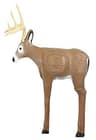
Delta McKenzie Intruder 3D Deer

Delta McKenzie Intruder 3D Deer

The target that teaches the thing a foam block cannot: where the vitals sit on a deer-shaped animal standing at an angle. Shooting a square block trains you to hit a square block. A 3D deer trains you to pick a spot behind the shoulder on a body that is quartering away, which is the shot you are most likely to actually be offered.

Best for shot placement
$119.99 · View on Amazon

Price as of August 31, 2026. #ad How we’re funded

5
Black Hole 4-Sided Archery Target

Black Hole 4-Sided Archery Target

The cheapest way to get a genuinely broadhead-rated target, and the right pick if you shoot a normal hunting compound rather than a speed bow. The open-face layered build gives arrows back easily and the 300 fps rating covers the great majority of whitetail setups — just read that number honestly against your own bow before you order.

Best on a budget
$59.95 · View on Amazon

$89.9933% off

Price as of August 31, 2026. #ad How we’re funded

The picks in full

#1Best overall

BLOCK Classic Layered Foam Target

The target most whitetail bowhunters should own, because it is the one that takes both the field points you practice with and the broadheads you actually hunt with. The open-layer foam stops an arrow by friction across many thin layers rather than by brute density, which is why a broadhead comes back out without a fight. Buy this if you are only buying one.

Strengths

  • Stops field points and broadheads, so you can confirm broadhead point of impact
  • Layered design releases arrows with far less effort than a dense foam block
  • Two shootable sides and a top handle — easy to rotate and to carry

Trade-offs

  • No published FPS rating, so the fastest crossbows are a question mark
  • Open-layer foam soaks up water if you leave it out in the rain
StopsField points and broadheads
Dimensions18" x 18" x 13.5"
Shootable sides2
Speed ratingNot published

Worth knowing. Broadheads and field points do not always land together, and the only way to find out is to shoot the heads you hunt with into a target rated for them. A field-point-only target cannot answer that question.

Specs read from the product listing, on August 31, 2026. “Not published” means the manufacturer does not state that figure.

#2Best for volume practice

Morrell Yellow Jacket YJ-425

The volume target. A bag stops field points over thousands of shots for less money than any foam block, and gives arrows back with two fingers instead of a shoulder — which is exactly what you want when you are putting in the reps that make a 25-yard shot automatic. It is a practice tool, not a broadhead target, and Morrell says so in the model name.

Strengths

  • Lowest cost per shot here for plain field-point reps
  • Arrows pull out with almost no effort — the reason people actually keep practicing
  • Light enough to carry out to the yard one-handed and hang or lean anywhere

Trade-offs

  • Field points only — a broadhead will wreck the bag and ruin the head
  • Bags hate weather; left out in the wet it packs down and stops fast arrows less well
StopsField points only
TypeBag target
DimensionsNot published
Speed ratingNot published

Worth knowing. Morrell sells this same model as the Yellow Jacket YJ-425 Field Point Archery Bag — the field-point limit is the manufacturer's own naming, not our inference.

Specs read from the product listing, on August 31, 2026. “Not published” means the manufacturer does not state that figure.

#3Best for crossbows

BLOCK Infinity Crossbow

The one to buy if you shoot a crossbow. A modern hunting crossbow leaves the rail around 380 to 400 fps, and a target not built for that either lets bolts through or swallows them so deep you damage one getting it out. This is rated to 520 fps with six shootable sides, which answers both problems honestly.

Strengths

  • 520 FPS rating covers every hunting crossbow on this site with room to spare
  • Six shootable sides spread the wear instead of blowing out one face
  • Takes broadheads as well as field points, so you can confirm bolt-and-broadhead impact

Trade-offs

  • The most expensive target here by a clear margin
  • A 16-inch cube is a small aiming face — fine for grouping, less forgiving of a flier
StopsField points and broadheads
Dimensions16" x 16" x 16"
Shootable sides6
Speed rating520 FPS

Worth knowing. Check the FPS rating against your own bow before you buy. A crossbow at 400 fps shot into a target rated for 300 is how people bury bolts to the fletching and snap them pulling them back out.

Specs read from the product listing, on August 31, 2026. “Not published” means the manufacturer does not state that figure.

#4Best for shot placement

Delta McKenzie Intruder 3D Deer

The target that teaches the thing a foam block cannot: where the vitals sit on a deer-shaped animal standing at an angle. Shooting a square block trains you to hit a square block. A 3D deer trains you to pick a spot behind the shoulder on a body that is quartering away, which is the shot you are most likely to actually be offered.

Strengths

  • Deer-shaped body makes you pick a spot rather than aim at a dot
  • Replaceable vital core renews the part you destroy instead of the whole target
  • Broadhead compatible and rated for compounds and crossbows alike

Trade-offs

  • Self-healing foam pulls harder than a bag or an open-layer block
  • Wrong tool for volume — shoot your reps into a bag and save the vitals for form work
StopsField points and broadheads
Type3D deer, replaceable vital core
Speed rating350 FPS
DimensionsNot published

Worth knowing. Set a 3D target at an angle rather than square to you. Broadside is the shot you are least likely to be offered and the one every hunter has already practiced to death.

Specs read from the product listing, on August 31, 2026. “Not published” means the manufacturer does not state that figure.

#5Best on a budget

Black Hole 4-Sided Archery Target

The cheapest way to get a genuinely broadhead-rated target, and the right pick if you shoot a normal hunting compound rather than a speed bow. The open-face layered build gives arrows back easily and the 300 fps rating covers the great majority of whitetail setups — just read that number honestly against your own bow before you order.

Strengths

  • Takes broadheads at close to a bag-target price
  • Four shootable sides and a carry strap for the money
  • Open-face layered foam means easy arrow removal, not a wrestling match

Trade-offs

  • The 300 FPS rating rules it out for crossbows and the quickest compounds
  • The largest face here is also the shallowest at 11 inches — less margin on a hot bow
StopsField points and broadheads
Dimensions22" x 20" x 11"
Shootable sides4
Speed rating300 FPS

Worth knowing. 300 fps is a real ceiling, not marketing. Most ready-to-hunt whitetail compounds sit under it; most crossbows do not.

Specs read from the product listing, on August 31, 2026. “Not published” means the manufacturer does not state that figure.

The four kinds of target, and which one you need

Almost every archery target sold is one of four constructions. They are not competing products so much as different tools, and most serious bowhunters end up owning two.

Bag targets

A synthetic shell packed with loose fill. Arrows stop through friction against thousands of fibers, which is why a bag gives an arrow back with two fingers and why it lasts for thousands of field-point shots at the lowest cost per shot of anything here.

The limitation is absolute: field points only. A broadhead slices the fill instead of parting it, wrecking the bag and dulling the head in one shot. Bags also dislike weather — a soaked bag packs down and loses stopping power. This is your volume tool, not your confirmation tool.

Layered and open-face foam

Sheets of foam compressed together with the shooting face at the layer edges. An arrow slides between layers and is gripped along its entire shaft rather than pinched at the tip, which is the trick that lets the same target stop a broadhead and still release it. Most of the targets worth owning for hunting are this type.

The trade is weather again: open layers hold water. Store it somewhere dry, or accept a shorter life.

High-density and self-healing foam

Denser material that closes back around the hole after the arrow is pulled. This is what carries the highest speed ratings, so it is where crossbow shooters and speed-bow shooters end up. The cost is pull effort — dense foam grips hard, and an arrow lube or a target with a slick internal layer stops being a luxury.

3D targets

A foam animal with a replaceable core where the vitals are. This is the only target that teaches shot placement rather than grouping, and for a whitetail hunter that is not a small thing: the difference between a dead deer and a lost one is usually a few inches of anatomy, not a few inches of group size.

Do not use one for volume. You are burning the expensive replaceable core to do work a bag would do better.

The speed rating is the spec that decides everything

If you read one number on the box, read this one. Every foam target publishes a maximum FPS it is built to stop, and the consequence of ignoring it is not gradual. Below the rating a target works for years. Above it, arrows pass through, bury to the fletching, or come out with bent inserts and cracked shafts.

The problem is that hunting equipment got fast. A modern hunting crossbow is commonly in the 380 to 400 fps range, and the fastest are past that — while a great many targets on the shelf are rated 300 fps or less. That mismatch is the single most common reason people conclude a target is “junk” when the target was never built for the bow being shot into it.

So: find your bow’s advertised speed, then buy above it. If you shoot a crossbow, treat 350 fps as a floor and prefer more. If you shoot a normal ready-to-hunt compound, a 300 fps target is genuinely sufficient and you can spend the savings on arrows. Our crossbow roundup lists the advertised speed for every model we cover, which is the number to check this against.

Why a broadhead-rated target is not optional

Here is the failure this page exists to prevent. You spend the summer shooting field points into a bag, you group well, you feel ready. A week before the opener you screw on broadheads, shoot once into that same bag to check, and either destroy the bag or skip the check entirely. Then you hunt with an untested arrow.

Broadheads have surface area. A fixed blade in particular behaves like a small wing on the front of the shaft, and if the arrow is leaving the bow with any tail-whip — which is what happens when spine, point weight and bow speed are not matched — those blades steer it. Easton’s own guidance on spine is blunt that point weight, insert weight, fletching and bow speed all change the spine a setup requires, and getting it wrong is the usual reason broadheads refuse to group with field points. The fix is a tuning problem, but you cannot even detect it without a target that will take the heads you hunt with.

That is the practical case for making your one target a broadhead-rated one. Shoot field points for volume, then shoot the actual hunting arrow — same shaft, same head, same nock — into the same target at your maximum hunting distance. If it lands with the field points, you are done. If it does not, you have found a real problem in August instead of in November. Our guide on choosing hunting arrows covers the spine and FOC side of fixing it, and the broadhead roundup covers which heads are most forgiving of a bow that is not perfectly tuned.

How many targets do you actually need?

One, if you buy the right one. Two, if you are honest about how you practice.

The two-target setup that most experienced bowhunters converge on is a cheap bag for the hundreds of field-point repetitions that build form, plus one broadhead-rated foam target that you shoot far less often and keep in good condition for confirming your hunting arrow. The bag absorbs the wear. The foam target stays honest.

If you only want one, buy the broadhead-rated one and accept that it will wear faster. A worn target is a cheaper problem than an unconfirmed broadhead.

Practice like you are going to hunt

A target in the backyard is a tool for building a shot you can repeat under pressure, and most people quietly practice the one shot they are least likely to take.

Shoot from height, at an angle. Almost every whitetail bowhunter shoots from an elevated stand or a saddle, and a downward angle changes both your geometry and your form — you have to bend at the waist, not drop your bow arm. If your only practice is standing flat on the lawn, you are not practicing your shot. Shoot from a deck, a bank, or a stand hung in the yard, and read the harness guide before you practice from any height.

Shoot one cold arrow. Deer do not wait for your fifth shot. The useful drill is one arrow, first thing, at an unknown distance, wearing what you will hunt in — then walk away. That single shot tells you more about your hunting accuracy than a hundred warm ones.

Know your real maximum. Your effective range is the distance at which you can put every cold arrow into a paper plate under hunting conditions, and for most bowhunters that number is well inside forty yards. Set the target there and resist the urge to prove something at sixty.

Practice in your hunting clothes. A jacket and a harness change your anchor and can catch a string. Late-season layers change it more — see the cold-weather jacket picks for the ones cut to let a bow arm work.

Making a target last

Targets die from three causes, and two are preventable.

Shooting the same hole. Grouping tightly is satisfying and it destroys the center of a target while the rest of the face is untouched. Aim at different dots deliberately. This is the real argument for multi-sided targets: four or six faces means four or six times the surface before any of it is used up.

Weather. Foam and bag fill both lose stopping power wet. Bring it in, or at least tip it on its side so the shooting face is not collecting rain.

Age, which you cannot prevent. When arrows start going deeper than they used to at the same distance, the target is telling you it is done. Believe it — a target that has quietly lost its stopping power is how arrows end up in whatever is behind it. Always shoot with a safe backstop regardless of how new the target is.

What a target will not fix

It will not fix a bow that does not fit you. Draw length that is wrong and draw weight you cannot hold from a seated position are form problems that repetition makes worse rather than better, and no amount of shooting solves them — see how to choose a compound bow and what draw weight a deer actually needs.

It will not fix a release that is teaching you a flinch, which is a trigger problem with its own answer in the release roundup. And it will not make an untuned arrow fly straight — it will only, if you bought the right one, show you that it does not.

What it does do is turn an expensive rig into a skill, for the price of the cheapest item in your kit. Pope & Young’s equipment standards define what counts as legal bowhunting tackle; nothing defines what counts as ready except the arrows you have already put downrange.

Frequently asked questions

Can you shoot broadheads into any archery target?

No, and this is the most expensive mistake in the category. Bag targets are field points only — a broadhead cuts the fill rather than parting it, which ruins the bag in one shot and dulls the head. You need a target that explicitly states broadhead compatibility, which in practice means layered, open-face or self-healing foam. Check the packaging or listing for the words, and do not assume a foam target takes broadheads just because it is foam.

What FPS target do I need for a crossbow?

More than most people buy. Modern hunting crossbows commonly run 380 to 400 fps and the fastest exceed that, while a large share of targets on the shelf are rated 300 fps or less. Treat 350 fps as an absolute floor for a crossbow and prefer a target rated well above your bow's advertised speed. Shooting a fast crossbow into an under-rated target buries bolts to the fletching and damages them on removal — the target is not defective, it was never built for that bow.

Why are my broadheads not hitting where my field points hit?

Almost always a tuning issue rather than a target issue. A broadhead has blade surface area at the front of the shaft, so any tail-whip leaving the bow gets steered into a different point of impact. Easton's spine guidance notes that point weight, insert weight, fletching and bow speed all change the spine a setup needs, and a mismatch there is the usual cause. The important part is that you can only find this by shooting your actual hunting arrow into a broadhead-rated target — which is why we recommend making your one target a broadhead-rated one.

Do I need a 3D deer target?

You do not need one, but it teaches something no block can: where the vitals sit on an angled animal. A square target trains grouping; a 3D deer trains you to pick a spot behind the shoulder on a body that is quartering away. If you buy one, set it at an angle rather than broadside — broadside is the shot you are least likely to be offered. Do not use a 3D target for volume practice, because you are consuming a replaceable vital core to do work a cheap bag does better.

How far should I practice for deer hunting?

At and slightly beyond your real effective range, which is the distance where you can put every cold first arrow into a paper-plate-sized group wearing hunting clothes. For most bowhunters that is well inside forty yards. Practicing at sixty is satisfying and mostly irrelevant to whitetail hunting, where shots are close. Spend the extra arrows on angled and elevated shots instead of on distance.

How long does an archery target last?

It depends far more on how you shoot it than on the brand. The center dies first because everyone groups, so aim at different spots deliberately and rotate multi-sided targets. Keep it dry — both foam and bag fill lose stopping power wet. The honest end-of-life signal is arrows penetrating deeper than they used to at the same distance; when that starts, replace it rather than trusting it, and always shoot with a safe backstop behind the target regardless of its age.

Is a bag target or a foam target better?

They do different jobs. A bag is cheaper per shot, pulls arrows with almost no effort and is the right tool for high-volume field-point practice, but it cannot take a broadhead. Layered foam costs more and pulls slightly harder, but it stops broadheads and lets you confirm your actual hunting arrow. The setup most experienced bowhunters land on is both: a cheap bag for reps, and one broadhead-rated foam target kept in good condition for confirmation.

Sources

Keep reading