Crossbows · Care and safety
How Long Can You Leave a Crossbow Cocked?
For the length of a hunt, not the length of a season. Here is what crossbow makers actually publish about leaving one cocked, why none of them prints an hour limit, and the two legitimate ways to unload at the end of the day.
How this is funded:we earn a commission if you buy through our links, at no extra cost to you. It never changes which product we recommend, and we’ll tell you plainly when to skip one. Full disclosure.
The working answer is one hunt. Cock the crossbow when you are in position and ready to hunt, and unload it before you walk out. Not overnight, not between sits, not in the truck, and not in the case in the garage until Saturday.
That answer frustrates people, because it is not an hour count. So it is worth explaining where it comes from, because the reasoning is more useful than a number would be — and because the number does not exist.
Nobody publishes an hour limit, and that is the finding
We went looking for a manufacturer figure: a published maximum time at full draw. Across the crossbows and the maintenance guidance we cover, there is no such figure. What the makers publish instead is two things:
- A string and cable replacement interval. TenPoint’s own guidance is to change strings and cables at least every two years, or every 1,000 shots for a hunter who shoots often, and to inspect them every session and condition them when they look dry. Those are the maintenance numbers this category actually commits to.
- A mechanism for letting the string down. Several current crossbows have a de-cock built in. A de-cock is an admission in hardware: the intended end of a cocked state is a controlled let-down, which is why the feature is worth paying for.
If leaving a bow cocked for days were fine, the second feature would be a solution to a problem nobody had. We are not going to dress that inference up as a tested result — it is reasoning from what makers chose to build and chose to print. But it points the same way as every owner’s manual and every hunter-education module: a cocked crossbow is a loaded weapon under load, and both halves of that sentence argue for unloading it.
The two real risks, in order
1. The safety risk, which is the one that hurts people. A cocked crossbow in a case, in a truck, or leaned in a garage corner is a loaded weapon that has left your attention. Crossbow triggers are mechanical, dry-fire inhibitors are mechanical, and safeties get bumped. The Tree Stand Safety Awareness Foundation’s whole message about stands — that the accident happens in the transition, not in the sit — applies here exactly: the dangerous moments with a cocked crossbow are climbing, hauling it up, turning in a blind and climbing down.
2. The equipment risk, which is slower and less dramatic. A string at full draw is at its working load rather than at rest, and cocked limbs are flexed. There is no published curve telling you what an extra twelve hours costs, so the useful discipline is the one that is published: inspect the string and cables every session, condition them when they are dry, and replace on the interval the maker states rather than when they look bad.
What to look for before you buy, if this matters to you
If you hunt alone, hunt from a stand, or hunt public ground where there is no safe place to discharge a bolt at dark, the de-cock stops being a luxury feature. Here is the order to think about it in:
- Does it de-cock, and how? A crank-based de-cock (ACUdraw De-Cock) winds the string down the way it wound it up. A let-down triggerbox releases it through the trigger group under control. Either beats the alternative.
- If it does not de-cock, where will you discharge it? That is a real logistical question, not a detail. It means carrying a target or planning a backstop you can see and trust in the dark, every hunt.
- Can you cock it again, seated, in the cold? Unloading at dark is only half the problem if cocking it in the morning is a fight. This is where a crank earns its price.
- What does the string care kit cost? Trivially little against the string, and it is the one maintenance item with a published interval attached.
The three purchases that solve this
Two crossbows that end the problem in hardware, and the consumable that keeps the string on its published schedule.
Crank de-cock
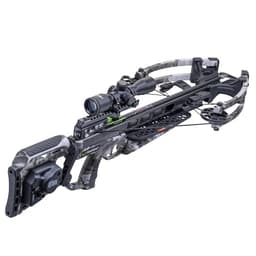
TenPoint Titan X De-Cock
Best overall under $1,000
- Speed
- 400 FPS
- Cocking device
- ACUdraw De-Cock (crank cock + controlled de-cock)
- Package
- Pro-View 400 lighted scope
Price as of October 16, 2026. #ad How we’re funded
Trigger let-down
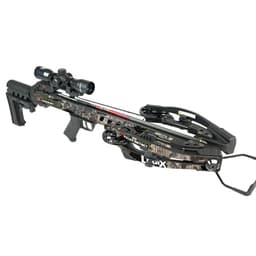
Killer Instinct LOGIX 435
Best value with a de-cock
- Speed
- 435 FPS
- Draw weight
- 210 lb
- Cocking device
- Let-down de-cocking triggerbox
Price as of October 16, 2026. #ad How we’re funded
String care
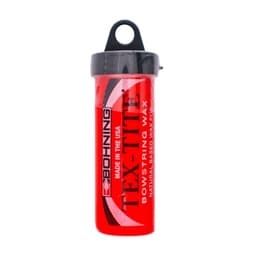
Bohning Tex-Tite Bowstring Wax, 1 oz
String and cable care on any bow or crossbow
- Type
- Bowstring wax
- Volume
- 1 oz
- For
- Strings and cables (not the rail)
Price as of October 16, 2026. #ad How we’re funded
The TenPoint Titan X is the pick for a hunter who wants the de-cock on a crank they are already using to cock the bow, and it is our overall pick under $1,000. The Killer Instinct LOGIX 435 puts the let-down in the trigger group instead and is the cheapest way onto this page — see how it compares in our CenterPoint versus Killer Instinct head-to-head, where it is the only one of four budget bows that de-cocks at all. The Bohning wax is for strings and cables, not the rail; the rail takes rail lube, and mixing those up is a common and expensive mistake covered in our maintenance guide.
The end-of-hunt routine that makes this a non-issue
- Decide the unload method before you climb, not at dark.
- Lower the crossbow on a haul line with the safety on and no bolt in the flight groove, then climb down attached to the tree.
- On the ground, either de-cock it or fire a discharge bolt into a backstop you can see, with a certain stop behind it and nothing beyond.
- Wipe the rail and the string, check the bolts and screws for tightness, and look at the serving while the light is still on your side.
- Case it uncocked. Check your state’s transport rule once, properly, and then it is settled.
General guidance, not legal or safety advice. Hunting regulations vary by state and change every year — always verify seasons, legal equipment and requirements with your own state wildlife agency before you hunt. Wear a full-body harness and stay attached to the tree from the ground up whenever your feet leave the ground.
Frequently asked questions
How long can you leave a crossbow cocked?
Treat the answer as one hunt. Cock it when you are in position and ready to hunt, and unload before you walk out. No maker of the crossbows we cover publishes a maximum number of hours, and the absence is informative: what they publish instead is a de-cocking mechanism, which only exists because the intended end of a cocked state is a controlled let-down, not an overnight wait. Leaving a crossbow cocked between hunts, in a vehicle, in a case or in a garage is the practice that owner's manuals and hunter-education materials consistently warn against.
Will leaving a crossbow cocked ruin the string?
There is no published figure that says a cocked string loses a measurable amount of life per hour, and we are not going to invent one. What manufacturers do publish is a replacement interval: TenPoint recommends changing strings and cables at least every two years, or every 1,000 shots if you shoot often, and inspecting strings and cables each session and conditioning them when they look dry. Those are the numbers to manage. A string held at full draw is under its working load rather than at rest, which is a reason not to store it that way, but the honest answer on wear is that the makers quantify shots and years, not cocked hours.
How do you uncock a crossbow without shooting it?
Either the crossbow has a de-cocking mechanism or it does not. Models like the TenPoint Titan X with ACUdraw De-Cock and the Killer Instinct LOGIX 435 with a let-down triggerbox are designed to let the string down under control from the crank or the trigger group. If yours has neither, the manufacturer-sanctioned method is to fire a bolt into a safe backstop: a target you brought, or a discharge bolt into soft ground with a clear, certain stop behind it. Do not try to improvise a let-down with a rope cocker unless your own manual describes that procedure, and never attempt to unlatch the string by hand.
Can you drive home with a cocked crossbow?
In many places, no. Transport rules for a cocked or loaded crossbow are set by state law and vary, and some states treat a cocked crossbow in a vehicle the same way they treat a loaded firearm. Check your own wildlife agency before you plan around it. Our state-by-state overview is a starting point for finding the right rule, not a substitute for the agency's own language.
Is it safe to leave a crossbow cocked in a tree stand all day?
Cocked for the sit is the normal way to hunt, and that is not what causes problems. What causes problems is everything that happens around it: climbing with a cocked bow, hauling it up on a rope with the safety off, swinging it inside a blind, and climbing down at dark still loaded. Cock it once you are seated and secured, keep the safety on and your fingers clear of the rail, lower it on a haul line before you descend, and unload before the walk out.
Sources
- TenPoint — 3 Critical Maintenance Tips to Keep Your Crossbow in Top Shooting Form — Manufacturer guidance: check every nut, bolt and screw for tightness; inspect strings and cables each session and condition when dry; TenPoint recommends changing strings and cables at least every two years, or every 1,000 shots if you shoot often; oil the trigger, dry-fire inhibitor, axles and cam bearings one drop at a time (accessed August 22, 2026)
- National Crossbow Association — State Regulations — State-by-state crossbow legality overview; always verify with your state agency (accessed July 22, 2026)
- TenPoint — US Crossbow Laws & Regulations by State — Industry-maintained crossbow legality guide, organized by state (accessed July 22, 2026)
- Tree Stand Safety Awareness Foundation — Industry safety foundation tracking treestand-fall statistics and the ABCs of safety (accessed July 22, 2026)
- Hunter-Ed — Fall-Arrest Systems (FAS) — State-approved hunter-ed guidance on full-body harness + fall-arrest components (accessed July 22, 2026)
Keep reading
Crossbow Maintenance
The rail, the string and the bolts that work loose - what to do and how often, from the makers' own intervals.
Read the maintenance guideShooting a Crossbow From a Tree Stand
Limb clearance, cocking while seated, and the shot angles a rail makes harder than a vertical bow does.
Read the stand guideBest Crossbows for Deer
Which models publish a de-cock, and where that feature sits against speed and price.
See the crossbow picksHow to Cock a Crossbow
Rope and crank technique, and why centering the string is an accuracy issue rather than a strength one.
Read the cocking guide