Crossbows · In the stand
Shooting a Crossbow From a Tree Stand
A crossbow does not need to be drawn, which is why people assume it is the easy choice in a stand. The hard parts moved somewhere else: limb clearance, cocking while seated, and an aim point that changes when you shoot steeply downhill.
How this is funded:we earn a commission if you buy through our links, at no extra cost to you. It never changes which product we recommend, and we’ll tell you plainly when to skip one. Full disclosure.
A crossbow in a tree stand is a width problem, a cocking problem and an angle problem. It is not a draw problem, which is the one everybody expects. Get those three right before the season and the crossbow is the easier weapon in a stand. Ignore them and you will discover all three at once, with a deer at twenty yards.
1. Limb clearance is the spec that decides your shot windows
A vertical bow occupies a narrow vertical plane. A crossbow is wide, and it stays wide through the whole swing. Cocked widths on current crossbows run from around six inches on the most compact reverse-geometry bows out to well over a foot, and the compact ones exist precisely because of this problem — the Ravin R8 publishes 6.5 inches cocked against 10.5 inches uncocked, and that figure is a stand-and-blind spec, not a bragging spec.
Whatever you own, the preparation is the same and it has to happen in daylight: sit in the stand, shoulder the bow, and swing through every window you expect to shoot through. You are not checking your sight picture. You are looking for what the limbs hit — the stand rail on your weak side, the trunk behind your shoulder, the one branch you have looked past a hundred times. Mark the windows that work. If a stand only gives you two of them, that is worth knowing in October rather than in November.
2. Cocking happens seated, or it happens dangerously
The Tree Stand Safety Awareness Foundation’s central point about falls is that they happen in the transitions — climbing, hauling gear, turning, descending — not during the sit. Standing up in a hang-on at 5:45 a.m. to put a boot in a cocking stirrup is a transition you have invented for no reason.
Cock the bow seated and secured, before legal light. A rope cocker can be worked from a seat if you can brace the stirrup against your boot and keep both hands even. A crank works from a seat on any draw weight, which is why it is the honest answer for a heavy bow, for cold fingers, and for anyone whose shoulder is the reason they went to a crossbow in the first place. Hunter-education guidance on fall-arrest systems is unambiguous about the other half of this: you stay attached to the tree from the ground up, and the crossbow travels on a haul line, uncocked, with nothing in the flight groove.
3. The angle changes your aim point, and the maths is not intuitive
From sixteen or twenty feet up, the distance your eye measures to a deer is the hypotenuse of a triangle. The bolt, though, is only fighting gravity across the horizontal leg of it. The practical consequence is that a steep shot ranged at the line-of-sight distance will hit high, and the effect grows the higher you are and the closer the deer stands.
At the ranges a crossbow should be shot at in a stand this is a small correction, not a dramatic one — but it is the correction that puts a bolt over the back of a deer at twelve yards. Range the horizontal distance to the spot you expect a deer to stand, or let an angle-compensating rangefinder do it for you, and write the numbers on a strip of tape on the stock. Our rangefinder guide covers which models publish angle compensation and which do not.
What to look for before you buy for stand hunting
- Cocked width, if the maker publishes it. Many do not. Where it is published, it is the single most useful number for a stand or blind hunter.
- Whether you can cock it seated. Try it in the yard, in a chair, wearing the gloves you will hunt in. If the answer is no, the crank is not an accessory.
- Whether it de-cocks. Everything about climbing down is easier when the bow can be unloaded without firing it.
- A harness that actually fits you. Capacity on these is published by size, not as one figure — the Hunter Safety System Ultra-Lite is rated 100–175 lb in S/M, 175–250 lb in L/XL and 250–300 lb in 2X/3X. Buy the size that brackets your weight in hunting clothes.
The three purchases that make a crossbow work in a stand
One for width, one for cocking seated, and one for the part that is not optional.
Narrowest cocked width
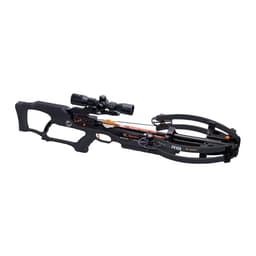
Ravin R8
Hunters who want the most compact premium crossbow
- Speed
- 420 FPS (400 gr arrow)
- Kinetic energy
- 156 ft-lbs
- Cocked width
- 6.5" cocked / 10.5" uncocked
Price as of October 16, 2026. #ad How we’re funded
Cocks from the seat
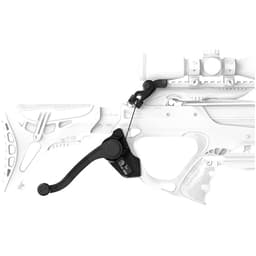
Barnett Crank Cocking Device
Heavy-draw crossbows and hunters who cannot pull 150+ pounds
- Type
- Crank cocking device
- Effort reduction
- Up to 93% (manufacturer figure)
- Handedness
- Ambidextrous
Fall-arrest harness
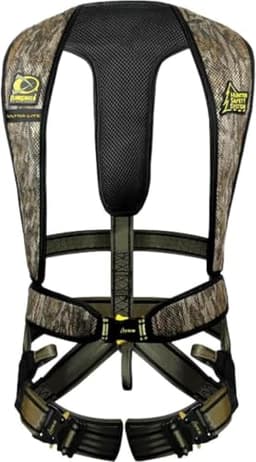
Hunter Safety System Ultra-Lite Harness (Mossy Oak Bottomland)
A stand or saddle hunter who wants a harness light enough to wear every sit
- Type
- Full-body harness vest, mesh upper
- Harness weight
- 2.5 lb
- Capacity
- S/M 100-175 lb; L/XL 175-250 lb; 2X/3X 250-300 lb
Price as of October 16, 2026. #ad How we’re funded
The Ravin R8 is here for one published number: 6.5 inches cocked, which is as narrow as this category gets and the difference between two shooting windows and five. The Barnett crank is the budget route to cocking from a seat on a bow that did not come with one — Barnett publishes up to a 93% effort reduction, and our cocking-device comparison covers where a rope is still the better buy. The harness is the only item on this page that has nothing to do with accuracy.
Practice the shot you are going to take
Almost nobody practices seated, and almost every crossbow shot from a stand is taken seated. Shoot from a chair at the height of your stand seat, with the same rest you will use in the tree, at a target angled the way a deer stands. A 3-D target earns its price here because it shows you where the vitals sit when the angle is steep — the entry hole moves forward and the exit stays high. Our target comparison covers which ones are rated for crossbow speeds, which matters: a bag rated to 300 FPS will not stop a 430 FPS bolt.
General guidance, not legal or safety advice. Hunting regulations vary by state and change every year — always verify seasons, legal equipment and requirements with your own state wildlife agency before you hunt. Wear a full-body harness and stay attached to the tree from the ground up whenever your feet leave the ground.
Frequently asked questions
Is it harder to shoot a crossbow from a tree stand than a bow?
It is different rather than harder, and the difficulty moves. A crossbow removes the draw, which is the part of a vertical-bow shot a deer is most likely to catch. In exchange it adds width: the limbs are much wider than your shoulders and swing through an arc when you track a deer, so you have to know where your stand rail, the tree and every nearby branch sit before you shoulder it. A vertical bow fits through a gap a crossbow will not.
Can you cock a crossbow while sitting in a tree stand?
Yes, and you should plan to. Cock it from the seat once you are secured, before legal light, rather than standing up in the dark. A rope cocking device works seated if you can brace the stirrup against your boot; a crank cocking device works seated regardless of draw weight and is the right answer on a heavy bow, in cold weather, or for anyone with a shoulder or back problem. Standing up in a stand to cock a crossbow is how people fall.
Where do you aim on a steep downhill crossbow shot?
Lower than the slope distance suggests, because the bolt only has to cover the horizontal distance to the deer. On an angled shot the line-of-sight distance is longer than the horizontal distance, and gravity acts over the horizontal leg of the triangle. At the 15 to 20 yards that most steep stand shots happen, the difference is small but real, and it gets larger the higher you are and the closer the deer is. Range the horizontal distance or use an angle-compensating rangefinder.
Should you rest a crossbow on the stand rail?
No. Resting the flight rail or the limbs on a hard surface changes how the bow behaves on the shot and risks the limbs contacting something on release, which can damage the crossbow and send the bolt somewhere you did not intend. Rest your forearm or the back of your hand on the rail if you need support, keep the limbs in free air, and keep your forward thumb below the flight rail where the string cannot reach it.
How high should a tree stand be for a crossbow?
The same consideration that applies to any stand, with one extra constraint: the steeper the angle, the less of the deer's vitals are in line behind the entry hole, and the more clearance your limbs need as you lean out. Height is a trade between concealment and shot geometry rather than a number to maximise - our tree-stand height guide works through it.
Sources
- Tree Stand Safety Awareness Foundation — Industry safety foundation tracking treestand-fall statistics and the ABCs of safety (accessed July 22, 2026)
- Hunter-Ed — Fall-Arrest Systems (FAS) — State-approved hunter-ed guidance on full-body harness + fall-arrest components (accessed July 22, 2026)
- Hunter-Ed — Fall-Arrest System Safety Guidelines — Hunter-ed rule: stay attached to the tree from the ground up, every hunt (accessed July 22, 2026)
- Wisconsin DNR — Tree Stand Safety — State wildlife agency guidance on harnesses and safe stand use (accessed July 22, 2026)
- Realtree — Can You Trust Angle-Compensating Rangefinders? — On why an arrow follows the true horizontal distance, not line-of-sight, on an angled shot from a stand (accessed July 22, 2026)
- Bowhunting.com — How Far Should You Shoot With a Crossbow? — On ethical crossbow range for whitetail and how energy drops downrange (accessed July 22, 2026)
Keep reading
Shooting a Bow From a Tree Stand
The vertical-bow version: bending at the waist, the seated shot, and why practice on flat ground misleads you.
Read the bow versionHow to Cock a Crossbow
Rope and crank technique, and why centering the string is an accuracy issue before it is a strength one.
Read the cocking guideHow Long Can You Leave a Crossbow Cocked?
What the makers publish, what they do not, and the two legitimate ways to unload at dark.
Read the cocked-time guideBest Tree Stand Safety Harnesses
Published capacities, the service life almost nobody knows about, and which makers name a standard.
See the harness picks