Field gear · Recovery
How Long to Wait Before Tracking a Deer
Almost every deer lost to a good hit is lost because somebody climbed down too early. Here are the wait times the National Deer Association publishes by shot type, what the blood is telling you, and the kit that makes a night trail workable.
How this is funded:we earn a commission if you buy through our links, at no extra cost to you. It never changes which product we recommend, and we’ll tell you plainly when to skip one. Full disclosure.
On an arrow lung shot, wait about an hour. On liver, a minimum of two. On a paunch hit, four to six — and overnight if it is cold. Those are the National Deer Association’s published wait times, and they are worth committing to memory before the season rather than relitigating in a tree with your heart rate at 140.
Nearly every deer lost after a decent hit is lost in the first twenty minutes, by a hunter who climbed down to look at the arrow and then kept walking. A deer that is dying quietly in its first bed will stay there. A deer that is bumped out of that bed can travel an extraordinary distance on adrenaline, and it does so in whatever direction the pressure pushes it — which is usually the thickest, nastiest cover available.
The wait times, by shot
| Hit | Wait | What you expect to find |
|---|---|---|
| Lung (arrow) | About 1 hour | Bright red, often frothy or bubbled blood; a short, heavy trail |
| Liver | Minimum 2 hours | Dark red blood; a deer that beds within a few hundred yards |
| Paunch / gut | 4–6 hours, or overnight in cold weather | Green or brown matter with a smell; little blood, slow death |
The logic behind the spread is mechanical rather than mystical. A double-lung deer loses blood pressure fast and is usually dead inside a hundred yards, so the hour you wait is insurance against the one that quartered badly. A liver hit is fatal and slower. A paunch hit is fatal and much slower still, which means the deer has hours in which it is capable of moving if you give it a reason to.
Read the arrow before you read the ground
The most informative object in a bow recovery is usually the arrow, because it carries evidence from inside the animal. The NDA’s blood-trailing guidance leans on blood color for exactly this reason: bright red indicates lung, dark red indicates liver or heavy muscle, and green or brown material with a distinct smell indicates the paunch.
So the sequence is: stay in the stand, mark where you last saw and heard the deer, give it a few minutes, then go to the arrow rather than to the deer. What is on the shaft decides your wait, and your wait decides whether you recover the animal. If you cannot find the arrow, treat the first blood the same way — and if you cannot find either, assume the worse hit and wait accordingly. Nobody ever lost a deer by waiting an extra two hours in cold weather.
Mark every drop, and keep the group small
Once the wait is up, the single most useful discipline on a trail is marking. The NDA guidance is to mark every drop of blood with tissue, and the reason is that a marked line shows you the deer’s direction of travel at a glance — which is what tells you where to look next when the blood thins out. It also gives you a last-known point you can always walk back to.
Move at the speed of the sign. Stop every few yards and look ahead rather than down, because a wounded deer bedded fifty yards in front of you is a recoverable deer if it does not know you are there. Keep the group to two or three people on the trail itself and save the rest for a grid search, which is the NDA’s recommended escalation when the trail dies: work outward from the last confirmed blood systematically instead of wandering.
The kit that makes a night trail workable
Most recoveries happen after dark, and the light you walked in with is almost never enough. There are two approaches worth owning, and they are not substitutes for each other.
Specialist blood light
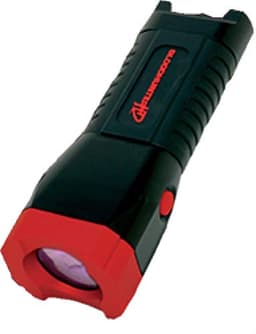
Primos Bloodhunter HD
The reference blood-tracking light
- Type
- Handheld blood tracking light
- Output
- Not published
- Runtime
- Not published
Price as of October 6, 2026. #ad How we’re funded
Blood mode, hands free
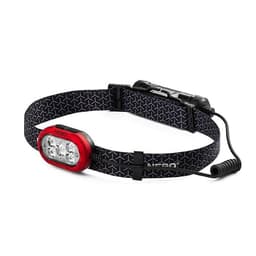
NEBO IllumaTrace Blood Tracker Headlamp
Tracking with both hands free
- Type
- Headlamp with blood mode
- Output (blood mode)
- 100 lumens
- Runtime
- Not published
Price as of October 6, 2026. #ad How we’re funded
Raw output
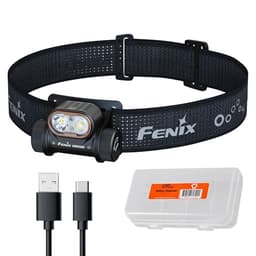
Fenix HM55R
Best for after-dark recovery
- Output
- 1,200 lumens
- Beams
- Spotlight + floodlight
- Red mode
- Yes
Price as of October 6, 2026. #ad How we’re funded
A filtered blood light increases the contrast between blood and leaf litter, which is worth real money on a sparse trail. A bright general-purpose headlamp — 1,200 lumens with a spot and a flood, in the case of the Fenix — does a different job: it lets you see ahead into cover and pick a route, and its red mode keeps your night vision while you are standing still deciding what to do.
Be aware of how little this category publishes. The Primos Bloodhunter HD, which is the reference product in specialist blood lights, publishes no output figure, no runtime and no rechargeable specification on the listing we read. The NEBO headlamp publishes 100 lumens in blood mode and no runtime. Those blanks render as “Not published” in the spec tables rather than being filled in with an estimate. Our blood tracking light picks go through the whole category on that basis, and our headlamp picks cover the general-purpose lights, including why red and green modes matter.
Warm weather changes the math
Everything above assumes you can afford the wait, and in warm weather you partly cannot. University of Wisconsin-Madison Extension says cooling should begin within a couple of hours of harvest, and Clemson Cooperative Extension says that above 50°F a carcass should be refrigerated within three to four hours of the kill. A six-hour wait on a gut shot at 65 degrees is a genuine conflict between recovery odds and meat quality.
The honest resolution is that recovering the deer comes first — a lost deer is a total loss and a slightly compromised one is not — but you can tilt the odds. Wait the time, then move fast: have the cooler and ice in the truck before you hunt, skin and quarter on site rather than dragging whole, and get the hindquarters onto ice first because they hold heat longest. Our guide to hanging times and temperatures covers the thresholds in detail.
One last note that applies to every recovery regardless of weather: wear gloves. CDC guidance for chronic wasting disease areas is to wear gloves when field-dressing, bone out the meat, minimize handling of brain and spinal tissue, and consider having the animal tested before eating it. That is a two-dollar precaution on a deer you have just spent four hours earning.
General guidance, not legal or safety advice. Hunting regulations vary by state and change every year — always verify seasons, legal equipment and requirements with your own state wildlife agency before you hunt. Wear a full-body harness and stay attached to the tree from the ground up whenever your feet leave the ground.
Frequently asked questions
How long should I wait before tracking a deer I shot with a bow?
It depends on where you hit it. The National Deer Association's guidance is roughly one hour on an arrow lung shot, a minimum of two hours on a liver hit, and four to six hours on a paunch hit. The reason the waits differ is simple: a double-lung deer is usually dead within seconds and a hundred yards, so an hour is insurance, while a gut-shot deer will bed down and die slowly, and pushing it turns a recoverable animal into a lost one.
How long to wait on a gut-shot deer?
Four to six hours is the published guidance, and in cold weather leaving it overnight is often the better call. A paunch hit is the single situation where patience most clearly decides the outcome: the deer will bed down within a few hundred yards if left alone, and will keep moving for a very long way if bumped. The cost of waiting in cold weather is low. The cost of pushing it is usually the whole animal.
How do I tell where I hit a deer from the blood?
Bright red blood, especially frothy or bubbled, points to lungs. Dark red points to liver or heavy muscle. Green or brown matter with a distinct smell, often on the arrow, points to the paunch. A sparse trail of bright blood high on vegetation can indicate a high hit above the lungs; blood low and heavy on both sides of the trail suggests a pass-through. Read the arrow first if you can find it — it usually tells you more than the first fifty yards of ground sign.
Should I track a deer in the dark?
If the wait time is up and the weather is warm, yes — meat spoils, and a deer left overnight at 60 degrees is a different problem from one left at 30. Trail with a bright light and at least one other person, mark every drop, and be prepared to back out if you jump the deer. If the weather is cold and the hit was marginal, leaving it until first light is frequently the better decision, because daylight finds blood that no light will.
Do blood tracking lights actually work?
They help, within limits. A blood-tracking light filters the spectrum so that blood contrasts more strongly against leaves and dirt than it does under white light, which makes a sparse trail easier to follow. What they do not do is create sign that is not there, and none of the lights on this page publishes an output figure or runtime for its blood mode except the NEBO headlamp, at 100 lumens. A bright general-purpose headlamp and careful marking will recover most deer; the specialist light earns its place on the hard ones.
What should I do if the blood trail runs out?
Stop, mark the last confirmed blood, and switch from trailing to searching. The National Deer Association's guidance is to grid-search outward from that point rather than wandering. Check the thickest cover within a couple of hundred yards, check downhill, and check water. Keep the last blood flagged so you can always return to a known point, and bring more people in for the grid rather than for the trail itself.
Does waiting ruin the meat?
Not at the wait times above, in cool weather. What ruins meat is a carcass left warm — University of Wisconsin-Madison Extension says cooling should begin within a couple of hours of harvest, and Clemson Cooperative Extension says a carcass should be refrigerated within three to four hours when the air is above 50 degrees. So the calculation is: if it is cold, wait the full time without worrying. If it is 60 degrees and you are on a gut shot, you are balancing recovery odds against spoilage, and the honest answer is that recovering the deer comes first.
What should I carry for a blood trail?
A light brighter than the one you walked in with, surveyor tape or tissue for marking, a knife, gloves, and a phone with a mapping app so you can drop pins on the last blood. Gloves are not optional on a recovery: CDC guidance for areas with chronic wasting disease is to wear gloves when field-dressing, bone out the meat, and minimize handling of brain and spinal tissue. A second person is worth more than any piece of equipment.
Sources
- National Deer Association — How to Blood-Trail a Deer — NDA guidance on waiting by shot type (one hour on an arrow lung shot, a minimum of two on liver, four to six on a paunch hit), reading blood color, marking every drop with tissue, and grid-searching when the trail dies (accessed August 22, 2026)
- University of Wisconsin-Madison Extension — Handling Venison Safely — Extension guidance on venison: the cooling process should begin within a couple of hours of harvesting the deer, and propping open the body cavity, keeping the carcass in the shade and exposing it to air movement all improve cooling; do not allow the carcass to freeze within the first six hours after harvest, as this can make the meat tough; aging means holding carcasses at 35 to 45 degrees, and it can take 7 to 10 days of aging to produce a noticeable eating difference (accessed September 8, 2026)
- Clemson Cooperative Extension (HGIC) — Safe Handling of Wild Game Meats — Extension guidance on deer carcass care: if the air temperature is above 50F the carcass should be refrigerated within three to four hours after killing; if the weather is over 40F it is strongly recommended the carcass go to a cooler the day of the kill; do not use airtight game bags or tarps that hold in heat and will cause meat to spoil rapidly; use ground pepper and cheesecloth or light cotton bags to protect the skinned carcass; hold carcasses at 34 to 37F for 7 to 14 days to age, limiting aging to a maximum of two weeks (accessed September 8, 2026)
- Colorado State University Extension — Field Care of Big Game — Extension guidance on field care: hang the animal in the shade to drain the body cavity and circulate air around it; carry enough cheesecloth or old sheets to cover the carcass; sprinkle black pepper on exposed meat to help keep flies away; aging recommendations at 40 degrees are 3 days for antelope, 7 days for deer, 7 days for cow elk and 14 days for bull elk; temperatures warmer than 40 degrees shorten the recommended aging period, and a carcass exposed to 60 or 70 degrees during the day should be butchered and frozen in a few days (accessed September 8, 2026)
- CDC — About Chronic Wasting Disease (CWD) — Federal guidance: wear gloves when field-dressing, bone out the meat, minimize handling of brain and spinal tissue, and consider testing before eating meat from CWD areas (accessed August 7, 2026)
Keep reading
Best blood tracking lights
Specialist blood lights and bright headlamps compared — including what each maker will not publish.
See the picksHow to field dress a deer
What happens once the recovery is over, and the clock that starts at that moment.
Read the guideHow long can a deer hang?
The temperature thresholds that decide whether you can wait until morning.
Read the guideBest broadheads for deer
The blood trail starts with the hole — fixed and mechanical heads compared.
See the picks