Tag & Timber

Attractants · The rut

Rut Hunting Gear: What to Carry, and When to Use It

Six purchases for the three weeks that decide the season, ordered by rut phase rather than by aisle — and built on the one rattling study that put numbers to any of it.

By Stephen V.Last updated How we pick

If you buy one thing for the rut, buy the Illusion Black Rack. The reason is the only piece of real research in this whole category: in Dr. Mickey Hellickson’s three-year rattling study, loud rattling sequences drew nearly three times the responses of quiet ones, and a synthetic rattling system is the tool that produces a loud, controllable sequence from a seat. If you hunt timber from a stand or a saddle where a two-handed rack is awkward, the Hunter’s Specialties Ruttin’ Buck rattle bag does the same job one-handed for a fraction of the money.

The rut is the only stretch of the season when a mature buck will come to you rather than the other way around, and it is short. That is why this page is ordered by rut phase rather than by product category: the scrape dripper is a late-October purchase and the estrous lure is a November one, and buying them in the wrong order wastes both.

Three findings worth having in mind before the picks, all from published research:

  • Rattling works more often than most hunters think, and at a specific time of day. Hellickson’s study recorded a 65% overall response rate, rising to 73% for collared bucks, with 54% of responses coming between 7:30 and 10:30 a.m. against just 16% at midday.
  • Most of them come from downwind. 60% of responding bucks approached from downwind, which means your wind plan decides whether a successful call ends in a shot or a blown stand. Scent products do not fix that; the National Deer Association’s own position is that thermals and wind are what you play.
  • Your calendar is more reliable than the moon. Nine years of fetal data from more than 1,600 does found the mean conception date inside a seven-day window every single year, and inside the same four-day window in eight of nine years. Breeding dates are driven by photoperiod and repeat locally year after year — so last year’s dates on your own ground are better planning data than any moon chart.

We have not field-tested these products and we make no claim about how many deer any of them has killed. The reasoning is the published research cited at the bottom of the page plus each product’s own published specification. Prices are live and dated.

How this is funded:we earn a commission if you buy through our links, at no extra cost to you. It never changes which product we recommend, and we’ll tell you plainly when to skip one. Full disclosure.

Quick picks

Ranked on published specs, package value and buyer fit. Select a row to jump to the full write-up. We have not tested these products — here is exactly what we do instead.

#ProductBest forPrice
1
Illusion Black Rack Rattling System

Illusion Black Rack Rattling System

Synthetic antlers that give you the volume a bag cannot, without carrying a real shed rack up a tree. Hellickson's rattling research found loud sequences drew nearly three times the responses quiet ones did, and this is the pick that lets you be loud on purpose.

Best overall for the rut
2
Hunters Specialties Ruttin' Buck Rattling Bag

Hunters Specialties Ruttin' Buck Rattling Bag

The cheapest honest way into rattling, and for a hunter up a tree it is arguably the better format: a bag works one-handed, packs flat, and cannot clatter against your bow or your stand rail the way a set of antlers can while you are trying to hold still.

Best rattling from a stand
$10.49 · View on Amazon

Price as of October 16, 2026. #ad How we’re funded

3
Primos The Original CAN

Primos The Original CAN

The easiest deer call in the world to use correctly: turn it over, let it settle, turn it back. There is no reed to blow flat and no volume to overdo, which is why it is the call to hand a new hunter and the call that lives in most veterans' bibs.

Best doe bleat
4
Code Blue Whitetail Doe Estrous Triple Pack, 2 oz

Code Blue Whitetail Doe Estrous Triple Pack, 2 oz

The classic pre-rut and rut lure, sold in small bottles because that is how it should be used — fresh, in small amounts, on a scent wick near your stand. The triple pack exists because urine-based lures degrade, and a bottle opened last November is not the same product.

Best estrous lure
5
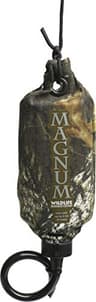
Wildlife Research Center Magnum Scrape Dripper

Wildlife Research Center Magnum Scrape Dripper

The dripper is the reason scrape scent works at all. It releases during daylight as temperatures rise and stops overnight, which conditions deer to visit the scrape when it is light — the one behavior change that turns a nocturnal scrape into a huntable one.

Best pre-rut purchase
$16.28 · View on Amazon

Price as of October 16, 2026. #ad How we’re funded

6
Montana Decoy Dreamy Doe Whitetail Decoy

Montana Decoy Dreamy Doe Whitetail Decoy

The decoy most hunters will actually carry, which is the only kind that kills deer. Montana publishes it at 30 oz including poles, folding to 13 by 16 inches and opening to 37 by 40 — meaning it goes in or on a daypack instead of riding in a truck bed, and a public-land hunter can set it a half mile from the road. The compromise is honest: a printed photographic panel reads superbly from the broadside angles a deer usually approaches from, and poorly from head-on.

Best decoy to carry in
$78.26 · View on Amazon

Price as of October 16, 2026. #ad How we’re funded

The picks in full

#1Best overall for the rut

Illusion Black Rack Rattling System

Synthetic antlers that give you the volume a bag cannot, without carrying a real shed rack up a tree. Hellickson's rattling research found loud sequences drew nearly three times the responses quiet ones did, and this is the pick that lets you be loud on purpose.

Strengths

  • Produces the loud opening crash the rattling research associates with the most responses
  • Synthetic construction does not dry out, crack or vary the way a shed rack does
  • Splits into halves and packs smaller than a real antler set

Trade-offs

  • Two hands and real movement to use — awkward in a stand with a bow across your lap
  • Loud rattling in thick cover can bring a buck closer than you want before you can move
TypeSynthetic rattling antlers
ConstructionManufacturer describes it as Bone-Core Technology
SoundAntler-on-antler rattling
WeightNot published

Worth knowing. Rattle with your back to the tree and your bow within reach. The research found 60% of responding bucks came in on the downwind side, and you will not have long.

Specs read from the product listing, on August 24, 2026. “Not published” means the manufacturer does not state that figure.

#2Best rattling from a stand

Hunters Specialties Ruttin' Buck Rattling Bag

The cheapest honest way into rattling, and for a hunter up a tree it is arguably the better format: a bag works one-handed, packs flat, and cannot clatter against your bow or your stand rail the way a set of antlers can while you are trying to hold still.

Strengths

  • One-hand operation, so your other hand stays on the bow
  • Packs flat into a bib pocket instead of hanging off your pack
  • The lowest-cost entry into rattling by a wide margin

Trade-offs

  • Cannot reproduce the loud opening crash of real antlers, and the research says loud sequences pull the most bucks
  • No grunting or bleating — this is one tool in a calling kit, not the kit
TypeRattling bag
OperationListed as one-hand operation
SeasonListed for the pre-rut and rut
MaterialNot published

Worth knowing. A bag is quieter to carry and quieter to deploy than antlers. That is a real advantage in a tree and a real limit on volume.

Specs read from the product listing, on August 24, 2026. “Not published” means the manufacturer does not state that figure.

#3Best doe bleat

Primos The Original CAN

The easiest deer call in the world to use correctly: turn it over, let it settle, turn it back. There is no reed to blow flat and no volume to overdo, which is why it is the call to hand a new hunter and the call that lives in most veterans' bibs.

Strengths

  • Almost impossible to blow badly — the sound is made by gravity, not by your breath
  • Small enough to live in a chest pocket all season
  • Works on does and on cruising bucks through the pre-rut and rut

Trade-offs

  • One sound only — you still need a grunt tube for buck vocalizations
  • Can-style calls can stick or sound off when wet or iced, so keep it inside a layer
TypeCan-style bleat call
SoundDoe estrus bleat
OperationTurn over and back — no breath needed
WeightNot published

Worth knowing. Keep it inside your jacket rather than on an outside lanyard. Cold and wet are what make a can call sound wrong.

Specs read from the product listing, on August 24, 2026. “Not published” means the manufacturer does not state that figure.

#4Best estrous lure

Code Blue Whitetail Doe Estrous Triple Pack, 2 oz

The classic pre-rut and rut lure, sold in small bottles because that is how it should be used — fresh, in small amounts, on a scent wick near your stand. The triple pack exists because urine-based lures degrade, and a bottle opened last November is not the same product.

Strengths

  • Small 2 oz bottles match how the product should actually be used
  • Three bottles cover the short window where estrous scent makes sense
  • Long-established brand in a category with a lot of noise

Trade-offs

  • Natural deer urine is prohibited in a number of states — check first
  • Only relevant for a few weeks a season; outside the rut it does nothing
TypeEstrous doe urine lure
Volume2 oz x 3
SeasonPre-rut and rut
SyntheticNo (natural urine)

Worth knowing. Several states restrict or ban natural cervid urine because of chronic wasting disease transmission concerns. Check your own regulations before buying, not after.

Specs read from the product listing, on August 22, 2026. “Not published” means the manufacturer does not state that figure.

#5Best pre-rut purchase

Wildlife Research Center Magnum Scrape Dripper

The dripper is the reason scrape scent works at all. It releases during daylight as temperatures rise and stops overnight, which conditions deer to visit the scrape when it is light — the one behavior change that turns a nocturnal scrape into a huntable one.

Strengths

  • Temperature-driven release times the scent to daylight hours
  • Refreshes the scrape without you walking in to do it
  • Fewer visits from you means less human scent on the site

Trade-offs

  • Requires the scent, which is a second purchase
  • One more thing hanging in a tree that someone can take
TypeScrape dripper (refillable)
ReleaseTemperature-driven, daytime
CapacityNot published
Scent includedNot published

Worth knowing. The value of a dripper is not the scent it delivers. It is that it delivers it while you are not there, which is the only way to build a pattern without polluting the site.

Specs read from the product listing, on August 22, 2026. “Not published” means the manufacturer does not state that figure.

#6Best decoy to carry in

Montana Decoy Dreamy Doe Whitetail Decoy

The decoy most hunters will actually carry, which is the only kind that kills deer. Montana publishes it at 30 oz including poles, folding to 13 by 16 inches and opening to 37 by 40 — meaning it goes in or on a daypack instead of riding in a truck bed, and a public-land hunter can set it a half mile from the road. The compromise is honest: a printed photographic panel reads superbly from the broadside angles a deer usually approaches from, and poorly from head-on.

Strengths

  • Published at 30 oz including poles, which is the difference between a decoy you own and a decoy you use
  • Folds to a published 13 x 16 in and opens to 37 x 40 in — it fits in a pack with room for the rest of your gear
  • A photographic image panel, so hair detail and color are a real photo rather than a paint scheme
  • Takes the maker's Teaser Tail and tip-up stand, so motion can be added later without a new decoy

Trade-offs

  • Two-dimensional: from directly in front or behind it is a panel, so the set-up angle does the work
  • Montana's own page contradicts itself on weight, listing 30 oz in the specification and 64 oz in the additional-information block
  • No material composition is published anywhere we could read
  • Teaser Tail and the tip-up stand are both sold separately, so the useful configuration costs more than the sticker
TypeCollapsible photographic doe decoy
Weight30 oz including poles (maker's spec)
Folded13 x 16 in
Unfolded37 x 40 in
IncludedLeg poles
MaterialNot published

Worth knowing. Montana publishes two different weights for this decoy on the same page (30 oz in the spec, 64 oz in additional information); both are recorded rather than averaged.

Specs read from the product listing, on October 5, 2026. “Not published” means the manufacturer does not state that figure.

What to carry, by rut phase

The exact dates are local and repeat on your ground year to year. The sequence does not change.

PhaseWhat bucks are doingWhat to carry
Pre-rutMaking and checking scrapes, mostly at nightScrape dripper and scrape scent; a grunt tube; light rattling
SeekingCovering ground looking for the first hot doeRattling, grunt, snort-wheeze; decoy on open ground
Chasing / peakActively pursuing does, moving all dayEstrous lure on a wick; doe bleat; buck-and-doe decoy pairing
Post-rutRecovering, feeding, a few does still cyclingBleats over food; estrous used sparingly; back to wind discipline

The rattling numbers, because they change how you do it

Hellickson’s three-year study is the one place this category has real data, and four of its findings are directly actionable:

  • Rattle loud. Loud sequences drew nearly three times the responses of quiet ones. The tentative tickling most hunters do is the least effective version.
  • Rattle in the morning. 54% of responses came between 7:30 and 10:30 a.m.; 16% at midday. If you only rattle on the evening sit, you are working the worst window.
  • Rattle on the cool, calm, cloudy days. Response improved as temperature and wind dropped and as cloud cover rose.
  • Get above it. Ground-level hunters in the study missed 57% of the responses that elevated observers could see. That is not a product recommendation, it is an argument for a stand or a saddle — most of the deer that answer you on the ground, you never know about.

One thing to keep in proportion: the study also found more than one buck responding per attempt during peak rut, which means a sequence can produce a deer you did not see arrive. Rattle, then put the antlers down and get your hands back on the bow. Our deer call comparison covers the whole calling kit, including the snort-wheeze that is worth owning for one specific situation.

Why a deer hears a rack from further away than you expect

Deer hearing runs from roughly 0.25 kHz to 30 kHz — above our ceiling near 20 kHz — with best sensitivity between about 4 and 8 kHz, which is where deer vocalizations fall, and their ears rotate independently to locate a sound. The practical consequence is that antler-on-antler and a bleat carry further and are located more precisely than you would guess. The same research notes deer were found nearly twice as likely to flee human speech as predator calls, which is the cheapest piece of rut advice available: stop talking on the walk in.

Scent and scrapes: what each product is actually for

A scrape dripper is a pre-rut purchase, not a rut one. Its whole function is temperature-driven release during daylight, so the scrape gets freshened when deer could plausibly be standing at it rather than at 2 a.m. Hang it over a real or mock scrape in late October and let it work for two weeks before you expect anything. Our mock scrape guide covers where to put it.

An estrous lure is a peak-rut purchase with a short shelf life in the field. Use it on a wick at a height a deer will nose, upwind of nothing you care about, and expect it to work as a stopper for a deer that is already coming rather than as a magnet from four hundred yards. The full comparison is in our deer scent picks.

Cover scent is not a substitute for a wind plan. With 60% of responding bucks arriving downwind, the thing that decides the hunt is where your scent is going, and thermals move it differently morning and evening. That is a stand-placement problem, and it is why our guide to playing the wind matters more during the rut than any bottle does. Check your state’s rules too: natural urine-based lures are restricted in some states.

Decoys: the one that gets carried is the one that works

A full-body decoy is more convincing and a collapsible photographic decoy gets used. The Montana Dreamy Doe publishes 30 oz including poles and folds to 13 by 16 inches, against 22 lb for the full-body buck we also cover. If you walk in half a mile on public ground, that is the whole decision. Use a doe decoy for a relaxed set and a buck for a challenge set, keep it in the open where it can be seen from distance, and never carry one into public land without blaze orange on it — our decoy comparison covers both.

What not to buy for the rut

  • A second grunt tube. One adjustable call covers buck, doe and fawn sounds. A spare in the truck is fine; a third in the pack is clutter.
  • Minerals and supplements, this month. The NDA’s evidence-based position is that there is no scientifically documented antler or health benefit for wild deer from supplements, and in any case November is not when they would act.
  • Anything that replaces the morning sit. Half the rattling responses in the research came in a three-hour morning window. The gear is cheap; the sits are not replaceable.

Frequently asked questions

What gear do you need for hunting the rut?

A way to rattle, a bleat call, an estrous lure, and - if you hunt open ground - a decoy. Order them by phase: a scrape dripper and scrape scent in the pre-rut, rattling and a grunt tube through the seeking phase, and an estrous lure plus a doe bleat at peak. The one purchase with real research behind it is the rattling system: Hellickson's three-year study found loud sequences drew nearly three times the responses of quiet ones, and a 65% overall response rate.

What is the best time of day to rattle for deer?

Morning, by a wide margin. In Dr. Mickey Hellickson's three-year rattling research, 54% of all responses came between 7:30 and 10:30 a.m., against 16% at midday. Response rates also improved as temperature and wind dropped and as cloud cover increased. If you only rattle on evening sits, you are working the weakest window of the day.

Does rattling actually work?

More often than most hunters assume, and the honest caveat is that you miss most of it. The research recorded a 65% overall response rate - 73% for collared bucks - and more than one buck responding per attempt during peak rut. It also found that hunters at ground level missed 57% of the responses that elevated observers could see, so a hunter who rattles from the ground and sees nothing has not necessarily failed to call a deer. Note too that 60% of responding bucks approached from downwind, which is what decides whether a response becomes a shot.

When is the rut, and does the moon affect it?

Locally, and no. Nine years of New Brunswick fetal data from more than 1,600 does found the mean conception date fell inside a seven-day window every year, and inside the same four-day window - November 26 to 29 - in eight of nine years. Breeding dates are driven by photoperiod and are consistent year to year within a population, regardless of moon phase. The practical consequence is that your own records from last season, and your own trail camera data, are better planning tools than any moon chart.

Is estrous scent worth it during the rut?

As a stopper rather than a magnet. Used on a wick inside your effective range, it gives a deer that is already working toward you a reason to stand still in the right spot. What it will not do is overcome a bad wind, and with 60% of responding bucks arriving downwind that is the thing most likely to end the hunt. Check your own state's rules as well, because natural urine-based lures are restricted in some states on disease grounds.

Sources

  • National Deer Association — 10 Tips for Rattling More Bucks Using Science — Dr. Mickey Hellickson's three-year rattling research: a 65% overall response rate (73% for collared bucks), 54% of responses between 7:30 and 10:30 a.m. against 16% midday, better response as temperature and wind dropped and cloud cover rose, greater than one buck per attempt during peak rut, 60% of bucks approaching from downwind, loud sequences drawing nearly three times the responses of quiet ones, and ground-level hunters missing 57% of the responses elevated observers saw (accessed August 24, 2026)
  • National Deer Association — No Link Between Moon Phase and Rut Peak — Nine years of New Brunswick fetal data from over 1,600 does: the mean conception date fell inside a 7-day window every year and inside the same 4-day window (November 26-29) in eight of nine; breeding dates are driven by photoperiod and are consistent year to year within a population, regardless of moon phase (accessed August 24, 2026)
  • National Deer Association — Listen to These 5 Facts About Deer Hearing — NDA on deer hearing: a range of roughly 0.25 kHz to 30 kHz against a human ceiling near 20 kHz, best sensitivity between about 4 and 8 kHz — the band deer vocalizations fall in — ears that rotate independently to locate a sound, and research finding deer nearly twice as likely to flee human speech as predator calls (accessed August 24, 2026)
  • National Deer Association — To Beat a Buck's Nose, Remember Thermals — NDA on how wind and thermals carry human scent — why playing the wind beats trusting scent products alone (accessed July 22, 2026)
  • National Deer Association — Understanding Deer Senses (Dr. Gino D'Angelo) — NDA research summary on the three senses that keep a deer alive — sight, hearing, and, above all, smell (accessed July 22, 2026)
  • National Deer Association — Minerals for Whitetails — NDA's evidence-based position: no scientifically documented antler or health benefit for wild deer, though supplements may help where soils are mineral-deficient; age and nutrition drive antler size (accessed August 7, 2026)
  • Montana Decoy — Dreamy Doe (product page) — Manufacturer's published figures: weight 30 oz including poles; folded 13 in x 16 in; unfolded 37 in x 40 in; leg poles included; compatible with the brand's Whitetail Tip Up Stand and its Teaser Tail, both sold separately; a lightweight, durable design with no material composition published. The same page's additional-information block separately lists a weight of 64 oz, which contradicts the 30 oz figure in its own specification — recorded here rather than resolved, because the maker publishes both. Cited as manufacturer claims (accessed October 5, 2026)

Keep reading