Crossbows · Bolts
How to Choose Crossbow Bolts
Three specifications decide whether a bolt is safe in your crossbow: the nock, the length and the minimum finished weight. Get the first one wrong and the string can slip past the bolt entirely — which is a dry fire, and the end of the crossbow.
How this is funded:we earn a commission if you buy through our links, at no extra cost to you. It never changes which product we recommend, and we’ll tell you plainly when to skip one. Full disclosure.
Match the nock first, then the length, then check the finished weight against the minimum in your crossbow’s manual. In that order, because the nock is the one that can hurt you. A crossbow specified for a half-moon nock expects the string to engage a groove cut across the back of the bolt. Put a flat-nocked bolt in that crossbow and the string can slip past the bolt entirely on release — a dry fire, which is the fastest way to destroy a crossbow and the most common way to be injured by one.
Everything else about bolt selection is a performance trade you can experiment with safely. Those three specifications are not.
The three specifications that are not optional
| Specification | What to do | What goes wrong if you get it wrong |
|---|---|---|
| Nock style | Buy exactly what your manual names — half-moon, flat, or a proprietary nock | String slips past the bolt: a dry fire |
| Length | Match the published length (16, 18, 20 and 22 in are all sold) | Bolt sits wrong on the rail or against the retention spring |
| Minimum finished weight | Check the manual’s figure for your model and stay at or above it | Behaves like a dry fire: limb damage, voided warranty |
The weight point deserves emphasis because it is the one people reason their way out of. Every crossbow manual publishes a minimum finished bolt weight for that specific model. A bolt under it cannot absorb the energy the bow stores, so the excess is dumped into the limbs, rail and trigger group instead. The damage is often not dramatic the first time, which is precisely why it is dangerous — it accumulates.
Nock style, in more detail than you want
There are broadly three families. A half-moon nock has a groove cut across the back of the shaft and must be indexed so the groove aligns with the string: on most crossbows that means the odd-colored vane facing down toward the rail, but your manual is the authority. A flat nock has no groove and relies on the string pushing a flat face. A proprietarynock — TenPoint’s Alpha-Nock family, for example — is designed for a particular string and latch geometry.
Two consequences follow. First, “universal” on a bolt packet describes the shaft, not the nock. Second, an indexing mistake with a half-moon nock has the same failure mode as the wrong nock entirely, so loading a half-moon bolt is a thing to do deliberately in good light rather than by feel in the dark. Our guide to cocking a crossbow covers the loading sequence, and our bolt picks record the nock style for every bolt we list.
The nock is also a wear item. Repeat shots batter a bare carbon nock, which is why premium bolts fit an aluminum bushing behind it — the Pro Elite bolts below use an Alpha-Nock HP with an aluminum bushing for exactly that reason. Inspect the nock on any bolt that has been shot a lot, and retire it if the groove is rounded or chipped.
Weight: the real trade, once you are above the minimum
Above the published minimum, bolt weight is a genuine engineering choice and it is the same trade as arrow weight on a vertical bow. A heavier bolt leaves the rail slower, drops more over distance, and carries more momentum into the animal. A lighter bolt flies faster and flatter, and gives up penetration.
You can put numbers on this. Wasp Archery publishes the standard kinetic-energy formula as arrow weight in grains multiplied by velocity squared, divided by 450,240. Run a few combinations and the picture is clear:
| Bolt weight | Speed | Kinetic energy (calculated) |
|---|---|---|
| 350 gr | 420 fps | ~137 ft-lb |
| 400 gr | 400 fps | ~142 ft-lb |
| 450 gr | 385 fps | ~148 ft-lb |
These are calculations from the published formula, not measured results, and the speed figures are illustrative of how a heavier bolt slows down rather than readings from any particular crossbow. The point is the pattern: across the range a hunter actually chooses from, total energy barely moves, and every one of these figures is several times the roughly 25 foot-pounds commonly cited as an ethical minimum for whitetail. So weight is not an energy decision at deer range. It is a penetration-versus-trajectory decision, and for a whitetail inside 40 yards either end of the range works.
For reference on the vertical-bow side, the Pope & Young Club’s equipment definitions include a 300-grain minimum total arrow weight for bowhunting — a floor that most crossbow bolts clear comfortably. Our crossbow effective range guide works through the energy and flight-time arithmetic in full, including validating the formula against a manufacturer’s own published kinetic-energy figure.
Shaft material: carbon, aluminum, and what each is for
Carbon is the default and the right default: it is light, stiff, durable in the ways that matter and sold everywhere. Its failure mode is the one to respect — a carbon shaft that has taken an impact can hold an invisible crack and come apart on release, which is why flexing and listening to every bolt is a habit rather than a precaution.
Aluminum is the specialist choice, and its appeal is mass. A 2219 aluminum shaft in a 7075-T9 alloy puts weight where a carbon bolt is light, which is exactly what you want for maximum penetration on a close shot. The costs are that it is slower, so your sight marks change, and that aluminum bends where carbon breaks — a bent aluminum shaft is obvious, which some hunters consider a feature.
The three bolts worth starting from
Pick by what problem you have: the manufacturer-specified bolt, the heavy penetrator, or the lighted bolt for last light.
The specified bolt
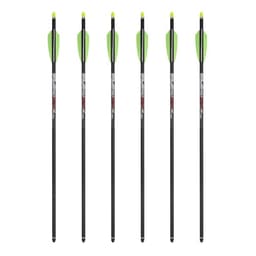
TenPoint Pro Elite 400 20-inch, 6-pack
TenPoint and Wicked Ridge owners buying the specified bolt
- Length
- 20"
- Shaft
- Carbon
- Nock
- Alpha-Nock HP (aluminum bushing)
Price as of October 10, 2026. #ad How we’re funded
Maximum penetration
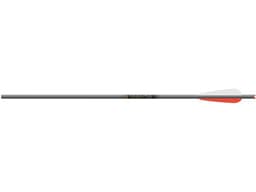
Easton XX75 Magnum 2219 20-inch, 6-pack
Maximum penetration on close whitetail shots
- Length
- 20"
- Shaft
- 2219 aluminum (7075-T9 alloy)
- Nock
- Half-moon (installed)
Last light
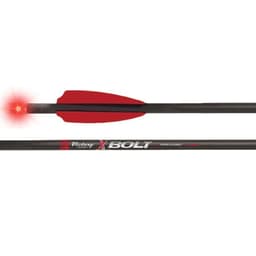
Victory Archery XBolt Sport Lighted 20-inch, 3-pack
Low-light shots where you need to see the impact
- Length
- 20"
- Shaft
- 0.300" carbon
- Nock
- Lighted
Price as of October 10, 2026. #ad How we’re funded
If your crossbow is a TenPoint or a Wicked Ridge, the first of these carries the Alpha-Nock HP the manuals call for and removes the nock question entirely. The Easton is the one to choose if you are hunting close and want mass — note that its listing publishes the shaft spec but not the total finished weight, so you will be re-sighting by observation rather than by arithmetic. The lighted bolt solves a real problem at last light, with two caveats worth repeating: lighted nocks are illegal in a few jurisdictions, and a battery you have been running down all summer is a battery that fails on the one shot that mattered.
After any bolt change: re-sight, then verify
Changing bolts changes your zero. So does changing packs of the same bolt, because production batches differ. The routine is: shoot a three-bolt group at 20 yards, correct, then confirm at the longest distance you will actually shoot. Then do the broadhead check, because a bolt-and-broadhead combination has to be verified together.
And keep the bolts alive. TenPoint’s own maintenance guidance for the crossbow applies to the whole system: inspect strings and cables every session and condition them when they look dry, check every nut, bolt and screw for tightness, and change strings and cables at least every two years or every 1,000 shots if you shoot often. A worn string is a bolt problem too, because it changes how the bolt leaves the rail. Our crossbow maintenance guide has the full schedule, and our crossbow sighting-in guide covers the re-zero.
General guidance, not legal or safety advice. Hunting regulations vary by state and change every year — always verify seasons, legal equipment and requirements with your own state wildlife agency before you hunt. Wear a full-body harness and stay attached to the tree from the ground up whenever your feet leave the ground.
Frequently asked questions
What crossbow bolts should I use?
The ones your crossbow's own manual specifies, and the specification to match first is the nock. A crossbow built for a half-moon nock expects the string to sit in a groove across the back of the bolt; a flat nock does not provide that groove, and the string can slip past the bolt on release. That is a dry fire — it destroys crossbows and injures people. After the nock, match the length and make sure the finished bolt weight is at or above the minimum your manual publishes.
Are all crossbow bolts the same?
No, and treating them as interchangeable is the single most dangerous habit in crossbow shooting. Nock style varies (half-moon, flat, and proprietary designs like Alpha-Nock), length varies (16, 18, 20 and 22 inches are all sold), and finished weight varies enormously between a light carbon practice bolt and a 2219 aluminum shaft. Each of those three is a safety specification on some crossbow, not a preference.
What weight crossbow bolt should I shoot for deer?
At or above the minimum finished weight your crossbow's manual publishes — which is the number that actually matters — and then as heavy as you are willing to re-sight for. Most hunting bolts land around 400 grains finished. Heavier bolts carry more momentum and penetrate better; lighter bolts fly faster and flatter. A whitetail at bowhunting range has energy to spare either way: a 400-grain bolt at 400 feet per second returns roughly 142 foot-pounds using the standard formula, against the roughly 25 foot-pounds commonly cited as an ethical minimum for deer.
What happens if a crossbow bolt is too light?
It behaves like a dry fire. The bow's stored energy has to go somewhere, and if the bolt is too light to absorb it, the excess goes into the limbs, the rail and the trigger group instead. The result is damaged limbs, a voided warranty and a crossbow that may fail catastrophically later. Every crossbow manual publishes a minimum finished bolt weight for that specific model — check yours rather than assuming a bolt sold as a crossbow bolt is heavy enough.
Do I need to re-sight after changing crossbow bolts?
Yes, and after a change of pack within the same model as well. Bolt weight determines how fast the bolt leaves the rail and how much it drops over a given distance, so a change of weight moves your point of impact at every distance. Even nominally identical bolts from a different production batch can differ. Shoot a three-bolt group at 20 yards before you trust a new pack, and a longer-range group before you hunt with them.
Are lighted crossbow nocks legal?
In most places yes, but not everywhere — lighted nocks are prohibited in a small number of jurisdictions, and the rule is sometimes written into archery-equipment regulations rather than crossbow-specific ones. Check your own state's regulations before you buy. If they are legal where you hunt, the practical approach is to practice with plain bolts of the same model and weight and reserve the lighted ones for hunting, so you are not relying on a battery you have been running down all summer.
How many crossbow bolts do I need?
Six is the practical minimum for one season: three in the quiver and three that live with your practice gear. A crossbow package typically ships with three, which is enough to sight in and not enough to hunt, because you will lose one in the leaves and crack one in a target. If you shoot lighted nocks, buy a cheap matched-weight pack for volume practice and keep the lighted ones for the hunt.
How do I check a crossbow bolt before shooting it?
Flex it, twist it and listen. A carbon shaft that has taken a hit can carry an invisible crack, and a cracked shaft can come apart on release and send fragments into your bow hand or forearm. Flex the shaft gently along its length while rotating it and listen for any crackling; check that the insert and point are tight, the vanes are intact, and the nock is undamaged and seated square. Inspect every bolt that has hit anything hard, and retire anything you are unsure about.
Sources
- TenPoint — 3 Critical Maintenance Tips to Keep Your Crossbow in Top Shooting Form — Manufacturer guidance: check every nut, bolt and screw for tightness; inspect strings and cables each session and condition when dry; TenPoint recommends changing strings and cables at least every two years, or every 1,000 shots if you shoot often; oil the trigger, dry-fire inhibitor, axles and cam bearings one drop at a time (accessed August 22, 2026)
- Wasp Archery — How to Calculate the Kinetic Energy of Your Arrow — The kinetic-energy formula (arrow weight and speed) used to judge penetration (accessed July 22, 2026)
- Bowhunting.com — How Far Should You Shoot With a Crossbow? — On ethical crossbow range for whitetail and how energy drops downrange (accessed July 22, 2026)
- Pope & Young Club — Equipment Definitions — Bowhunting equipment standards, including the 300-grain minimum arrow weight (accessed July 22, 2026)
- National Crossbow Association — State Regulations — State-by-state crossbow legality overview; always verify with your state agency (accessed July 22, 2026)
Keep reading
Best crossbow bolts
Five bolts ranked, from the manufacturer-specified premium option to a cheap matched-weight practice pack.
See the picksBest crossbow accessories
Everything the package leaves out: cocker, bolts, broadheads, a rated target, lube and a rangefinder.
See the picksHow to sight in a crossbow
The step you have to repeat after any bolt change, done properly.
Read the guideCrossbow effective range for deer
What the kinetic energy numbers allow, and where group size sets the real limit.
Read the guide