Tag & Timber

Tree stands · Hang-on

Best Hang-On (Lock-On) Tree Stands, and the Two Purchases Nobody Prices With Them

A hang-on is the only stand that goes exactly where the deer are instead of where a straight tree happens to be. It is also the only stand that is useless on its own - so this page prices the whole setup, not a third of it.

By Stephen V.Last updated How we pick

Buy the Hawk Helium Kickback XL. It is the hang-on to own if you want one stand that hangs on almost any tree and is still comfortable at hour six — and at this price it is also the budget pick, because it is the cheapest hang-on we can show you a live price for. If your hunting is one or two sets you sit all day on ground you know, the Millennium M100U Ultralite is the better buy: a sling seat instead of a pad is the single biggest comfort difference in this category. But the number you should actually plan around is not on either stand’s listing, because a hang-on cannot be climbed, and should not be hung, without two more purchases.

A hang-on — lock-on, if that is what they call it where you hunt — is a platform and a seat that strap to a trunk and stay there. That is the whole design, and it is why hunters pick it over the alternatives:

  • It fits trees a climber cannot. A climbing stand needs a straight, branch-free trunk of the right diameter. A hang-on will go on a leaner, a crooked oak, a limby tree, or a trunk too big or too small for a climber — which in practice means it goes where the deer are rather than where the timber cooperates.
  • It is quiet once it is up. A ladder stand is a visible structure and a climber makes noise on every ascent. A hung set is a dark shape you step onto in the morning.
  • It is the cheapest way to own several sets. Hang-ons are the stand type hunters buy three of, one per wind. That is the real reason the price gap to a premium ladder stand matters.

And here is the finding this page is built on, which no “best hang-on stand” list we can find prices honestly. A hang-on is a three-part purchase, and the stand is the cheapest third of it on paper and the least important third in practice. You cannot reach a hung stand without climbing sticks, and you should not hang or hunt one without a lifeline running from the ground to above the platform. Both are on this page with their own prices, because a stand in the low two hundreds that needs a stick set and a lifeline is a decision closer to four hundred — and pretending otherwise is how hunters end up climbing a new set on screw-in steps they bought because the budget was gone.

We own none of this gear and have not hunted from any of it. Every figure below was read from the live listing on the date shown on each card, and anything the maker does not publish is recorded as not published rather than estimated. Prices are live and dated.

How this is funded:we earn a commission if you buy through our links, at no extra cost to you. It never changes which product we recommend, and we’ll tell you plainly when to skip one. Full disclosure.

Quick picks

Ranked on published specs, package value and buyer fit. Select a row to jump to the full write-up. We have not tested these products — here is exactly what we do instead.

#ProductBest forPrice
1
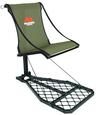
Hawk Helium Kickback XL

Hawk Helium Kickback XL

A hang-on with a recline — the Kickback's reclining backrest is far more comfortable than a bare lock-on, and it works on trees a climber can't. Pair it with climbing sticks and you can hunt crooked or branchy trees a climber rules out.

Best overall, and the budget hang-on
2
Millennium M100U Ultralite

Millennium M100U Ultralite

Famous for its comfortable sling seat — the M100U is the hang-on people leave up all season because sitting in it for hours doesn't wreck your back. Not the lightest, but the most comfortable lock-on many hunters have used.

Best for all-day sits
$274.99 · View on Amazon

Price as of November 12, 2026. #ad How we’re funded

3
Hawk Helium Climbing Sticks (4-pack)

Hawk Helium Climbing Sticks (4-pack)

Light aluminum sticks that pair with any hang-on or saddle. Four sticks get most hunters to a workable height, and the Helium line is the standard-bearer for lightweight, quiet climbing sticks.

The access you have to buy with it
$119.99 · View on Amazon

Price as of November 12, 2026. #ad How we’re funded

4
Hunter Safety System Reflective Lifeline

Hunter Safety System Reflective Lifeline

The cheapest thing on this page and the one that closes the gap most falls happen in. A harness protects you once you are standing on the platform; a lifeline is the rope that keeps you attached from the ground, up the sticks, through the transition onto the stand, and back down in the dark. The reflective sheath is not a gimmick either — it answers a flashlight beam, which is how you find the right tree at 5 a.m.

The purchase that should come first
$39.99 · View on Amazon

Price as of November 12, 2026. #ad How we’re funded

The picks in full

#1Best overall, and the budget hang-on

Hawk Helium Kickback XL

A hang-on with a recline — the Kickback's reclining backrest is far more comfortable than a bare lock-on, and it works on trees a climber can't. Pair it with climbing sticks and you can hunt crooked or branchy trees a climber rules out.

Strengths

  • Reclining backrest is unusually comfortable for a hang-on
  • Works on crooked or branchy trees a climber can't use
  • Large platform for its class

Trade-offs

  • Needs separate climbing sticks or steps to reach height
  • Hanging it quietly takes practice
TypeHang-on / lock-on stand
Weight capacity300 lb
Best treeAlmost any tree (with climbing sticks)
AccessRequires climbing sticks (sold separately)

Worth knowing. A hang-on needs a separate way up — factor climbing sticks or steps into the budget and the pack weight.

Specs read from the product listing, on July 22, 2026. “Not published” means the manufacturer does not state that figure.

#2Best for all-day sits

Millennium M100U Ultralite

Famous for its comfortable sling seat — the M100U is the hang-on people leave up all season because sitting in it for hours doesn't wreck your back. Not the lightest, but the most comfortable lock-on many hunters have used.

Strengths

  • ComfortMAX sling seat is exceptional for long sits
  • Solid, quiet aluminum platform
  • Foldable for pack-in

Trade-offs

  • Sling seat sits higher — takes adjustment for shots
  • Needs climbing sticks to hang
TypeHang-on / lock-on stand
Weight capacity300 lb
Best treeAlmost any tree (with climbing sticks)
SeatComfortMAX sling seat

Worth knowing. The most comfortable stand is the one you'll actually sit in until last light — comfort is a hunting advantage, not a luxury.

Specs read from the product listing, on July 22, 2026. “Not published” means the manufacturer does not state that figure.

#3The access you have to buy with it

Hawk Helium Climbing Sticks (4-pack)

Light aluminum sticks that pair with any hang-on or saddle. Four sticks get most hunters to a workable height, and the Helium line is the standard-bearer for lightweight, quiet climbing sticks.

Strengths

  • Lightweight aluminum — easy to pack in
  • Standoffs hold the sticks off the tree for foot room
  • Quiet to attach with the right rope or strap

Trade-offs

  • Four sticks may not reach full height on a fat trunk
  • Requires practice to hang quietly and safely
TypeAluminum climbing sticks (set of 4)
Pairs withHang-on stands and saddles
MaterialAluminum (lightweight)
AttachmentRope/strap (check what's included)

Worth knowing. Always use a lineman's belt and a full-body harness while hanging sticks and a stand — most tree-stand falls happen during the climb and setup, not the sit.

Specs read from the product listing, on July 22, 2026. “Not published” means the manufacturer does not state that figure.

#4The purchase that should come first

Hunter Safety System Reflective Lifeline

The cheapest thing on this page and the one that closes the gap most falls happen in. A harness protects you once you are standing on the platform; a lifeline is the rope that keeps you attached from the ground, up the sticks, through the transition onto the stand, and back down in the dark. The reflective sheath is not a gimmick either — it answers a flashlight beam, which is how you find the right tree at 5 a.m.

Strengths

  • Keeps you connected from the ground to the stand and back again, which is the window a harness alone does not cover
  • Reflective material lights up off a flashlight beam, so you find your tree and your rope in the dark
  • Ships with the carabiner and sound dampeners, so it is quiet against the trunk
  • Cheap enough to buy one per stand, which is how they actually get used

Trade-offs

  • It has a service life: HSS states the rope lasts 3 years from date of purchase, superseding the 2-year warning printed on some ropes
  • No published breaking strength, rope diameter or material on the listing
  • Left on the tree it is exposed to UV and weather all year, and a faded rope is a rope to retire
  • Only useful if you also own a harness — this is a component, not a system by itself
TypeLifeline with prusik, carabiner and sound dampeners
Service life3 years from date of purchase (maker's updated statement)
VisibilityReflective sheath
LengthNot published
Breaking strengthNot published

Worth knowing. HSS states on this listing that although some ropes carry a printed 2-year lifespan warning, the current policy is a 3-year lifespan from date of purchase.

Specs read from the product listing, on October 5, 2026. “Not published” means the manufacturer does not state that figure.

What this category publishes, and the column that is empty on every row

We went looking for the figures that should decide a hang-on purchase — weight capacity, seat type, stand weight and what access hardware is in the box — across both stands. One column is identical, one is useful, and two are blank.

ItemTypePublished capacityAccess includedSeat
Hawk Helium Kickback XLHang-on / lock-on300 lbNo — sticks sold separatelyFlip-back pad seat
Millennium M100U UltraliteHang-on / lock-on300 lbNo — sticks sold separatelyComfortMAX sling seat
Hawk Helium sticks (4-pack)Aluminum climbing sticksNot publishedn/an/a
HSS Reflective LifelineFall-arrest lifelineNot publishedn/an/a

Both stands publish 300 pounds and neither publishes a platform dimension or a stand weight on the listing we read. The 300-pound figure is worth reading carefully: it is a combinedrating for you plus your clothing plus your bow plus your pack, not a bodyweight limit. A 240-pound hunter in late-season layers with a crossbow and a loaded pack is closer to that number than they think, and the registry’s only answer above it is a harness rated higher, not a different stand.

The blank capacity cell on the climbing sticks is the more interesting one, and it is a choice rather than an absence of any yardstick. The Treestand Manufacturers Association’s own standards index lists two ASTM standards that name climbing sticks explicitly — F3249 for specifications of treestands, climbing sticks and tripod stands, and F3545 for static loading testing of the same — so there is a published way to test a stick and state what it holds. The listing we read states neither.

How many sticks you actually need, which is the question the four-pack answers

A hang-on at a sensible hunting height needs enough sticks to reach the platform and one more section of climbing above it, because the last move of the climb is stepping across onto the stand, and you want your hands on something higher than your feet when you do it. Most hunters find four sticks is the first honest number, and three is the number they wish they had bought four of.

That is why a four-pack is on this page rather than a cheaper three-pack. Buying three sticks for a hang-on is the most common way a setup ends up two feet lower than planned, and height in a hang-on is not really about scent — it is about having your outline in branches instead of against sky, and about shot angle. The companion arithmetic is in our climbing sticks guide, and if you would rather compare stick sets on their own, our climbing stick picks cover the category in full.

The lifeline is not an accessory, and this is the part we will not soften

A full-body harness protects you while you are standing on the platform. It does nothing at all during the climb and nothing during the hang — and the climb is when hunters fall. A lifeline is a rope anchored above the stand and run to the ground, with a prusik knot you slide as you go, and it keeps you attached from the first step to the moment you clip in at the top, then from the top back down in the dark.

State and hunter-education guidance is consistent on this: a full-body fall-arrest system, used from the ground up. The National Deer Association has written at length on the leading causes of stand falls and the case for being attached on every hunt, and the Tree Stand Safety Awareness Foundation exists because the numbers in this category are bad. One lifeline per tree, left in place all season, is the cheapest line item on this page and the only one that changes an outcome.

One thing almost nobody who owns a harness knows: Hunter Safety System’s own FAQ recommends replacing a harness every three to five years, or immediately if it shows wear or damage or has been in a fall, and checking stitching, straps and buckles before every hunt. If the harness in your truck is older than the stand you are about to hang, that is the purchase to make first. Our harness picks and harness guide cover the rest of it.

Hang-on, climber or ladder: who should not buy a hang-on

A hang-on is the wrong stand for two hunters. If you hunt one spot, all season, every season, on private ground you can drive to, a ladder stand is more comfortable, faster to get into in the dark, and needs no sticks — our ladder stand picks cover that case, and the head-to-head is the page to read if you are genuinely torn. And if you move constantly on public land where nothing can be left out, a saddle is lighter than any hang-on and packs smaller; saddle versus stand makes that case honestly, including the parts of it hunters oversell.

The hang-on wins in the middle, which is where most whitetail hunting actually happens: several known trees on ground you hunt repeatedly, hung in the summer, left up, sat on the right wind. If you want to hang a set and leave it, how to hang a tree stand is the procedure, and stand height settles the argument about how far up to put it.

What the money buys between these two stands

The gap between the Hawk and the Millennium is not capacity — both publish 300 pounds — and it is not where they will hang, because both go on almost any tree. It is the seat, and what the seat does to hour five.

A flip-back pad, which is what the Hawk uses, gets you a clear platform to shoot from and a firm surface to sit on. A sling seat, which is what the Millennium publishes, puts your weight into suspended fabric that spreads load instead of pressing on two contact points. Hunters who sit all day in November describe that difference in terms of whether they stayed until last light. Hunters who hunt two hours at dawn mostly do not notice it.

So buy on how long you sit, not on brand — and buy the sticks and the lifeline in the same order as the stand, because the first morning you plan to hunt a new set is exactly when you will discover what is missing.

Frequently asked questions

What is the best hang-on tree stand?

On the published specs, the Hawk Helium Kickback XL. It publishes a 300 lb capacity, hangs on almost any tree, and is the cheapest hang-on in our registry with a live price - so it is both the overall pick and the budget pick here. If you sit all day rather than for a dawn shift, the Millennium M100U Ultralite publishes the same 300 lb capacity with a ComfortMAX sling seat instead of a pad, and the seat is the main thing the extra money buys in this category.

What is the difference between a hang-on and a lock-on tree stand?

Nothing. They are two names for the same stand type: a platform and seat that strap to the trunk and stay there, reached with separate climbing sticks. Regional habit decides which word a hunter uses. What matters is the distinction from the other two types - a climbing stand carries you up the tree itself but needs a straight, branch-free trunk, and a ladder stand brings its own access but is a fixed structure you do not move.

Do hang-on tree stands come with climbing sticks?

Almost never, and neither of the stands on this page does. The listings for both the Hawk Helium Kickback XL and the Millennium M100U Ultralite state that access is by climbing sticks sold separately. That is the single biggest hidden cost in the category: budget the sticks with the stand rather than after it, because a hang-on with no way up it is not a usable stand.

How many climbing sticks do you need for a hang-on stand?

Four is the honest number for a normal hunting height, which is why we point at a four-pack rather than a cheaper three-pack. You need enough stick to reach the platform plus a section above it, because the last move of the climb is stepping across onto the stand and you want a handhold higher than your feet when you do it. Three sticks usually means hunting two feet lower than you planned.

What does a 300 lb weight capacity on a tree stand actually include?

You, your clothing, your bow or crossbow, and everything in your pack - it is a combined rating, not a bodyweight limit. Both stands here publish 300 lb. A heavier hunter in late-season layers with a crossbow and a full pack can be close to that figure, and the answer in that case is a harness rated for more weight rather than hoping about the stand; our harness picks include one rated above the 300 lb limit the rest of the category stops at.

Do I need a lifeline if I already own a harness?

Yes, and this is the one thing on this page we will not soften. A harness protects you while you are standing on the platform and does nothing during the climb - which is when falls happen. A lifeline runs from the ground to above the stand so you are attached from the first step to the last, in both directions, including in the dark. State wildlife agency and hunter-education guidance both describe a full-body fall-arrest system used from the ground up, and one lifeline left on each tree all season is the cheapest line item in a hang-on setup.

Is a hang-on stand better than a climbing stand?

It depends entirely on your trees. A climbing stand needs a straight trunk with no branches in the climbing zone and a diameter in its published range; where you have that, it carries its own access and nothing is left in the woods. A hang-on will go on a leaner, a crooked tree or a limby one - which usually means it can go where the deer actually travel rather than where the timber happens to cooperate. The trade is that the hang-on needs sticks, and that two more purchases come with it.

Sources

  • Treestand Manufacturers Association — Standards — The TMA's own standards index. Active standards listed: TMS 04 / ASTM F2123 (Standard Practice for Treestand Instructions), TMS 15 / F2128 (Standard Test Method for Treestand Repetitive Loading Capability), TMS 09 / F2275 (Treestand Manufacturer Quality Assurance Program) and TMS 06 / F2337 (Standard Test Method for Treestand Fall Arrest System). The page also lists newer ASTM standards with no corresponding TMS number, two of which name climbing sticks explicitly: F3249, covering specifications for treestands, climbing sticks and tripod/tower stands, and F3545, covering static loading testing for treestands, climbing sticks and tripod/tower stands. F3412 covers treestand terminology. Several older TMS standards (TMS 01/02/03/05 and TMS 11/12/17) are listed as withdrawn, having been consolidated into F3249 and F3545. The TMA states it does not hold distribution or publishing rights to the ASTM documents themselves (accessed October 26, 2026)
  • National Deer Association — Treestand Accidents: Can We Stop the Insanity? — NDA on the leading causes of treestand falls and the case for a harness on every hunt (accessed July 22, 2026)
  • Tree Stand Safety Awareness Foundation — Industry safety foundation tracking treestand-fall statistics and the ABCs of safety (accessed July 22, 2026)
  • Hunter-Ed — Fall-Arrest Systems (FAS) — State-approved hunter-ed guidance on full-body harness + fall-arrest components (accessed July 22, 2026)
  • Wisconsin DNR — Tree Stand Safety — State wildlife agency guidance on harnesses and safe stand use (accessed July 22, 2026)
  • Hunter Safety System — Frequently Asked Questions — The maker's own service-life rule, in its own words: it recommends replacing your harness every 3-5 years, or immediately if it shows signs of wear, damage, or has been involved in a fall; and before every hunt, checking for frayed stitching, worn straps or damaged buckles, and not using the harness if anything looks questionable. The FAQ does not address lifeline rope lifespan, TMA certification, weight limits or washing. Cited for the replacement interval, which almost no buyer of a harness knows exists (accessed October 5, 2026)

Keep reading