Bows · Shot execution
Shooting a Bow From a Tree Stand
An arrow follows the horizontal distance, not the distance your eye measures down the slope — which is why a correctly sighted bow shoots high from twenty feet up. Here is the geometry, the aiming point, and the form change that fixes most elevated misses.
How this is funded:we earn a commission if you buy through our links, at no extra cost to you. It never changes which product we recommend, and we’ll tell you plainly when to skip one. Full disclosure.
An arrow drops according to the horizontal distance it travels, not the line-of-sight distance your eye measures — so a correctly sighted bow shoots high from a tree stand unless you correct for it. That one sentence explains a large share of the arrows that sail over a deer’s back at fifteen yards, and it is a geometry problem rather than a shooting problem.
It is also only half of what changes when you climb. The other half is that the deer’s vitals are no longer where you have spent all summer aiming, because from above you are looking down into the chest rather than across it. Fix the distance and you stop shooting high. Fix the aiming point as well and you start getting two lungs instead of one.
The distance problem, with numbers
Realtree’s treatment of angle-compensating rangefinders puts the principle plainly: an arrow follows the true horizontal distance, not the line of sight, on an angled shot from a stand. The practical size of the error depends on how high you are and how close the deer is, and the relationship is not intuitive — the error is largest at close range, which is exactly where most whitetail shots happen.
| Stand height | True horizontal distance | Line-of-sight distance your eye measures | Error if you hold for line of sight |
|---|---|---|---|
| 20 ft | 10 yd | ~11.9 yd | ~1.9 yd too far |
| 20 ft | 20 yd | ~21.1 yd | ~1.1 yd too far |
| 20 ft | 30 yd | ~30.7 yd | ~0.7 yd too far |
| 30 ft | 10 yd | ~14.1 yd | ~4.1 yd too far |
| 30 ft | 20 yd | ~22.4 yd | ~2.4 yd too far |
These are straight Pythagorean figures from the two distances, not test data — the slope distance is the hypotenuse of a triangle whose sides are your height above the deer and the horizontal distance to it. Read the table for the pattern rather than the decimals: at thirty yards the correction is small enough to ignore with a multi-pin sight, and at ten yards from a tall stand it is large enough to miss over the top of a deer.
There are two fixes and you should use both. The reliable one is an angle-compensating rangefinder, which does the trigonometry and reports the horizontal number your pin is actually calibrated for. The free one is to range your shooting lanes from the stand before season, write the horizontal numbers down, and hunt to those — which also stops you ranging a live deer while it is looking at you.
The aiming problem: where the vitals go when you climb
On flat ground, the broadside aiming point behind the near shoulder puts the arrow through the middle of both lungs. From twenty feet up at close range, the arrow enters high on the near side and exits low on the off side — so the same visual aiming point sends it over the top of the heart and through the top of the near lung only.
The correction is to stop aiming at the visible crease and start aiming at the chest cavity as a three-dimensional volume. In practice that means holding at or slightly below the mid-line of the body you can see, behind the near shoulder, and picking the exit point on the off side as the thing you are actually aiming at. The steeper the angle, the lower on the visible body your hold goes.
The corollary is the shot to pass: a deer directly beneath the stand. There the arrow travels down the length of the chest rather than across it, and the chance of reaching both lungs is poor regardless of how well you shoot. Waiting for the deer to step out to ten or fifteen yards is free, and it converts a bad angle into a good one. Our guide to tracking after the shot covers what each hit type means for your wait time, and the shot-placement consequences are why it is worth passing the hard one.
The form change: bend at the waist, not at the elbow
Here is the mistake that produces inconsistent elevated shots even when the distance is right. Faced with a downhill target, most hunters keep their torso upright and drop their bow arm to find the deer. That changes shoulder alignment, shortens the effective draw and moves the anchor — three alterations to the form the bow was sighted in with, all at once, at the worst possible moment.
The fix is to keep the entire upper body in the same relationship it has on flat ground and hinge forward from the hips. Your bow arm, release arm, shoulders and head alignment all stay put; only the angle of your spine changes. This is also what gets the lower limb of the bow clear of the stand rail, which is the second thing that ruins elevated shots.
Three things to rehearse before opening day, in the harness and the coat you will hunt in:
- The seated shot. Most hunters have never shot an arrow sitting down, and plenty of deer arrive before you can stand up without being seen. Practice it.
- The off-side turn. A right-handed shooter’s hardest shot is to their right. Find out at home which directions you genuinely cannot cover from the seat, and hang the stand accordingly.
- Clearance. The tether, the harness straps, a bino harness and anything on your belt are all things a string can catch. Set the tether so you can stand, turn and draw without loading it, and check the path of the string with the bow at full draw.
The three pieces of kit that make an elevated shot repeatable
One solves the distance, one solves the angle mechanically, and one is non-negotiable before you are in the tree at all.
Solves the distance
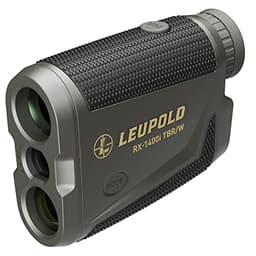
Leupold RX-1400i TBR/W Gen 2
Stand hunters who want angle-compensated range
- Max range (reflective)
- 1,400 yd
- Magnification
- 6x
- Angle compensation
- Yes — TBR/W (true horizontal + wind hold)
Price as of October 10, 2026. #ad How we’re funded
Solves the angle
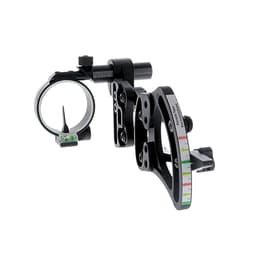
TRUGLO Pendulum Series Ultimate Treestand Sight
Elevated stand hunting inside pendulum range
- Type
- Pendulum treestand sight
- Bracket
- Adjustable
- Pins
- Not published
Price as of October 10, 2026. #ad How we’re funded
Before any of it
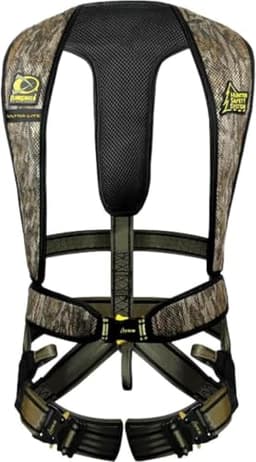
Hunter Safety System Ultra-Lite Harness (Mossy Oak Bottomland)
A stand or saddle hunter who wants a harness light enough to wear every sit
- Type
- Full-body harness vest, mesh upper
- Harness weight
- 2.5 lb
- Capacity
- S/M 100-175 lb; L/XL 175-250 lb; 2X/3X 250-300 lb
Price as of October 10, 2026. #ad How we’re funded
The rangefinder is the general-purpose answer: TBR/W reports the true horizontal distance a bow or bullet actually follows, and the Flightpath mode flags whether an arrow clears intervening limbs — which from a stand is a real question, not a gimmick. The pendulum sight is the specialist answer, and it suits a hunter who shoots almost nothing except close elevated shots. Note honestly that the pendulum sight publishes neither a pin count nor an effective range on the listing we read, so you are buying the concept rather than a specification; our bow sight picks set out what each sight in the category does and does not state.
The harness is the one item here that is not a performance choice. The National Deer Association has documented the leading causes of treestand falls and the case for wearing a harness on every hunt, the Tree Stand Safety Awareness Foundation exists to track those statistics, and state-approved hunter education guidance is to stay attached to the tree from the ground up — which means a lineman’s rope or a lifeline on the climb, not just a harness once you are seated. The harness above is published at 2.5 lb with built-in lineman’s loops and a shock-absorbing tether; note that its maker names no standard, test or certifying body, and that Hunter Safety System’s own FAQ recommends replacing a harness every three to five years, or immediately after a fall or any sign of wear. Our harness picks and climbing stick guide cover the rest of the system.
How far is too far from a stand?
Elevation does not extend your range — if anything it shortens it, because the shot angle narrows the window through both lungs. Conventional bowhunting guidance treats 40 to 50 yards as a practical outer limit on whitetail, and most hunters are better served by a self-imposed 30. Add elevation and the honest number is the distance at which you can keep a three-arrow group inside the chest cavity, from the seat, at the angle you will actually shoot.
That is a number you have to find rather than read, which is the whole argument for practicing from the stand itself. Our draw weight for deer guide covers the energy half of the limit, and our guide to hanging a stand covers setting the stand so your best shooting lane is also the one the deer uses.
General guidance, not legal or safety advice. Hunting regulations vary by state and change every year — always verify seasons, legal equipment and requirements with your own state wildlife agency before you hunt. Wear a full-body harness and stay attached to the tree from the ground up whenever your feet leave the ground.
Frequently asked questions
Why does my bow shoot high from a tree stand?
Because you are ranging the wrong distance. An arrow drops according to the horizontal distance it travels, not the longer line-of-sight distance from your eye to the deer. From 20 feet up at 20 horizontal yards, your eye measures around 22 yards of slope — so if you range 22 and hold your 20-to-25 pin, the arrow arrives with less drop than you allowed for and hits high. The fix is to range or compute the true horizontal distance, which is what an angle-compensating rangefinder does.
Where do you aim on a deer from a tree stand?
Lower than instinct suggests, and with a different picture of the vitals. From a steep angle the near-side entry hole is higher on the body than the exit, so an arrow placed where you would aim on flat ground tends to clip only the near lung or pass over the heart. Aim at the center of the chest cavity as it exists in three dimensions rather than at the crease you can see — which usually means holding at or slightly below the mid-line of the visible body, behind the near shoulder.
How steep an angle can you ethically shoot at?
The limiting factor is not the angle itself but how much of both lungs the arrow can reach. The steeper the shot, the more likely it is that the arrow passes through one lung and exits low on the off side without ever crossing the chest cavity. A deer directly under the stand is the worst case and the shot most worth passing. Practicing from a real elevated platform at the angles you actually hunt tells you where your own limit is far better than any rule of thumb.
Do I bend at the waist or drop my bow arm when shooting downhill?
Bend at the waist. Keeping the whole upper body — bow arm, release arm, shoulders and head alignment — in the same relationship it has on flat ground, and simply hinging forward from the hips, preserves the form you sighted the bow in with. Dropping the bow arm while leaving the torso upright changes shoulder alignment and anchor, which moves impact unpredictably. It also raises the arrow over the stand rail, which is the second reason to do it.
Should I use a pendulum sight for tree stand hunting?
It is a genuine option for a hunter who shoots almost exclusively from elevation at close range, because a pendulum sight compensates for the angle mechanically and removes a decision at the shot. Two honest caveats: the pendulum sight in our registry publishes neither a pin count nor an effective range, so you are buying on the concept rather than on specifications; and the system only works inside its intended distance and angle window. For most hunters a fixed multi-pin sight plus an angle-compensating rangefinder is the more flexible answer.
How high should I practice shooting from?
From the height you hunt, on the platform you hunt from, with the harness on. Shooting downhill off a deck or a hillside is better than nothing but it does not reproduce the two things that actually change — the stand rail in the way of your lower limb, and the restricted foot position that stops you squaring up to the target. If you cannot practice from your stand, at minimum practice sitting down, because a seated shot is the one most hunters have never rehearsed.
Is it safe to draw a bow in a tree stand with a harness on?
Yes, and you should never be in a stand without one. The thing to check at home rather than in the dark is clearance: the tether, the harness straps and anything you have attached to your belt or chest are all things a bowstring can catch. Set the tether length so you can stand, turn and draw without it loading, and run through the draw in the harness and the coat you will hunt in. State-approved hunter education guidance is to stay attached to the tree from the ground up, every hunt — the climb is where most falls happen.
Does shooting from a tree stand reduce penetration?
Not meaningfully at whitetail distances — the arrow is carrying the same energy it would on flat ground over the same horizontal distance. What changes is the path through the animal. A steep angle sends the arrow across less of the chest and more of the body depth, so it meets more bone and tissue on a diagonal and is likelier to end up in the off-side shoulder or low in the brisket. That is an aiming problem, not an energy problem.
Sources
- Realtree — Can You Trust Angle-Compensating Rangefinders? — On why an arrow follows the true horizontal distance, not line-of-sight, on an angled shot from a stand (accessed July 22, 2026)
- Bowhunting.com — How Far Should You Shoot With a Crossbow? — On ethical crossbow range for whitetail and how energy drops downrange (accessed July 22, 2026)
- National Deer Association — Treestand Accidents: Can We Stop the Insanity? — NDA on the leading causes of treestand falls and the case for a harness on every hunt (accessed July 22, 2026)
- Hunter-Ed — Fall-Arrest System Safety Guidelines — Hunter-ed rule: stay attached to the tree from the ground up, every hunt (accessed July 22, 2026)
- Tree Stand Safety Awareness Foundation — Industry safety foundation tracking treestand-fall statistics and the ABCs of safety (accessed July 22, 2026)
- Hunter Safety System — Ultra-Lite Realtree Harness (product page) — Manufacturer's published figures: harness weight 2.5 lb; 1.25 in upper-body webbing; weight capacity by size, with S/M rated 100-175 lb, L/XL 175-250 lb and 2X/3X 250-300 lb; ventilating mesh fabric, rubber-coated leg buckles, quick snap buckles, built-in lineman's loops and a shock-absorbing tether; the box contains the harness, an adjustable tree strap, a suspension relief strap that doubles as a deer drag, a tree stand safety DVD, safe-use instructions and a warranty card. On standards the page says only that the harness surpasses all industry safety standards — it names no standard, no test and no certifying body — and it publishes no warranty period. Cited as manufacturer claims (accessed October 5, 2026)
Keep reading
How to sight in a compound bow
Set the pins on flat ground first — the angle correction comes after the bow is right.
Read the guideHow to choose a rangefinder
Angle compensation, bow modes and the specifications worth paying for.
Read the guideTree stand safety and harness guide
Tether length, lifelines and the clearance check to run before opening day.
Read the guideBest bow sights
Fixed multi-pin, single-pin slider and the pendulum option, with what each maker publishes.
See the picks