Tag & Timber

Guides · Late season

Late Season Deer Hunting Gear: The Seven Things That Keep You in the Stand

Late-season hunting is not a shooting problem, it is an endurance problem. Seven purchases — none of them a weapon — decide whether you sit until the last ten minutes of light or climb down at three.

By Stephen V.Last updated How we pick

Start with the bib — the Muddy Outdoors TRX Insulated Bib, for the hunter whose jacket has stopped being enough. It is not the warmest item here and it is not the cheapest. It is first because the bib closes the one gap every other purchase leaves open: the seam at your waist that opens every time you lean forward, which on a cold still sit is where the heat actually goes.

Late season is a different hunt from October, and almost nothing about it is about the bow. The deer are on food, the cover is gone, the sits are longer, and the thing that ends your hunt is not a missed opportunity — it is you getting cold enough to move. So this list is built around one question: what fails first on a three-hour sit at 20 degrees? In our reading of the published specifications and the cold-safety guidance, the answers in order are the waist, the feet, the hands and the head.

Four rules shaped the picks:

  • Layer loosely and keep the base dry. CDC/NIOSH cold guidance is to dress in several loose layers, keep the base layer dry and protect the extremities. That is why there is a merino top on this list and not a second jacket — cotton against your skin steals heat as it dries, and sweat from the walk in is the most common reason a hunter gets cold at 2pm.
  • Conduction, not air temperature, cools a stand hunter. You are sitting on a metal platform with your boots on a metal foot rest. That is why the cheapest item here is an insulating insole and why it earns its place.
  • Heat the core to warm the hands. The heated vest on this page puts its zones at the collar, mid-back and both hand pockets, which is the placement that reaches your fingers. Heated gloves treat the symptom.
  • Buy published numbers where they exist. Most of this category publishes almost nothing. The heated vest and the insole publish real figures; the bib, the muff and the skull cap publish neither an insulation weight nor a temperature. Those render as “Not published” below.

Prices are live and dated. We own none of this gear and have not tested it — the picks come from published specifications, the research and safety guidance cited at the bottom of the page, and honest reasoning about a stationary hunter in the cold.

How this is funded:we earn a commission if you buy through our links, at no extra cost to you. It never changes which product we recommend, and we’ll tell you plainly when to skip one. Full disclosure.

Quick picks

Ranked on published specs, package value and buyer fit. Select a row to jump to the full write-up. We have not tested these products — here is exactly what we do instead.

#ProductBest forPrice
1
Muddy Outdoors TRX Insulated Bib

Muddy Outdoors TRX Insulated Bib

A bib is the single biggest warmth upgrade a stand hunter can make, because the cold that ends a sit comes up through the seat and in around the waist — the two places a jacket-and-trousers combination leaves open. This is the purpose-built version of that fix.

Buy this first
$127.96 · View on Amazon

Price as of October 10, 2026. #ad How we’re funded

2
Muck Boot Woody Arctic Ice

Muck Boot Woody Arctic Ice

Built for sitting still in the cold. Heavy fleece lining, a thick rubber-and-neoprene body and a Vibram Arctic Grip outsole that bites on ice make this the boot for the late-season stand hunter who isn't walking far but needs to keep toes.

Best late-season boot
$179.99 · View on Amazon

$225.0020% off

Price as of October 10, 2026. #ad How we’re funded

3
Minus33 Midweight Merino Wool Crew

Minus33 Midweight Merino Wool Crew

The base layer to build a cold-weather sit around. 100% merino wool is warm for its weight, keeps insulating when it's damp, and — the reason it matters to a hunter — resists odor so you can wear it multiple hunts without broadcasting yourself. Midweight is the versatile pick: warm enough for stand sits, not so hot you cook on the walk in.

Best base layer
$89.99 · View on Amazon

Price as of October 10, 2026. #ad How we’re funded

4
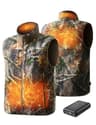
TIDEWE ThermCore Heated Hunting Vest (Double-Sided Fleece)

TIDEWE ThermCore Heated Hunting Vest (Double-Sided Fleece)

The right first piece of heated gear for a stand hunter, and the reason is where the four zones sit: collar, mid-back and both hand pockets, which is the core and the hands rather than a warm chest and cold everything else. It is also the only garment here that publishes a temperature per setting instead of a vague 'up to' figure, and the only one built out of quiet double-sided fleece in a camo pattern, so it works as the mid layer you actually hunt in.

Best heated layer
$114.99 · View on Amazon

Price as of October 10, 2026. #ad How we’re funded

5
Hunter Safety System Muff Pak Hand Warmer

Hunter Safety System Muff Pak Hand Warmer

The muff is the part most hunters skip and the part that actually works. A belt-mounted pouch keeps both bare hands warm between deer and lets you pull them out clean for the shot, which is the one thing a glove can never do. From the company whose harnesses this site already recommends, so the belt hardware is built for a hunter wearing a harness over it.

Best for the hands
$39.99 · View on Amazon

Price as of October 10, 2026. #ad How we’re funded

6
ScentLok Midweight Skull Cap

ScentLok Midweight Skull Cap

The hat for people who wear a hood. A cuffed beanie under an insulated hood is a lump that pushes the hood sideways and kills your peripheral vision on the side a deer always comes from; a flat two-way-stretch skull cap disappears under it. Fleece paneling over the ears and neck is the detail that matters, because ears and the back of the neck are where a cold sit actually gets unbearable.

Best under a hood
$34.99 · View on Amazon

Price as of October 10, 2026. #ad How we’re funded

7
Yaktrax Thermal Cold Weather Insole

Yaktrax Thermal Cold Weather Insole

The best cheap answer to a cold platform, and the only insole here that publishes a temperature at all: Yaktrax rates it to -13F. The construction is the useful part — a reflective Radiantex layer to send your own heat back up and a dense felt layer underneath to slow the cold coming the other way, which is exactly the loss a stand hunter has. Read the fiber content before you believe the word woolen, though.

Cheapest real upgrade
$9.99 · View on Amazon

$11.9917% off

Price as of October 10, 2026. #ad How we’re funded

The picks in full

#1Buy this first

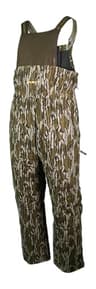
Muddy Outdoors TRX Insulated Bib

A bib is the single biggest warmth upgrade a stand hunter can make, because the cold that ends a sit comes up through the seat and in around the waist — the two places a jacket-and-trousers combination leaves open. This is the purpose-built version of that fix.

Strengths

  • Bib front closes the lower-back and waist gap a jacket cannot
  • Insulated for the sit rather than the walk
  • Bottomland is a genuine timber pattern rather than a novelty print

Trade-offs

  • Insulation weight is not published on the listing
  • Bibs are hot on the walk in — plan to carry, not wear
TypeInsulated bib
PatternMossy Oak Bottomland
InsulationNot published
Waterproof ratingNot published

Worth knowing. The reason bibs beat insulated trousers is the same reason they beat a longer jacket: there is no seam at your waist for cold air to find when you lean forward to shoot.

Specs read from the product listing, on August 22, 2026. “Not published” means the manufacturer does not state that figure.

#2Best late-season boot

Muck Boot Woody Arctic Ice

Built for sitting still in the cold. Heavy fleece lining, a thick rubber-and-neoprene body and a Vibram Arctic Grip outsole that bites on ice make this the boot for the late-season stand hunter who isn't walking far but needs to keep toes.

Strengths

  • Very warm fleece lining for stationary cold-weather sits
  • Vibram Arctic Grip outsole holds on ice
  • Waterproof rubber-and-neoprene construction

Trade-offs

  • Too warm for early season or long walks
  • Heavy and stiff compared with a leather hiker
HeightTall
MaterialRubber + neoprene, fleece-lined
InsulationHeavy (late-season warmth)
OutsoleVibram Arctic Grip (ice traction)

Worth knowing. Warmth for a stationary hunter comes from insulation plus staying dry; toes go cold from sweat as often as from the air, so don't over-insulate for a boot you'll also walk in.

Specs read from the product listing, on July 22, 2026. “Not published” means the manufacturer does not state that figure.

#3Best base layer

Minus33 Midweight Merino Wool Crew

The base layer to build a cold-weather sit around. 100% merino wool is warm for its weight, keeps insulating when it's damp, and — the reason it matters to a hunter — resists odor so you can wear it multiple hunts without broadcasting yourself. Midweight is the versatile pick: warm enough for stand sits, not so hot you cook on the walk in.

Strengths

  • Merino stays warm when damp and dries without the chill of wet cotton
  • Naturally odor-resistant — a real advantage against a deer's nose
  • Midweight suits the widest range of deer-season temperatures

Trade-offs

  • Costs more than synthetic base layers
  • Wool needs gentle washing and takes longer to dry than synthetics
Material100% merino wool
WeightMidweight
StyleLong-sleeve crew top
Best forCold stand sits, scent control

Worth knowing. Never hunt in a cotton base layer: cotton holds sweat against your skin and steals heat as it dries. Merino or synthetic only.

Specs read from the product listing, on August 7, 2026. “Not published” means the manufacturer does not state that figure.

#4Best heated layer

TIDEWE ThermCore Heated Hunting Vest (Double-Sided Fleece)

The right first piece of heated gear for a stand hunter, and the reason is where the four zones sit: collar, mid-back and both hand pockets, which is the core and the hands rather than a warm chest and cold everything else. It is also the only garment here that publishes a temperature per setting instead of a vague 'up to' figure, and the only one built out of quiet double-sided fleece in a camo pattern, so it works as the mid layer you actually hunt in.

Strengths

  • TIDEWE publishes a temperature AND a runtime per setting — 113F for 10 hours, 122F for 5.5, 131F for 3 — which almost nobody in this category does
  • Double-sided polar fleece at 275 gsm outside and 220 gsm inside: warm without the battery, and quiet enough to draw a bow in
  • Four zones at the collar, mid-back and both pockets, which is the core-first placement that actually reaches your fingers
  • The 10,000 mAh pack has two USB ports, so it heats the vest and charges a phone on an all-day sit

Trade-offs

  • TIDEWE publishes no garment weight, so you cannot compare its warmth per ounce against a passive puffer vest
  • The maker's page lists Veil Whitetail and Realtree Edge; the listing for this size ships TrueTimber Kanati, so confirm the pattern before you order
  • Air dry only, which makes a scent-free wash-and-store routine slower than it is for the rest of your camo
  • No numeric overheat cut-off is published for this vest, and the high setting is 131F — see the burn note below before you sleep in it
TypeHeated mid-layer vest, 4 zones
Heat zonesCollar, mid-back, both hand pockets
Settings113F for 10 h / 122F for 5.5 h / 131F for 3 h
FabricDouble-sided polar fleece, 275 gsm outer, 220 gsm inner
Battery10,000 mAh power bank, 3-4 h charge (2 h quick)
WeightNot published

Worth knowing. The heating elements are carbon nanofiber, and TIDEWE says hand or machine wash cold on a gentle cycle and air dry only — the dryer is what kills a heated garment, not the washer.

Specs read from the product listing, on September 30, 2026. “Not published” means the manufacturer does not state that figure.

#5Best for the hands

Hunter Safety System Muff Pak Hand Warmer

The muff is the part most hunters skip and the part that actually works. A belt-mounted pouch keeps both bare hands warm between deer and lets you pull them out clean for the shot, which is the one thing a glove can never do. From the company whose harnesses this site already recommends, so the belt hardware is built for a hunter wearing a harness over it.

Strengths

  • Bare hands stay warm right up to the draw, then come out with full feel on the release
  • Holds a pair of disposable warmers, so it gets warmer than any glove and stays that way
  • Realtree pattern and a hunting-specific belt, not a repurposed sideline muff

Trade-offs

  • Costs more than most of the muffs in this category
  • Amazon's listing publishes no dimensions, insulation or weight — you are buying on the brand
  • A muff on your waist is one more thing that can catch a bowstring; check your clearance at home
TypeBelt-mounted hand muff
PatternRealtree
SizeStandard
InsulationNot published
WeightNot published

Worth knowing. A muff only works if you can get into it fast and out of it faster. Practice the draw wearing it before opening day, in the coat you will actually hunt in.

Specs read from the product listing, on September 3, 2026. “Not published” means the manufacturer does not state that figure.

#6Best under a hood

ScentLok Midweight Skull Cap

The hat for people who wear a hood. A cuffed beanie under an insulated hood is a lump that pushes the hood sideways and kills your peripheral vision on the side a deer always comes from; a flat two-way-stretch skull cap disappears under it. Fleece paneling over the ears and neck is the detail that matters, because ears and the back of the neck are where a cold sit actually gets unbearable.

Strengths

  • Flat, two-way-stretch profile that fits under a hood without shoving it out of position
  • Fleece paneling over the ears and neck, which is where cold gets in on a stand
  • Carries the same Carbon Alloy odor layer as the headcover, plus a Silver Alloy bacterial-control claim
  • DWR finish and a wicking treatment, so sweat from the walk in does not sit against your scalp

Trade-offs

  • Costs about as much as the merino beanie and is warm in fewer conditions on its own — it is a layer, not a hat
  • ScentLok publishes no fabric composition, no weight and no sizing detail for it
  • Worn alone in real cold it is not enough; it assumes you have a hood
  • Like all carbon apparel, it reduces your scent footprint rather than defeating a nose
TypeLow-profile skull cap
Odor technologyCarbon Alloy; Silver Alloy for bacterial control
Warmth detailFleece paneling over ears and neck
StretchTwo-way stretch
FinishDWR finish; wicking treatment
Fabric compositionNot published
WeightNot published

Worth knowing. A skull cap is a layering piece. Judge it on how it behaves under a hood, not on how warm it feels in your hand.

Specs read from the product listing, on September 10, 2026. “Not published” means the manufacturer does not state that figure.

#7Cheapest real upgrade

Yaktrax Thermal Cold Weather Insole

The best cheap answer to a cold platform, and the only insole here that publishes a temperature at all: Yaktrax rates it to -13F. The construction is the useful part — a reflective Radiantex layer to send your own heat back up and a dense felt layer underneath to slow the cold coming the other way, which is exactly the loss a stand hunter has. Read the fiber content before you believe the word woolen, though.

Strengths

  • The only insole in this group with a published cold rating (-13F)
  • Radiantex reflective layer plus dense felt is the right structure for conduction loss, which is what a steel platform does to you
  • Trim-to-fit from a women's 6 to a men's 12, so one SKU covers most hunters
  • Cheapest pick here by a wide margin, which makes a spare dry pair in the pack realistic

Trade-offs

  • Published composition is 97.66% polyester and 2.34% polyethylene — there is no wool in it, despite the blended woolen felt wording
  • No thickness is published, which is the figure that decides whether it fits your boot
  • A 90-day warranty on a part that gets crushed daily all season
  • Felt absorbs sweat and needs pulling out to dry after every wet sit
TypeInsulating insole, reflective + felt
Cold rating-13F (maker's claim)
Materials97.66% polyester, 2.34% polyethylene
SizingOne size trim-to-fit, W6 to M12
Warranty90 days
ThicknessNot published

Worth knowing. Yaktrax's listed activities for this insole are walking, fishing and hunting, and the pack contains one pair.

Specs read from the product listing, on October 5, 2026. “Not published” means the manufacturer does not state that figure.

What each piece is actually for

Read the right-hand column first. The point of this table is that each item is solving a different heat-loss path, which is why adding a second jacket does not fix a cold sit.

ItemPublished figure that mattersHeat-loss path it closes
Insulated bibInsulation weight not publishedThe waist gap that opens when you lean forward
Late-season bootHeavy insulation; Vibram Arctic Grip outsoleConduction through the sole, plus ice traction
Merino base layer100% merino, midweightEvaporative cooling from the walk-in sweat
Heated vest113F for 10 h / 122F for 5.5 h / 131F for 3 hCore heat, which is what reaches the fingers
Hand muffInsulation and weight not publishedBare hands at the moment of the shot
Skull capFabric composition and weight not publishedEars and neck, under a hood
Insulating insoleRated to -13F; 97.66% polyester, 2.34% polyethyleneConduction from a cold platform into the boot

Why the bib comes before a warmer coat

A jacket is designed around a standing, moving body. A seated hunter in a stand is bent at the hips with their arms forward, which lifts the hem of any jacket and opens a gap across the lower back and waist. Insulated trousers do not fix this, because they also end at your waist. A bib carries insulation up over the chest and back with no seam at the waist at all.

The practical note is that a bib is miserable to walk in. Plan to carry it and put it on at the tree, which is also the right move for the merino layer underneath — arriving dry is worth more than arriving warm. Our hunting bib picks compare the category, including an uninsulated option for early season, and our layering system guide covers the walk-in problem in full.

Feet: insulation is only half the job

Two separate things make a stand hunter’s feet cold, and most people only address one. The first is air temperature, which insulation handles. The second is conduction — you are resting your boots on a steel platform that is the same temperature as the air and far better at pulling heat out of you than the air is.

That is the entire case for the insole on this list, which is the cheapest item here by a wide margin. It is the only insole in our registry with a published cold rating (−13°F, the maker’s claim), and it combines a reflective layer with dense felt, which is the right structure for conduction loss. One honest correction: its published composition is 97.66% polyester and 2.34% polyethylene, so there is no wool in it despite the “blended woolen felt” wording in the listing copy. It also publishes no thickness, which is the figure that decides whether it fits your boot.

The other half is the boot, and the trap is over-insulating. A boot warm enough for a three-hour sit at 15 degrees is too warm to walk a mile in, and sweat inside a boot makes your feet colder than the cold does. The honest answer is to size for the sit, walk in slowly, and carry a dry spare pair of socks. Our cold-weather boot picks, insole picks and guide to keeping feet warm in the stand cover the whole problem, and our boot insulation guide has the gram-weight table.

The base layer is a scent decision as well as a warmth one

Merino earns its price twice in late season. The warmth argument is familiar: wool holds heat when damp and dries without the chill that wet cotton delivers. The second argument is the one bowhunters should care about more. The Woolmark Company’s published research puts wool’s water-vapour absorption at twice that of cotton and thirty times that of polyester, and cites a New Zealand assessor study in which unwashed wool retained 66% less body-odor intensity than polyester.

Late season is when that matters most, because the cover is gone and deer are concentrated on a small number of food sources — you are hunting the same field edge repeatedly, with less margin for a mistake. The National Deer Association’s work on deer senses is unambiguous that smell is the sense that keeps a deer alive, and their thermals piece makes the point that wind and air movement decide where your scent goes regardless of what you are wearing. Reduce the source, then play the wind. Our base layer picks, merino versus synthetic comparison and scent control picks go further on this.

Heat the core, not the extremities

A heated vest looks like a luxury and behaves like a structural fix, because warm hands are mostly a function of core temperature rather than glove insulation. The vest on this page is the rare product in this category that publishes both a temperature and a runtime for each setting: 113°F for 10 hours, 122°F for 5.5 hours, 131°F for 3 hours, with zones at the collar, mid-back and both hand pockets.

Two cautions, both from the published record. First, the high setting is 131°F, and Japan’s National Institute of Technology and Evaluation documents low-temperature burns from body-worn warming products with a clear time-and-temperature relationship — symptoms after 3 to 4 hours of contact at 44°C (111°F), after 30 minutes to an hour at 46°C (115°F), and after 2 to 3 minutes at 50°C (122°F). NITE notes the injury develops even when the heat feels comfortable. Use a layer between the element and bare skin, and do not fall asleep on high. Second, the maker publishes no garment weight, so you cannot compare its warmth per ounce against a passive puffer vest. Our heated gear picks cover the whole category, including the battery figures.

Hands: the one place a bowhunter cannot compromise

A glove warm enough for late season is a glove you cannot shoot in, which is why the muff is the right answer for an archer and a heated glove is the right answer for someone carrying a gun. A belt-mounted muff lets you keep bare or thin-gloved hands warm until the draw, then come out with full feel on the release. Drop a pair of disposable warmers in it and it gets warmer than any glove.

The practical warning is clearance. A muff at your waist is one more thing a bowstring can catch, so practice the draw wearing it, in the coat you will actually hunt in, before opening day. Note also that this listing publishes no dimensions, insulation or weight — you are buying on the brand. Our hand warmer and muff picks and glove picks cover both routes.

The head, and a myth worth retiring

You will read that you lose most of your body heat through your head. You do not. The Indiana University School of Medicine, writing about its own faculty’s BMJ study of medical myths, traces the claim to an old military study in which subjects wore arctic survival suits without hats, so the head was the only exposed part; had the same experiment been run in swimsuits, they would not have lost more than about 10% of their body heat through their heads. Any exposed body part loses heat roughly in proportion to its area.

Which is a good reason to cover your head anyway — it is exposed, and ears and the back of the neck are where cold gets into a seated hunter. Just do not treat a hat as doing more work than the bib. A low-profile skull cap is the right shape if you hunt in a hood, because a bulky beanie pushes the hood out of position. Our face mask and headwear picks cover warmth against concealment, including a merino beanie for hunters who do not wear a hood.

What to buy, in what order, on what budget

If you are adding one thing this winter, add the insole — it is the cheapest item here and it addresses a heat-loss path nothing else on your body touches. If you are adding one real purchase, add the bib.

Add the merino top next, because it improves every sit including warm ones. The heated vest and the muff are the enthusiast purchases, and they are genuinely worth it for the hunter who keeps climbing down early — the whole economic case for late-season gear is that the last hour of light in December is the best hour of the whole season, and there is no point owning a stand you cannot sit in. Our whitetail season gear checklist sets out the season as a whole, our early-season clothing picks are the opposite end of the same problem, and our budget gear guide covers doing this for less.
Frequently asked questions

What gear do I need for late season deer hunting?

Think in heat-loss paths rather than in warmth. The seven items on this page each close a different one: an insulated bib for the waist gap that opens when you lean forward, a heavily insulated boot plus an insulating insole for conduction through a metal platform, a merino base layer for the sweat from the walk in, a heated vest for core heat, a hand muff for the hands, and a low-profile skull cap for the ears and neck. Adding a second jacket closes none of them.

Are bibs better than insulated pants for hunting?

For a seated hunter, yes. A bib carries insulation up over the chest and back with no seam at the waist, which is where cold air gets in when you bend forward at the hips to shoot. Insulated trousers end at the waist, exactly like a jacket does, so the two garments leave the same gap. The trade-off is that bibs are hot on the walk in — carry it and put it on at the tree.

Why do my feet get cold in a tree stand even in good boots?

Because insulation only addresses air temperature, and a stand hunter loses heat by conduction. Your boots are resting on a metal platform that is the same temperature as the air and much better at pulling heat out of you. An insulating insole with a reflective layer and dense felt addresses that path directly. The other common cause is sweat: a boot warm enough to sit in is usually too warm to walk a mile in, and damp feet get cold fast.

Is a heated vest worth it for hunting?

For a hunter who keeps climbing down early, yes — and the reason is that warm hands follow core temperature more than they follow glove insulation. The vest on this page heats the collar, mid-back and both hand pockets, and publishes a temperature and runtime per setting: 113F for 10 hours, 122F for 5.5, 131F for 3. Its high setting is 131F, so keep a layer between the element and bare skin; low-temperature burns from body-worn warmers are documented at lower temperatures than people expect.

Do you lose most of your body heat through your head?

No. Indiana University School of Medicine, writing about its own faculty's BMJ study of medical myths, traces that claim to an old military study in which subjects wore arctic survival suits without hats, so the head was the only exposed part. Run in swimsuits, the same subjects would not have lost more than about 10% of their heat through the head. Cover your head because it is exposed, not because it is special.

Is merino worth the money for a hunting base layer?

For late season, yes, and the second reason is better than the first. Warmth when damp is the familiar argument. The one bowhunters should weigh more heavily is odor: Woolmark's published research puts wool's water-vapour absorption at twice cotton's and thirty times polyester's, and cites a study in which unwashed wool retained 66% less body-odor intensity than polyester. Never hunt in cotton — it holds sweat against your skin and steals heat as it dries.

Hand muff or heated gloves for bowhunting?

A muff, almost always. A glove warm enough for a December sit is a glove you cannot feel a release through, and the moment that decides the hunt is the one where you need feel. A belt-mounted muff keeps bare or thin-gloved hands warm until the draw and then gets out of the way. Heated gloves make more sense for a firearms hunter. If you use a muff, practice your draw wearing it — it is one more thing a string can catch.

What is the single cheapest thing that improves a cold sit?

An insulating insole, and it is not close. It costs a fraction of any garment here, it addresses conduction through the boot sole — which nothing else on your body touches — and it is the only insole in our registry with a published cold rating, at -13F. Two caveats from its own published data: its composition is 97.66% polyester and 2.34% polyethylene, so there is no wool in it, and it publishes no thickness, which is what decides whether it fits your boot.

Sources

  • CDC / NIOSH — Cold Stress: Cold and Work — Federal cold-safety guidance: dress in several loose layers, keep the base layer dry, and protect the extremities (accessed July 22, 2026)
  • The Woolmark Company — Wool Is Naturally Odor Resistant — Wool absorbs twice the water vapor of cotton and thirty times that of polyester, and a New Zealand assessor study found unwashed wool retained 66% less body-odor intensity than polyester (accessed August 19, 2026)
  • National Deer Association — Understanding Deer Senses (Dr. Gino D'Angelo) — NDA research summary on the three senses that keep a deer alive — sight, hearing, and, above all, smell (accessed July 22, 2026)
  • National Deer Association — To Beat a Buck's Nose, Remember Thermals — NDA on how wind and thermals carry human scent — why playing the wind beats trusting scent products alone (accessed July 22, 2026)
  • Indiana University School of Medicine — Medical myths for the holiday season: true, false or unproven — IU School of Medicine on the Vreeman and Carroll BMJ study of medical myths: the belief that most body heat is lost through the head likely originated with an old military study that put subjects in arctic survival suits without hats, so the head was the only part exposed; had the same experiment been run on subjects wearing only swimsuits, they would not have lost more than 10 percent of their body heat through their heads. Any exposed body part loses heat proportionally, and the head needs no special protection relative to other areas (accessed September 10, 2026)
  • NITE (Japan, National Institute of Technology and Evaluation) — Prevention of low temperature burn injuries — The Japanese national institute's own press release on low-temperature burns from products worn against the body for long periods, naming hot-water bottles, electric heating pads, electric blankets and disposable body warmers. Its stated temperature-and-time relationship: symptoms may develop after more than 3 to 4 hours of contact at 44C, after 30 minutes to 1 hour at 46C, and after 2 to 3 minutes at 50C, though it depends on the person's condition at the time. NITE notes the injury develops even when the temperature feels warm and comfortable, which is what makes it insidious, and that 16 of the 30 cases it recorded in FY2008 fell between November and March. Cited because several heated garments and heated insoles publish a high setting at or above 55C (131F) (accessed September 30, 2026)
  • Yaktrax — Thermal Insole (product page) — Manufacturer's published figures: rated to -13F for cold weather; a Radiantex layer that redirects heat back to the feet and keeps moisture out; polar white blended woolen felt for extreme warmth over recycled blended felt to lock out moisture; one size trim-to-fit covering a women's 6 to a men's 12; one pair per pack; unisex; listed activities walking, fishing and hunting; a 90-day warranty. Its published material composition is 97.66% polyester and 2.34% polyethylene, and the page publishes no insole thickness. Cited as manufacturer claims (accessed October 5, 2026)
  • ScentLok — Midweight Headcover (Carbon Alloy technology) — ScentLok's own description of its odor technology: Carbon Alloy combines treated carbon, activated carbon and zeolite to adsorb the odors your body generates; the headcover is DWR treated to repel light moisture, carries a wicking treatment for moisture management, and uses a hinged facemask that pulls down to call or shoot. A manufacturer claim, cited as such (accessed September 10, 2026)

Keep reading