The early-season problem in one sentence
You have to walk in warm and sit still cool, and those two requirements want opposite clothing. A 65-degree October afternoon with the sun on your back is genuinely hot work in camo, and the same evening at 48 degrees after the sun drops, sitting motionless twenty feet up with a breeze moving, is cold enough to make you fidget.
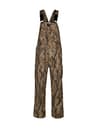
The answer is not a different jacket. It is to carry the insulation rather than wear it — walk in with as little on as you can stand, and put a layer on once you are settled and have stopped producing heat. That is why the uninsulated bib is on this list and the insulated one is not: a bib that closes the waist gap and blocks wind without adding heat is exactly the garment that lets you make that switch. Our layering system guide covers how the three layers interact across the whole season, and our bib picks cover the insulated versions you will want in six weeks.
Why material beats everything else in warm weather
In late season you choose fabric for warmth. In early season you choose it for what happens to your sweat, and the two leading answers behave very differently.
Synthetics wick fast and dry fast, which is genuinely valuable on a high-output hunt — that is the argument for the ColdGear mock on this page despite its name, and why we rank it as the walk-in layer rather than the sit-still layer. The cost is odor: polyester holds it, and holds it in the exact garment closest to your skin.
Merino goes the other way. Wool absorbs thirty times the water vapor of polyester and twice that of cotton, and the assessor study Woolmark publishes found unwashed wool retaining 66% less body-odor intensity than polyester. It also keeps insulating when it is damp, which matters because you will arrive damp. The trade is price, and that thin merino pills and snags on brush. Our merino vs synthetic comparison works through the whole decision, and our base layer picks cover both camps.
One thing no fabric does is beat the wind. Scent control is a supplement to wind discipline, never a substitute for it, and in early season there is a second wrinkle: thermals. On warm afternoons rising air carries your scent up and away; as the ground cools in the evening that current reverses and runs downhill, which can put your scent into a bedding area you were deliberately hunting the edge of. Our scent control picks cover the sprays and storage worth bothering with, and the honest summary is that they buy a margin on top of a good wind rather than permission to ignore one.
Boots are the early-season purchase people get wrong
Most hunters own one pair of hunting boots and they are the warm ones, because that is the pair you notice needing. Wearing them in October produces a wet foot on arrival, and a wet foot gets cold faster than a bare one when you finally stop moving.
A light, waterproof leather-and-nylon hiker with little or no insulation is the correct October boot for anyone covering ground. The trade-off is honest and worth stating: leather holds more scent than rubber, which is why the rubber boot still wins for a short walk into a tight setup on pressured ground. Our rubber vs leather comparison covers exactly that choice, and our boot picks cover the full range.
Sock weight follows the same logic. A midweight cushion sock does not overheat on the hike, which is the actual mechanism behind cold feet later — wet wool insulates far worse than dry wool, and you make it wet on the way in rather than sitting still. Carrying a dry spare and changing at the base of the tree is the cheapest upgrade in early-season hunting. Our sock picks cover the weights.
Cover your skin, but only just
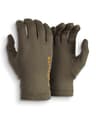
Hands and face are the two things that move, and a whitetail’s visual system is built around movement. The early-season answer is minimal: a 3/4 mesh mask that leaves the eyes and nose bridge open so you can see your pins and still breathe, and a thin merino liner glove that lets you shoot without a bare hand on a cold riser at last light.
Neither is a warmth product and neither is sold as one — the mask publishes “Insulation: None — warm-weather mask” and the liner publishes no insulation figure at all. That is the right spec for October. Our face mask and headwear picks and glove picks cover the insulated versions for when the weather turns.
Rain is the one thing you cannot carry your way out of
Early-season weather changes inside a sit. A packable rain suit that lives in the bottom of the pack and weighs almost nothing is the difference between climbing down at the first shower and hunting the two hours after it, which on warm fronts is often the best movement of the day.
Buy the cheap one for this job specifically, and know what you are getting: the Pro Lite publishes no waterproof rating, and the honest description is an emergency layer rather than a garment to hunt in all day. Our rain gear picks cover the heavier shells built to be worn through brush for a full season.
What to buy in what order
If you are building an early-season kit from nothing, the order that wastes the least money is: light boots and a midweight sock first, because that is the purchase that fixes the walk-in; then a wicking base layer, because it is cheap and it is what your scent control is actually managing; then the uninsulated bib, which is what lets you carry your warmth instead of wearing it; then the mask, liner gloves and the packable rain suit, which together cost less than any one of the first three.
Everything on this list stays useful when the weather turns — the bib layers over insulation, the liner goes under a mitten, the rain suit goes over a parka. That is the test we applied: early-season gear that becomes late-season gear, rather than a second wardrobe you use for three weeks. Our whitetail season checklist lays out how the rest of the kit changes phase by phase.