Tag & Timber

Guides · Mentoring

Deer Hunting Gear for Youth Hunters: What to Buy for a Kid's First Season

Equipping a young hunter is a different purchase from equipping yourself, because almost every decision is about fit and supervision rather than performance. Six items, in the order a mentor should buy them.

By Stephen V.Last updated How we pick

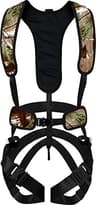
Buy the harness first — the Hunter Safety System X-1 Bowhunter Harness, for the adult putting a young hunter in a tree for the first time. It is published at 2.5 pounds, it ships with a tree strap and a suspension relief strap so it works the day it arrives, and it costs a fraction of a premium vest. It is first on this list for a reason that has nothing to do with gear preference: a fall is the only mistake on a youth hunt that cannot be fixed later in the day.

This page is written for the mentor, not for the hunter. That changes the shopping list more than people expect, because the constraints are different ones. An adult buying for themselves optimizes for performance within a known fit. An adult buying for a twelve-year-old is buying against three moving targets: a body that will be a different size next season, a hunt that has to accommodate two people in one position, and a legal framework (youth seasons, hunter-orange rules, minimum draw weights, crossbow eligibility) that varies by state.

So the picks below follow four rules:

  • Buy adjustability over specification. A bow with a 7-to-70-pound draw-weight range and a 19-to-31-inch draw-length range fits a growing shooter for several seasons. A fixed-spec flagship fits them for one.
  • Buy for two people in the stand, not one. A mentored hunt means an adult within arm’s reach. That is a two-person platform, or a blind with room to move, not a hang-on.
  • Make the easy thing the safe thing. A harness that is comfortable gets worn. A target arrows pull out of easily gets shot at. Both matter more for a new hunter than any spec.
  • Check the law, and do not trust a product to do it for you. Hunter-orange requirements are written in square inches of visible orange and differ by state, season and sometimes land type. Crossbow eligibility for young hunters varies the same way. Verify with your state agency.

This page does not replace our beginner gear guide, which is written for an adult equipping themselves. The overlap is deliberate but the pick list is different, because a mentor is solving fit and supervision rather than a first purchase. Prices are live and dated; we own none of this gear and have not tested it.

How this is funded:we earn a commission if you buy through our links, at no extra cost to you. It never changes which product we recommend, and we’ll tell you plainly when to skip one. Full disclosure.

Quick picks

Ranked on published specs, package value and buyer fit. Select a row to jump to the full write-up. We have not tested these products — here is exactly what we do instead.

#ProductBest forPrice
1
Hunter Safety System X-1 Bowhunter Harness

Hunter Safety System X-1 Bowhunter Harness

The single most important piece of tree-stand gear, and it is cheap. A full-body harness is what turns a fall from fatal into a scare, and the X-1 is the version of that with nothing added: a 2.5 lb vest with no weave-through buckles and no dangling straps, the tree strap and suspension relief strap in the box, and a published 5-year warranty that is longer than anything else in this group. It is the harness to buy if the price of a premium vest is the reason you do not own one.

Buy this first
$79.99 · View on Amazon

Price as of October 10, 2026. #ad How we’re funded

2
Muddy 2-Person Ladder Tree Stand, 17'

Muddy 2-Person Ladder Tree Stand, 17'

The stand to buy if you take someone with you, which for most hunters is the real reason a ladder stand exists at all. Seventeen feet with a two-person platform is the standard shape of a stand a kid can learn to hunt from.

Best stand for mentoring
$359.99 · View on Amazon

Price as of October 10, 2026. #ad How we’re funded

3
Diamond Archery Infinite 305

Diamond Archery Infinite 305

The most adjustable bow on this list, and the smartest buy for anyone who isn't sure of their exact draw length yet. A 7-to-70-pound weight range and a 19-to-31-inch draw range mean one bow fits a growing teenager, a new adult archer, and a seasoned hunter — all from the same box, no press required to make the big changes.

Best bow for a growing archer
$349.95 · View on Amazon

Price as of October 10, 2026. #ad How we’re funded

4
CenterPoint Hellion 400

CenterPoint Hellion 400

A lot of crossbow for the money: 400 FPS and 185 lb draw in a complete package that regularly costs less than the accessories on a premium rig. It's the sensible buy for a hunter who wants results, not bragging rights.

Best crossbow where it's legal
$339.95 · View on Amazon

Price as of October 10, 2026. #ad How we’re funded

5
Morrell Yellow Jacket YJ-425

Morrell Yellow Jacket YJ-425

The volume target. A bag stops field points over thousands of shots for less money than any foam block, and gives arrows back with two fingers instead of a shoulder — which is exactly what you want when you are putting in the reps that make a 25-yard shot automatic. It is a practice tool, not a broadhead target, and Morrell says so in the model name.

Best target for practice
$69.99 · View on Amazon

Price as of October 10, 2026. #ad How we’re funded

6
Hot Shot Thinsulate Acrylic Cuff Knit Hat, Blaze Orange

Hot Shot Thinsulate Acrylic Cuff Knit Hat, Blaze Orange

The cheapest way to stop breaking the law during a firearms season, which is a strange thing to say about a hat and is nonetheless the reason to own one. Most states that require hunter orange let a cap carry part or all of the requirement, and a blaze knit hat is the item you can leave permanently in the truck so the question never comes up. Thinsulate and an acrylic knit make it genuinely warm as well.

Cheapest thing you must not skip
$9.99 · View on Amazon

Price as of October 10, 2026. #ad How we’re funded

The picks in full

#1Buy this first

Hunter Safety System X-1 Bowhunter Harness

The single most important piece of tree-stand gear, and it is cheap. A full-body harness is what turns a fall from fatal into a scare, and the X-1 is the version of that with nothing added: a 2.5 lb vest with no weave-through buckles and no dangling straps, the tree strap and suspension relief strap in the box, and a published 5-year warranty that is longer than anything else in this group. It is the harness to buy if the price of a premium vest is the reason you do not own one.

Strengths

  • Published at 2.5 lb and low-profile enough that it does not fight a bow or a crossbow
  • Comes with a Primary Treestrap and a suspension relief strap, so it is usable the day it arrives
  • A published 5-year warranty, which HSS calls the strongest in the industry and which no other pick here matches
  • Costs a fraction of a premium vest, which is the only reason anyone ever hunts without one

Trade-offs

  • A harness alone does not protect you on the climb — add a lineman's rope and a lifeline
  • No standard, test or certifying body is named on the listing
  • No weight capacity is published, so sizing is by garment size rather than by hunter weight
  • Minimal padding and no pockets: this is a safety device, not a vest you organize gear in
TypeFull-body safety harness (vest)
Harness weight2.5 lb
In the boxPrimary Treestrap, suspension relief strap, safe-use instructions
Warranty5 years (maker's claim)
CapacityNot published
Standard namedNot published

Worth knowing. A harness only helps if you're attached to the tree from the ground up — a lineman's rope on the climb and a lifeline on the trunk close the gap most falls happen in.

Specs read from the product listing, on October 5, 2026. “Not published” means the manufacturer does not state that figure.

#2Best stand for mentoring

Muddy 2-Person Ladder Tree Stand, 17'

The stand to buy if you take someone with you, which for most hunters is the real reason a ladder stand exists at all. Seventeen feet with a two-person platform is the standard shape of a stand a kid can learn to hunt from.

Strengths

  • Two-person platform makes mentoring a new hunter practical
  • Seventeen feet is enough height for most whitetail setups
  • Semi-permanent — set it once and it is ready every season

Trade-offs

  • Two people in a stand means twice the movement and twice the scent
  • Heavy to move once it is up; treat the location as a decision
TypeLadder stand
Height17 ft
Capacity2 people
Weight ratingNot published

Worth knowing. A two-person stand is rated for two people's combined weight plus gear. Check the published rating against what two grown adults in winter clothing actually weigh.

Specs read from the product listing, on August 22, 2026. “Not published” means the manufacturer does not state that figure.

#3Best bow for a growing archer

Diamond Archery Infinite 305

The most adjustable bow on this list, and the smartest buy for anyone who isn't sure of their exact draw length yet. A 7-to-70-pound weight range and a 19-to-31-inch draw range mean one bow fits a growing teenager, a new adult archer, and a seasoned hunter — all from the same box, no press required to make the big changes.

Strengths

  • Enormous 7–70 lb draw-weight and 19–31 in draw-length range grows with the shooter
  • Sold as a fully-loaded package, ready to sight in
  • Backed by Diamond/Bowtech's build quality at a value price

Trade-offs

  • The very wide adjustment range is a jack-of-all-trades — a fixed-spec flagship will feel a touch more refined
  • Package accessories are entry-level; plan to upgrade the arrows and possibly the sight
Peak draw weight7–70 lb
Draw length19–31 in
Speed (IBO)Up to 305 fps
PackageFully loaded (sight, rest, quiver, stabilizer)

Worth knowing. The wide adjustment range is the point: buy it slightly heavy and back the weight off, and you can add poundage over a season as your form and back tension build — without buying a second bow.

Specs read from the product listing, on August 7, 2026. “Not published” means the manufacturer does not state that figure.

#4Best crossbow where it's legal

CenterPoint Hellion 400

A lot of crossbow for the money: 400 FPS and 185 lb draw in a complete package that regularly costs less than the accessories on a premium rig. It's the sensible buy for a hunter who wants results, not bragging rights.

Strengths

  • 400 FPS is far more than enough for any whitetail shot
  • Sold as a complete, hunt-ready package
  • Priced within reach of a first-time crossbow buyer

Trade-offs

  • Fit and finish are basic next to premium brands
  • Stock scope is serviceable, not exceptional
Speed400 FPS
Draw weight185 lb
Cocked widthNot published
PackageScope, quiver + arrows included

Worth knowing. 185 lb of draw weight is a lot to cock by hand; a rope cocker (usually included) roughly halves the effort and is essential for repeatable shots.

Specs read from the product listing, on July 22, 2026. “Not published” means the manufacturer does not state that figure.

#5Best target for practice

Morrell Yellow Jacket YJ-425

The volume target. A bag stops field points over thousands of shots for less money than any foam block, and gives arrows back with two fingers instead of a shoulder — which is exactly what you want when you are putting in the reps that make a 25-yard shot automatic. It is a practice tool, not a broadhead target, and Morrell says so in the model name.

Strengths

  • Lowest cost per shot here for plain field-point reps
  • Arrows pull out with almost no effort — the reason people actually keep practicing
  • Light enough to carry out to the yard one-handed and hang or lean anywhere

Trade-offs

  • Field points only — a broadhead will wreck the bag and ruin the head
  • Bags hate weather; left out in the wet it packs down and stops fast arrows less well
StopsField points only
TypeBag target
DimensionsNot published
Speed ratingNot published

Worth knowing. Morrell sells this same model as the Yellow Jacket YJ-425 Field Point Archery Bag — the field-point limit is the manufacturer's own naming, not our inference.

Specs read from the product listing, on August 31, 2026. “Not published” means the manufacturer does not state that figure.

#6Cheapest thing you must not skip

Hot Shot Thinsulate Acrylic Cuff Knit Hat, Blaze Orange

The cheapest way to stop breaking the law during a firearms season, which is a strange thing to say about a hat and is nonetheless the reason to own one. Most states that require hunter orange let a cap carry part or all of the requirement, and a blaze knit hat is the item you can leave permanently in the truck so the question never comes up. Thinsulate and an acrylic knit make it genuinely warm as well.

Strengths

  • Blaze orange, which is the point — the cheapest single item that moves you toward a state hunter-orange requirement
  • 3M Thinsulate in an acrylic knit, so it is a real cold-weather hat rather than a compliance token
  • Under ten dollars at the price we recorded, cheap enough to own two and lose one
  • Acrylic shrugs off the abuse that ruins a merino knit in a pack

Trade-offs

  • Hot Shot does not publish the Thinsulate gram weight for this hat, and gram weight is the only number that tells you how warm insulation is
  • Acrylic holds odor in a way merino does not, so it is the wrong hat for a still bow sit at close range
  • Blaze orange is a legal aid, not a legal opinion — orange requirements vary by state, season and sometimes by land type, and a hat alone may not satisfy yours
  • No face coverage at all
TypeCuffed knit hat
Insulation3M Thinsulate (gram weight not published)
Shell materialAcrylic
ColorBlaze orange
SizingOne size
Thinsulate gram weightNot published

Worth knowing. Check your own state's hunter-orange rule before you rely on any single garment. Requirements are written in square inches of visible orange and differ by state and season.

Specs read from the product listing, on September 10, 2026. “Not published” means the manufacturer does not state that figure.

The six items, and the published figure that matters on each

ItemPublished figure that mattersWhy it matters for a young hunter
Full-body harness2.5 lb; 5-year warranty; capacity not publishedLight enough to be worn without complaint
Two-person ladder stand17 ft; 2-person platform; weight rating not publishedA mentor within arm’s reach of the shooter
Adjustable compound bow7–70 lb draw weight; 19–31 in draw lengthFits a growing shooter for several seasons
Entry crossbow400 FPS; 185 lb draw weight; width not publishedHolds itself at full draw — no hold to fail
Bag targetField points only; dimensions not publishedEasy arrow removal is why practice continues
Blaze orange hat3M Thinsulate; gram weight not publishedVisibility, where your state requires it

Three of the six publish no weight capacity, rating or gram weight. That is normal in this category and it is why we record the blanks as “Not published” rather than estimating. On the two-person stand in particular, check the published combined rating against what an adult in winter clothing plus a child plus gear actually weighs before you trust it with both.

Safety first, because this is the one irreversible risk

The National Deer Association has written at length about treestand accidents and the case for a harness on every hunt, and state-approved hunter education guidance is blunter still: stay attached to the tree from the ground up, every hunt. That last phrase is the part most hunters, including experienced ones, ignore — the harness on your chest does nothing while you are on the ladder.

For a mentored hunt that translates into three purchases, not one: the harness, a lifeline left permanently on the tree so the climb is protected, and the habit of clipping in before the first step. The X-1 is the right harness to start a young hunter in because it is light, low-profile enough not to fight a bow, and cheap enough that there is no argument about buying one. Note honestly that it names no standard, test or certifying body on its listing and publishes no weight capacity, so sizing is by garment size. The Hunter Safety System FAQ also publishes a replacement interval almost nobody knows exists: every three to five years, or immediately after any fall or sign of wear.

Our harness picks, harness and fall-arrest guide and guide to hanging a stand cover the lineman’s-rope and lifeline side in full.

The stand decides whether the hunt works at all

A mentored hunt needs the adult close enough to whisper, point and physically stop a shot. That rules out a hang-on and a saddle, which is a pity because those are the cheapest and most mobile options. A 17-foot two-person ladder stand is the standard answer and a good one: set once, ready every season, with two seats side by side.

Be realistic about the costs. Two people in a stand means twice the movement and twice the scent, so expect fewer close encounters than you get hunting alone, and set the stand with a wider margin on the wind. A ladder stand is also heavy enough that where you put it is a decision rather than an experiment. The alternative worth considering, especially for a younger or fidgety hunter, is a ground blind: a three-person see-through blind hides movement far better than a stand does, and a child who can shuffle around without being spotted will sit much longer. Our ladder stand picks, ground blind picks and ladder versus hang-on comparison cover the options.

The weapon: adjustability beats specification

For a vertical bow, the single most useful specification for a young shooter is the adjustment range, and it is not close. A bow adjustable from 7 to 70 pounds of draw weight and 19 to 31 inches of draw length covers a shooter from their first season to adulthood. Buy it slightly heavy and back the weight off; add poundage over seasons as form and back tension build. That is one bow instead of three.

Two things to get right regardless of what you buy. First, draw length must be correct now, not aspirational — an over-long draw is the most common fault in a young archer and it shows up as string slap on the forearm, a locked bow arm and a collapsing anchor. Our guide to measuring draw length gives the wingspan method and the full-draw checkpoints. Second, draw weight has to clear your state’s legal minimum for deer and be a weight the shooter can hold steady for thirty seconds while a deer walks. Our draw weight for deer guide works through that trade-off, and our beginner bow picks cover the category.

Where a crossbow is legal for young hunters, it is a genuinely strong option and for one specific reason: it holds itself at full draw, so there is no holding effort to fail at the worst moment. The entry crossbow here publishes 400 FPS from a 185-pound draw weight, which is far more than a whitetail requires. The honest caveat is that 185 pounds is a lot to cock, so an adult will be cocking it — which is fine, and is part of what a mentored hunt is. Crossbow eligibility, season and minimum draw weight all vary by state; check before you buy. Our beginner crossbow guide, cocking guide and crossbow laws overview cover this, and our crossbow versus compound comparison weighs the two routes.

Practice: the target is a behavior purchase

The target matters out of proportion to its price, because the only thing that makes a young shooter accurate is volume, and the thing that stops volume is effort. A bag target that releases arrows with almost no pull is the correct buy for a new archer even though a layered foam target is more versatile, because a child who has to fight the target for every arrow will quietly stop shooting.

One hard limit: the bag on this page is field points only, by the manufacturer’s own naming. A broadhead will wreck the bag and ruin the head. So you need a second, broadhead-rated target before season to confirm that hunting heads hit where field points do — which is a real step, not an optional one. Our archery target picks cover both, and our guide to sighting in a bow covers the field-point-to-broadhead check.

Blaze orange, and why a hat is not an answer

The cheapest item on this page is the one with the clearest legal dimension. Hunter orange requirements are written in square inches of visible orange, and they differ by state, by season and sometimes by land type — a hat alone may or may not satisfy yours, and in archery-only seasons orange may not be required at all. Read the requirement, then buy to it.

Two notes on the hat itself. It carries 3M Thinsulate but the gram weight is not published, and gram weight is the only number that tells you how warm insulation actually is. And acrylic holds odor in a way merino does not, so this is the wrong hat for a close-range bow sit — it is a firearms-season hat. Our headwear picks cover the warmth and concealment options, and our insulation guide explains the gram-weight scale.

What to buy, in what order

In order: harness, then the stand or blind, then the weapon, then the target, then the orange. Everything else — boots, a knife, a rangefinder, a pack — can be borrowed for a first season or bought after you know the hunter is going to keep at it.

The two places not to economise are the harness and the draw-length fit, because they are the two that cause harm rather than inconvenience. The place to economise confidently is clothing: a kid will outgrow it, and layering a merino base under whatever outerwear you already own is both cheaper and warmer than buying a youth camo set. Our complete deer hunting gear list covers the wider kit, our budget gear guide covers doing all of it for less, and our gifts for a new hunter page is the version of this list written for someone buying a present rather than outfitting a season.
Frequently asked questions

What gear does a kid need for their first deer hunt?

A full-body harness that fits them, a stand or blind that holds two people so you can sit with them, a weapon sized to their draw length and legal in your state, a target that is easy to pull arrows out of, and whatever blaze orange your season requires. Everything else can be borrowed for a first season. The order matters: buy the harness before the weapon, because a fall is the only mistake on a youth hunt you cannot fix later in the day.

What draw weight should a youth bow be set at?

Two constraints, and both have to be satisfied. It must clear your state's legal minimum draw weight for deer, and it must be a weight the shooter can hold steady at full draw for thirty seconds while a deer walks into position. Those conflict more often than people admit. A bow with a very wide adjustment range — 7 to 70 pounds on the pick here — lets you set it correctly now and add poundage over seasons as form builds, instead of buying a second bow.

How do I know if a bow's draw length fits a child?

Measure rather than guess, then check at full draw. The standard starting point is wingspan divided by 2.5. Then look for the signs of an over-long draw, which is the usual error: string slap on the forearm, a locked-out bow arm, the head pushed forward to reach the string, and an anchor that collapses on release. A draw length that is slightly short is far less damaging to form than one that is long.

Is a crossbow a good choice for a young hunter?

Where it is legal, yes, for one specific reason: a crossbow holds itself at full draw, so there is no holding effort to fail at the moment a deer steps into the opening. That removes the single biggest physical obstacle for a smaller-framed hunter. The practical caveat is cocking — the entry crossbow here has a 185-pound draw weight, so an adult will be doing that, which is appropriate on a mentored hunt. Crossbow eligibility, seasons and minimum draw weights vary by state; verify with your agency.

Do two-person ladder stands work for taking a kid hunting?

They are the standard answer and a good one, because a mentor needs to be within arm's reach to point, whisper and physically stop a shot. The costs are real: two people make twice the movement and twice the scent, so expect fewer close encounters and set the stand with more margin on the wind. Check the published combined weight rating against an adult in winter clothing plus a child plus gear — several stands in this category do not publish one at all.

Does my child need to wear blaze orange deer hunting?

It depends entirely on your state, your season and sometimes the land type. Requirements are written in square inches of visible orange, so a hat may or may not satisfy yours, and in archery-only seasons orange is often not required. Read your own state's regulation and buy to it rather than assuming one garment covers it. A blaze hat is the cheapest step toward a requirement, not proof of compliance with it.

What kind of target should a new archer practice on?

A bag target, because the thing that stops a young shooter practicing is effort, not interest. A bag releases arrows with almost no pull, which keeps the reps coming; a layered foam target is more versatile but harder to pull from. The limit is that bag targets are usually field points only — the one here is, by the maker's own naming — so you also need a broadhead-rated target before season to confirm that hunting heads hit where field points do.

How is this different from your beginner deer hunting gear guide?

Our beginner guide is written for an adult equipping themselves, so it optimizes for performance within a fit that is already known and fixed. This page is written for a mentor, where almost every decision is fit, supervision and law instead: adjustability over specification, two-person positions over mobile ones, and a legal framework — youth seasons, orange requirements, minimum draw weights, crossbow eligibility — that changes the shopping list. The two lists overlap on the harness and diverge almost everywhere else.

Sources

Keep reading